


by Bob Hendry
Back to Main Page
|
|
|
|
|
|
|
|
|
|
|
|
|
|
|
|
|
|
|
|
|
|
|
|
|
|
|
|
|
|
|
|
|
|
||||||||||||||||||||||||||||||||
|
||||||||||||||||||||||||||||||||
|
||||||||||||||||||||||||||||||||
| Alacrity tips and tricks | ||||||||||||||||||||||||||||||||
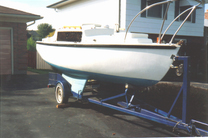
| Notice that the keels sit over the axle. The winch mast is set to put about 85 to 100 lbs of weight on the hitch. Also notice that the ends of the metal plates are flared outward. This helps to guide the boat on to the trailer. A wheeled and retractable jack is now installed which allows me to move the boat and trailer by hand on a paved surface. This is really handy. When launching the trailer is backed part way into the water and then the bow winch is detached and replaced with a long painter which is tied to the winch mast. This allows me to pop the boat off the trailer by myself and walk it to the adjacent dock. Quite simple really for a 72 year old guy. | ||||||||||||||||||||||||||||||||
|
||||||||||||||||||||||||||||||||
|
||||||||||||||||||||||||||||||||
| Trailering, launching and stepping the mast - single handed by Bob Hendry |
||||||||||||||||||||||||||||||||
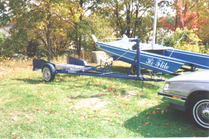
| "I single hand so it is important that I can launch, retrieve and rig my boat alone. Also, I have a full size North American car which has the size and horsepower to easily handle a boat this size. It has travelled as fast as 110 km/hr on the highway. The trip to the North Channel is about 657+ kilometers. The boat is floated on and off the trailer. This requires a fairly steep ramp with good traction. There are no rollers, only a winch. The bow support you see in both photos has since been removed as the vessel rests comfortably on the keels. Yes, that is an aluminum ladder you see chained to the bed so that the boat may be easily boarded when on dry land. | ||||||||||||||||||||||||||||||||
|
||||||||||||||||||||||||||||||||
|
||||||||||||||||||||||||||||||||
| Unfortunately there are no plans for the trailer which was built by a previous owner. When I got it there was no winch or winch mast. The rear plates were also an addition as was the wheeled jack. There is now a plywood deck on the trailer between the keels. This helps when doing any maintenance on the hull. The mast can be raised by one person. I use an extension on the jib halyard. The end is secured to the bow fitting and the halyard run to the block at the masthead. The line is then run back to the bow roller and fed back to a cleat on the cabin roof near the cockpit. It is necessary to remove the rudder and replace it with an extended mast crutch so that the angle of the mast is sufficient to clear the vent on the coach roof. Again, all this is possible single handed." | ||||||||||||||||||||||||||||||||
| Elsie Too on her trailer. | ||||||||||||||||||||||||||||||||
| The procedure is fairly simple. The trailer is backed down the ramp until the top of the 2 steel plates at the rear are just submerged. These plates guide the keels onto the trailer and the winch brings the boat forward until the bow touches the rubber guide on the winch. The angle is such that when the boat and trailer are hauled to flat ground the bow is still about 4" from the guide. A sharp snap of the brakes drives the boat forward and I often grease the rails under the keels to allow them to slide. The keels are secured with a couple of bolts through the keels and around the trailer. (see photo). Actually, this is probably redundant as the boat does not tend to move much when on the trailer. There was a problem once when I forgot to remove the retaining bolts before launch and my friends at he ramp has a good laugh at my expense. | ||||||||||||||||||||||||||||||||
| Back to Tips and Tricks Page Back to Main Page |
||||||||||||||||||||||||||||||||
|
||||||||||||||||||||||||||||||||
|
||||||||||||||||||||||||||||||||
|
||||||||||||||||||||||||||||||||
|
||||||||||||||||||||||||||||||||