Duiker, Common
| Common name | Scientific name | Average weight of adult male | Average length or shoulder height | Diet | How do they live | Feeding time | Gestation period | Number of young at birth |
| Duiker, common | Sylvicapra grimmia | 18 kg | 50 cm | herbivorous browser | solitary | day/night | 3 months | single lamb |
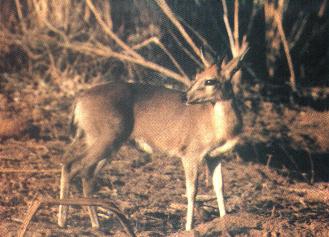
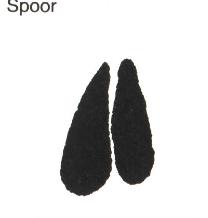
This little Duiker is about five times as large as it's cousin the Blue Duiker. They are found throughout the region but always in dense vegetation or forest areas, unlike the Blue Duiker that is only found along the coast. They are the largest Duiker species in Africa.
Only the rams have horns. The average length is about 11cm.
Their name came from their habit to dive ("duik" = dive in Afrikaans) in a series of zigzag jumps across the veldt when disturbed.
They normally eat leaves but would eat grass as well. They are loners but a ram would accompany a ewe when she is in heat.
| Common name | Scientific name | Average weight of adult male | Average length or shoulder height | Diet | How do they live | Feeding time | Gestation period | Number of young at birth |
| Duiker, blue | Cephalophus monticola | 4 kg | herbivorous browser | solitary | day/night | 4 months | single lamb |
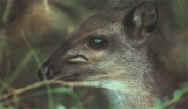
The Blue Duiker is undoubtedly the smallest of the South African antelope with both the males and females weighing about 4 kg. Both the males and females have horns and the use the gland underneath the eyes to mark their territory.
They have a very limited specialized habitat. They occur in the Cape between East London and George and in Natal From the Umfolozi river down the coast. Their numbers are dwindling because of the disappearing of their specialized habitat.
They use regular paths and this habit is exploited by poachers who caught many already in wire snares. They are seldom seen as they dart away with the slightest hint of danger.