|
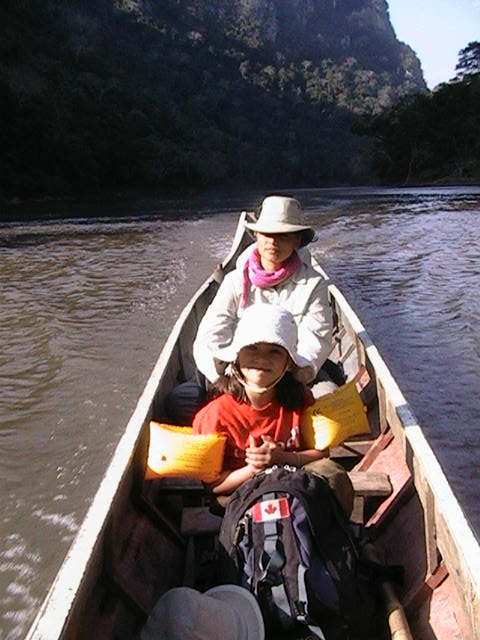
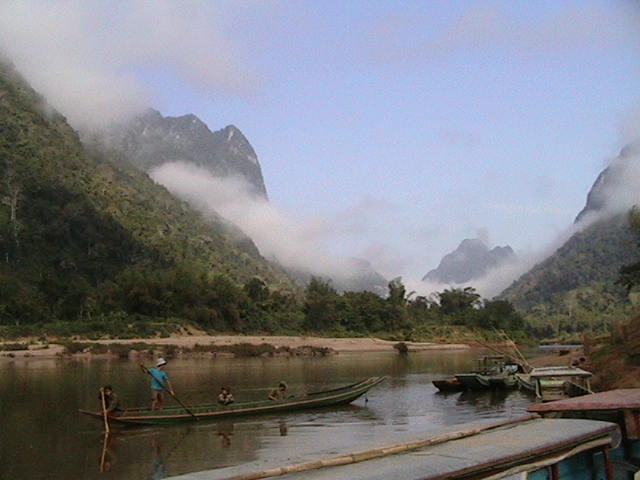
The next day we spent some time on a little beach lazing in the warm sand before chartering a small boat to take us to a couple of even more remote villages up-river. We were dropped off at a village called Ban Hatsa Pheui. As soon as we arrived I noticed a remarkable difference from the other villages we had visited. The people were not smiling much, and didn't seem as friendly and outgoing. Little or no sabaydee when we arrived from the children neither. We soon noticed that their appearance was also different, definitely a lot poorer; many had sores or rashes and looked in poor health. We also had the feeling of not being welcome, although the villagers were polite and accepted our presence there. We were about to leave when an old woman carrying asmall child came up to mommy and showed her the festering wounds on the child's bare dirty feet. She must have thought that as foreigners we may have been doctors, and asked for help. Unfortunately we were not carrying a first-aid kit so all we could offer was some bottled water,soap and some |
|
|
band-aids and tried to convey to the old lady how to wash and dress the wounds. A small crowd started gathering and before we knew it we had a number of other people showing us wounds and rashes as well. The folks felt at a loss, wanting to help but not knowing quite how to do it - (they made a mental note to carry a small first-aid kit in their daypacks). Their first thought was to give money to the village - but to whom and how could we be sure it would be used in the right way? With some probing, we discovered there were no doctors, nurses, or even a pharmacy, and definitely no one who spoke English. From the beginning of this trip my parents had an agenda to try and give a little when they can to the needy. Not by handouts to individuals, but instead through small donations to village schools, hospitals, orphanages or clinics. So far this had been possible in various small towns during our trip, but this time they knew we were standing in a village in dire need and yet they had no idea how to go about it! All they felt for sure was that we couldn't just walk away. After some discussion amongst themselves the idea of getting a doctor, to the village to treat the sick, began to take form.
The next few days were spent gathering more information on the village itself. They found that it was consisting of the Khamu minority group. These people are hill tribes and not used to living on a river, therefore unable to benefit from the fact they might have been relocated here. They also found that there were no medical visits to the village, meaning the people were not getting much assistance from the local (Lao) government. A shame since the village had enormous potential as a tourist village - similar to the one we were staying in.
In Luang Prabang, they (with me in tow) did some running around and were finally directed to the NGO Swiss Red Cross, where they got in contact with a French doctor working there. He very kindly assisted in putting us in contact with a local doctor and we met together an evening over drinks to set up some sort of deal. The doctor agreed to make personal visits to the village in the next few days (along with another doctor from the nearby town) taking the necessary equipment and medicines as well to treat the people there. The initial budget included 4 separate visits, consisting of 3 days each, doctor's fees, travel expenses, and medicines. |
|