Main Programs J.C Valencia Colombia
Main Programs J.C Valencia Colombia
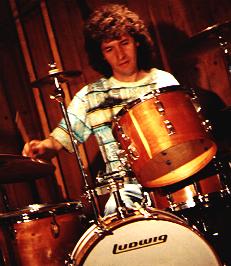
Leal has played in national television and in 1998 he published the book, "Como tocar en bateria ritmos internacionales y autoctonos", (How to play foreign and national rhythms on drums), the result of many years of effort. This book has been the basis of the clinics he has run in institutions from Colombia, Mexico and Australia.
Rafael Leal created the band Ayombe in the late nineties fusing colombian folk music with Jazz. He's about to launch his first CD.
Jazz was the music he heard at lunch time while growing up in Bogot� and he became particularly fascinated by it in the 1980's, participating in different groups and festivals. In the late 80's he began what became a long term association with guitarrist Gabriel Rondon and Berklee graduate pianist Oscar Acevedo.
In the early 90's, the best known colombian Jazz critic and historian, Carlos Florez Sierra invited William to participate in his television series, to explain different aspects of Jazz and Piano playing. This work led to more public exposure and combined with Maestre's increasing compositional maturity, ended up with the creation of his first band, "Magenta", in 1998. The band recorded its first CD in 1999 and has participated in several local festivals.
Joe Madrid had to learn music by working with professional players : he learned to play the piano and the bass and then began writing his first compositions and making arrangements. He loved to read and he knew of no boundaries between music genres. Before his 20th birthday, he was writing arrangements for what could be the most popular colombian band of the 20th century, the Lucho Bermudez Orchestra.
Then he decided to move and went to the Bahamas where he had the chance to meet the Beatles while they were shooting a film. Later, he moved to Miami, then to Mexico and Dallas, where he became a music teacher. He continued his productive wandering going to California where he made arrangements for the great orchestras of Woody Herman and Stan Kenton. Then he went to New York and worked with Aretha Franklin and the godfather of Soul, James Brown.
His career reached a peak by the mid 70's while arranging for different american bands and working with Mongo Santamaria. A live recording of a concert with Mongo at the Yankees stadium became a cult item for Latin Jazz fans around the world but Joe decided to go back to Colombia before the decade was over, perhaps tired of the non-stop travelling and the overwhelmingly long work journeys. He missed his family and thought it was important to help develop the local scene.
He made the music for many TV programs, arranged for local orchestras, recorded some Salsa LP's and became a private teacher. But he had to face the tough realities of an isolated, conservative and provincial country with limited interest in Art and music, scarce musical academies and a silly, elistist version of Jazz. Joe worked hard against the many obstacles, he suffered a lot but managed to induce some changes.
The unbelievable strides that Jazz managed to accomplish in Colombia in the 1990's : new academies, dozens of young players, new Jazz festivals and record labels owe a lot to the efforts of Joe Madrid.
Armando played popular colombian music with different local orchestras and developed a subtle and lyrical style of playing the piano, probably based on the music of Bill Evans and Dave Brubeck.
By the end of the 60's, Manrique formed his first Jazz trio, together with bassist Pepe Garc�a and drummer Plinio Cordoba, playing in a small bar in downtown Bogot�, called "Freddys". From there on, he continued to play Jazz with his own group that included some of the brightest musicians in Colombia : Gabriel Rond�n, Javier Aguilera, Edgar Bernal, Armando Escobar, Marta Patricia Yepes, Jhony McLean, Tony Pe�aloza and Jorge Kruguer.
Manrique managed to combine his amazing talent as a musician with a gift for promoting musicians and Jazz. He created legendary night clubs like "Hippocampus" and "Jazzbar" in Bogot� and "Manricuras" in Cali, leading to the increasing awareness of Jazz as a delicious and interesting option for young players and music fans alike.
Manrique defined the concept of the Jazz club in Colombia. During a period of 13 years, the best colombian musicians and singers from genres like Jazz, Latin jazz, Brasilian and Salsa participated in the "Jam sessions" that took place in his clubs. Having no formal musical training was not an obstacle for Manrique to be considered the best Jazz pianist of his generation in Colombia.
Armando Manrique died in Bogot� in 1983. Ungladly, there are scarce recordings of his work but his influence over the evolution of Jazz in the country has been huge.
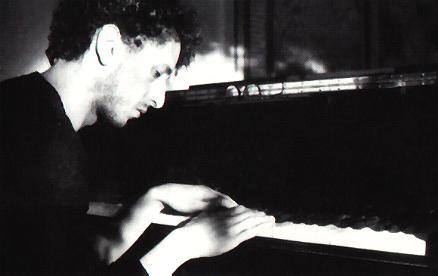
Listening to the music of colombian Jazz pianist H�ctor Martignon is rediscovering the eloquence that great Jazz players attain, revealing their instrument's capacity to recall a glorious past that's still alive and that leads to a bright future. On records like "Portrait in Black and White" (1996)you can hear echoes of Antonio Carlos Jobim (The CD title comes from a Jobim composition, Retrato em Branco e Preto), the influence of Chet Baker, the sound of traditional colombian folk music and what Martignon describes as "a good example of how traditional Boleros can well be converted into beautiful Jazz ballads".
Hector communicates with the public by way of his deep knowledge of the rich legacy of colombian music, a wide set of rhythms and melodies still developing and growing, while other national folk musics decay elsewhere.
Hector Martignon studied in Germany at Freiburg's HochSchule f�r Musik with the great composer Karl Heinz Stockhausen. He lived for many years in Europe but decided to move to the U.S in 1990 where he's played with Jazz greats like Gato Barbieri, Don Byron, Steve Turre and Ray Barreto, among others, but it's maybe with his long time friends and collaborators : bassist Jairo Moreno and percusionist Satoshi Takeishi, that his music gets most unique.
Hector Martignon's style has roots in key musicians of modern Jazz like Oscar Peterson, Bill Evans and the wizard of be-bop, Thelonious Monk.
His talent looks amazing in records like "Portrait in Black and White" but also on his live shows, playing original compositions like "She said she was from Sarajevo", a song about a young woman he met in New York who had lost half her family "because of the stupidity of humanity". The talent of Martignon is more than a display of technique and showmanship, he's an expressive musician, expert in the art of touching deeply into the hearts of his listeners.
Edy Martinez was born in the south of Colombia, in a small city called Pasto. He didnt have any formal training in music. Edy left Colombia in 1960, moving initially to the Netherland Antilles and then to New Orleans, Miami and New York.
He remained for 33 years outside the country, working as keyboardist and arranger for Tito Puente, Ray Baretto, Mongo Santamar�a, Ron Carter, Bobby Watson, Gato Barbieri and Paquito d'Rivera.
Edy came back briefly to Colombia with the idea of promoting the development of Jazz by way of concerts and recordings with young musicians but he found many obstacles. He told a local newspaper (El Espectador) : "There's no respect for our career. That's the problem. The musicians have to become politicians, engineers, scientists or astronauts [to get some respect]... To record a CD of Latin Jazz in the U.S is very difficult but to do it in Colombia is nearly impossible". Edy Martinez managed to achieve it in 1995 after a lot of hard work. He recorded the first CD of Latin Jazz totally produced in Colombia, "Privilegio", featuring a young group of musicians from Venezuela, Cuba and Colombia. That CD has become the most successful Jazz recording ever in Colombia with more than 5.000 copies sold in four years. Edy told El Espectador: "We just want people to take our efforts into consideration, the strength with which our music is born, our idea of introducing culture and harmony in our lives". Why has Edy insisted so much in spite of the many obstacles he has found ? "I'm a Jazz musician because I'm a modern musician and Jazz is the most contemporary sound today...All my life I've done what I feel in my soul with the raw materials that I've had on hand".
Monsalve�s music reflects his inclination towards rediscovering the rich legacy of Colombian folk music combining it with sounds and rhythms from other cultures. His first CD as a leader, "Bunde nebuloso", recorded in New York in 2001 with jewish saxophonist Anat Cohen, pianist Jason Lindner and drummer Jeff Ballard presents a mixture of colombian folk music, indian ragas and talas, modern Jazz improvisation and contemporary music.
Currently, Monsalve works as a teacher at the Universidad Javeriana and Universidad de los Andes Conservatories. He directs the jazz ensembles of both institutions. In 1999 he created the group Curupira, formed by young colombian talents playing typical instruments like tamboras, gaitas, tambor alegre, llamador and maracas. Together they play an intense music that fuses local folklore with rock. Curupira has released 2 records.
Moreno has played with symphonic orchestras in north america but he has also been interested in Jazz playing in New York with great musician like Ray Barretto, Tito Puente, Arturo Sandoval and Paquito D'Rivera.
In the nineties he became THE bassist in all the recordings of saxophonist Antonio Arnedo, helping him in the arrangements of the CD "Travesia" and has also recorded with pianist Hector Martignon.
Pla is widely seen as the godfather of latin jazz and salsa in the UK, helping to found the first British salsa group, Valdez, soon after he arrived. His busy career in Colombia and New York was followed in London by touring and recording with artists as diverse as Boney M, Frank Chickens and Kate Bush. He recently toured China with Trevor Watts' Moire Music.
Pla's resume includes work with New York-based salsa band Orquestra La Tradicion, and tours with percussionist Carlos "Patato" Valdes and Fania All Stars' vocalist Adalberto Santiago.
He began his musical education at age 7, playing clarinet and when he was 15 he was able to play with legends like Tito Puente and Johnny Pacheco. "Jay" Rodr�guez, as he's known in the U.S, was later trained by Francisco d'Rivera, the father of Paquito and still in his 30's, is considered as a great musician, Jay has played or recorded with the likes of Dizzy Gillespie, Cecil Taylor, Charles Mingus and Ray Barretto. He has been a member of the New York based Jazz-Funk group Groove Collective.
All of them are young musicians coming from some of the best academies in the capital of Colombia where they have participated in many Jazz festivals and recorded their first CD in January of 2.000.
Absorbing afroamerican rhythms as well as Jazz and Cuban son, but especially picking up influences from caribbean and andean folk music, "La Moderna" has created an attractive, swinging and mature fusion sound. The band has recovered tunes made famous in Colombia by the most popular national group in the 20th century, the Lucho Bermudez Orchestra, but they have also expressed interest in other local styles like bambuco, pasillo, chand�, mapal� and Cumbia.
Currently, Rafael Rodriguez is in the U.S studying music at the Univeristy of Indiana.
He studied Chemical engineering but music ended up by seducing him, especially Jazz and Bossa Nova and in 1965 he travelled to the U.S where he became a professional musician. He started by playing folk, Salsa and Jazz fusion, touring the american southwest.
Rond�n came back to Colombia in the early 70�s, joining Armando Manrique's trio as guitarrist and singer. He participated in many television programs while at the same time studying arrangements and composition. In 1976, he created his own group, the band "Caf�", mixing brasilian music with pop, Salsa and Jazz. Around that time he began to create jingles for local TV. After "Caf�", he formed the groups "Madera", "Bitches brew" and "Vox Populi".
Gabriel Rond�n has worked as studio musician or arranger for most of the top colombian musicians of all genres. With them, he was able to travel around most of Latin America, but at the same time he has worked with his Jazz groups, playing in all the local festivals. He has been the private teacher of some of the brightest young musicians in colombian Jazz and recently joined the instructors staff of Universidad Javeriana's music department.
In his long and interesting career that covers more than 3 decades, Gabriel Rond�n has played or recorded with great musicians like Elizabeth Waldo, Mart�n Fierro, Lalo Schifrin, Joe Madrid, Francisco Zumaqu�, Wally Keiderling, Carlos Averhoff and Eugene Euman.
"No matter what style I ever played in," he recalls, "I always came back to the Latin grooves. Latin music crosses so many boundaries, and its ability to seduce at the same time as it celebrates life and my cultural background has always amazed me.
It's got a strong natural appeal to me. "
Quintero was particularly inspired by Spanish flavored masters like Cal Tjader, Eddie Palmieri, Tito Puente, Antonio Carlos Jobim and Carlos Santana. Yet it was Chick Corea whom he felt "brought out the excitement of bridging Latin music with
American jazz, " inspiring the young guitarist to pursue a blend of j azz, Latin and rock as he launched his career.
Attending the Berklee College of Music in the early 80s, he was encouraged to explore more improvisational styles."Coming from rock guitar, which most musicians can pretty much play by ear, it was really challenging to learn the old jazz standards and start literally from the bottom up," he says.Upon graduating in 1984, Quintero studied composition at Boston's New England Conservatory with George Russell before moving to Los Angeles to embark on his career. Once out West, he found himself part of the city's studio scene.
"Even though I had the privilege to do studio work," he recalls, "I realized my heart lay in putting together and creating a name for myself as an artist." He assembled some of his also since relocated Boston schoolmates and began gigging around L.A. and Orange County. Opening for Gato Barbieri, long an influence, convinced Quintero that he was making all the right career moves.
He became a staple of NAC radio with tracks from his first two albums; "Juan Carlos Quintero" in 1990 and "Through the Winds" in 1992/1993--on Nova Records. The follow up in 1997/1998 with,
"The Way Home" on Escapade Music Inc.
For a time, he worked in A and produced projects for the label, then moved on to work in Artist Relations for Latin Percussion Music Group when Nova folded. His position at LPMG, a noted manufacturer of percussion instruments, involved working as a liaison with the company's most notable endorsers, including
Latin jazz legends Tito Puente and Irakere and members of Santana.All the while, Quintero kept performing with his new band, honing a refined musical style which reaches fulfillment on "The Way Home". "The title is a reference to my coming back to a lot of the instincts which inspired me to play music in the first place," he says. "It's close to the heart of who I am. It's a pivotal milestone in my career, letting the world know I'm back in the groove.
German traveled to the U.S in the late eighties studying at the Miami-Dade Community College and playing with different bands of Florida. Apart from playing drums, Sandoval has also learned to play percussion and instruments from India with masters from that country.
He has played the drums in the bands of Longineu Parsons, Cheo
Feliciano, Tilmann Dehnhard, Antonio Arnedo, Eddy Martinez, Oscar Acevedo, Gabriel Rond�n,
William Maestre, Gilberto "Tico"Arnedo and Otto Ketting, among others and has been a soloist with Colombia's Symphonic Orchestra, the National Band, The Francisco Cristancho orchestra and the mexican group MITOTE.
Sandoval has composed jingles for radio and television and has been a teacher at
Centro de Orientaci�n Musical Francisco Cristancho and at Universidad Javeriana de Bogot�. He co-wrote a book on Drum technique and was the coordinator of the Festival Internacional de Jazz al Parque.
He recently recorded a CD in Europe with portuguise singer
Nuno Da C�mara and his brother Orlando Sandoval, and continues to play with his electric trio La Barahunda trying to push forward the evolution of colombian music.
Later, tarquino traveled to Spain where he became a member of the group "COLUMNA de FUEGO". It was in Madrid that he became known as "Chevere". He was a very much sought after musician and joined the band DOLORES, recording the album "La Puerta Abierta" and then "La Danza del Fuego" with flamenco master Paco de Lucia.
Tarquino began playing Jazz fusion and had the chane to play with the legendary bassist Charles Mingus, at the Festival Internacional de Jazz de San Sebasti�n and with the band Weather Report. Then he moved to Germany, to the city of Kassel, where he works with local musicians and is a drums & percussion teacher. He created the group "CLUB of ROAM" with Norbert M�ller and Ralf Burczyk, recording 5 CD's and currently he's working with the bands "GEROLD ADLER FUSION" and "MEZCLA PURA" with argentinian Diego Jascalevich.
Uribe studied music with italian master Andres Rosa and later joined Academia Cristancho and the conservatory of Universidad Nacional de Colombia. Then he traveled to the U.S and studied piano, composition and arrangenments at the University of Miami.
In the nineties, Ricardo Uribe became a teacher at Universidad Javeriana de Bogota and played with colombian musicians like Antonio Arnedo and Mario Barracaldo in venues like the Festival de Jazz del Teatro Libre.
He returned to Cali in 1980 and together with Kike Santander, Alberto Ramirez and Satoshi Takeishi (an extraordinary japanese drummer that also attended Berklee and came to Colombia invited by Zambrano) formed a Jazz Fusion group, that played compositions by Chick Corea, Weather Report and Herbie Hanckock. This group was very succesful in the night clubs of Cali and Bogot�.
In 1983, Juan Vicente moved to Bogot�, where he replaced Armando Manrique as pianist at the Jazz Bar. Later on he formed another fusion group with keyboardist Bernardo Ossa, saxophonist To�o Arnedo, bassist Lisandro Zapata, guitarrist Alexis Restrepo, conguero Gustavo Gallo and drummer Satoshi Takeishi.
Juan Vicente Zambrano participated in the recording of one of the most important Jazz albums in Colombian history, "Macumbia" by Francisco Zumaqu�. In 1986, Zambrano moved to the U.S to study at the University of Miami.
He's currently working with portorican flutist Nestor Torres, plays Latin Jazz and belongs to the production team of Emilio Estefan.
The band was formed by guitarrists Santiago Zuluaga and Carlos Posada, bassist Sergio Gomez and percussionists Deborah Miranda and Juan Manuel Vergara.
Zoe is open to the sounds of World music and to creative improvisation. They use instruments like Oud, berimbau, "cajon" and a regional type of guitar called "tiple". Zoe recorded their fist CD in the year 2000.
 William Maestre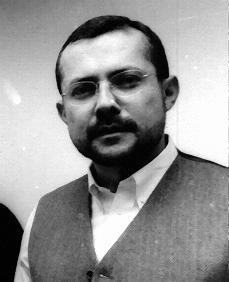
Joe Madrid 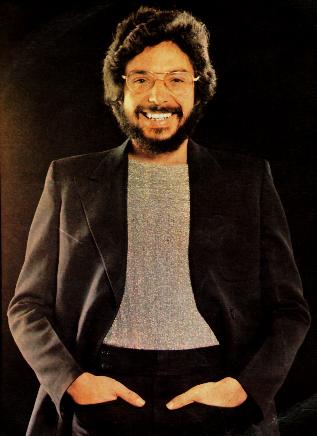
Armando Manrique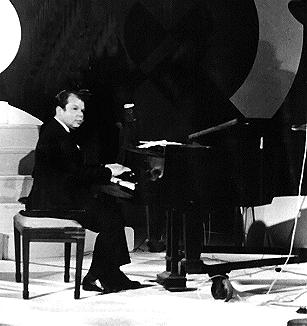 Hector Martignon
  Edy Martinez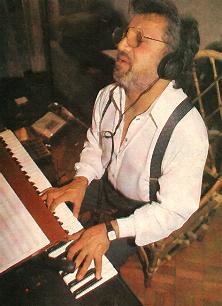
Juan Sebastian Monsalve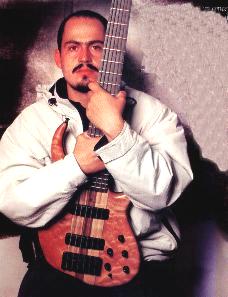
Jairo Moreno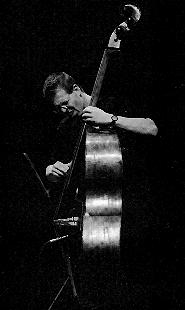
Juan Carlos Padilla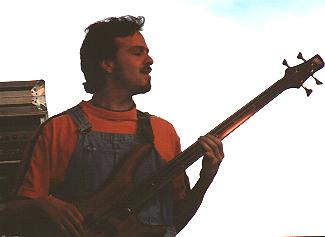
Roberto Pla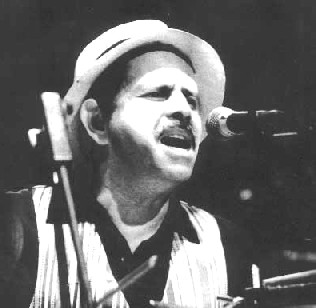
Alfonso Robledo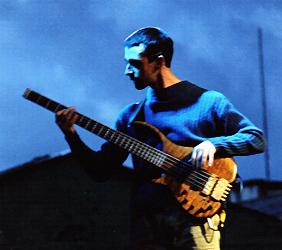
Jay Rodr�guez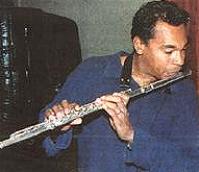
Rafael Rodriguez
Gabriel Rond�n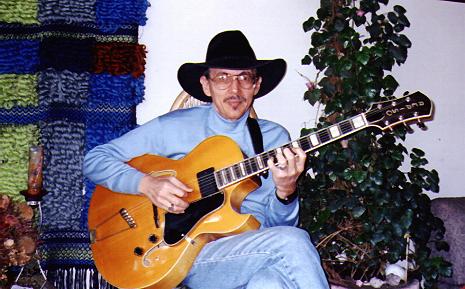
Juan Carlos Quintero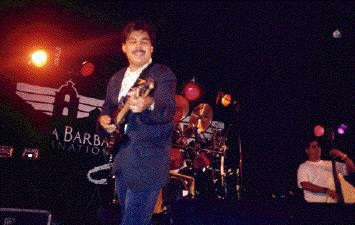
Leonardo Saavedra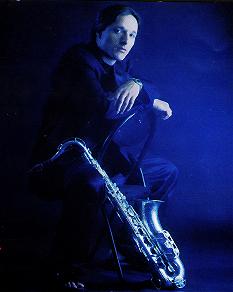
German Sandoval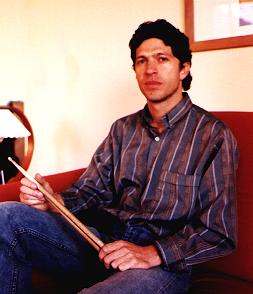
Rafael Serrano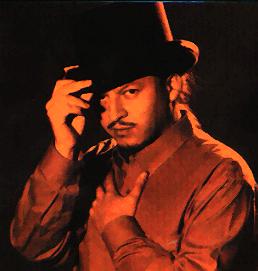
Alvaro Tarquino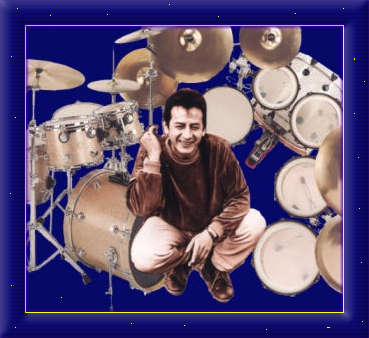
Ricardo Uribe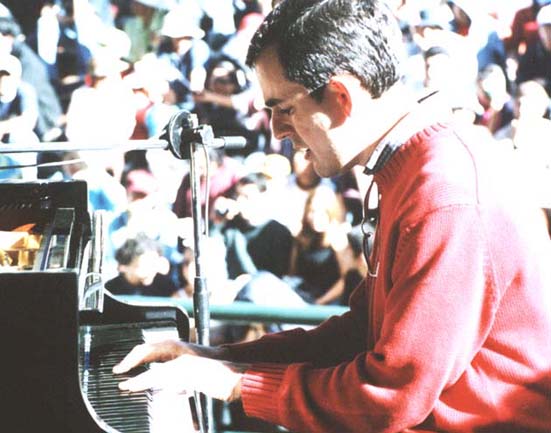
Juan Vicente Zambrano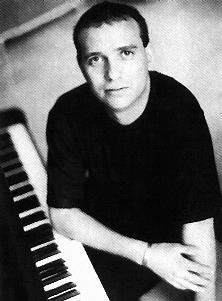
Zoe Quintet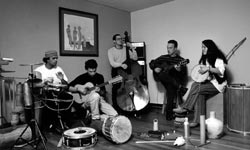
Francisco Zumaque