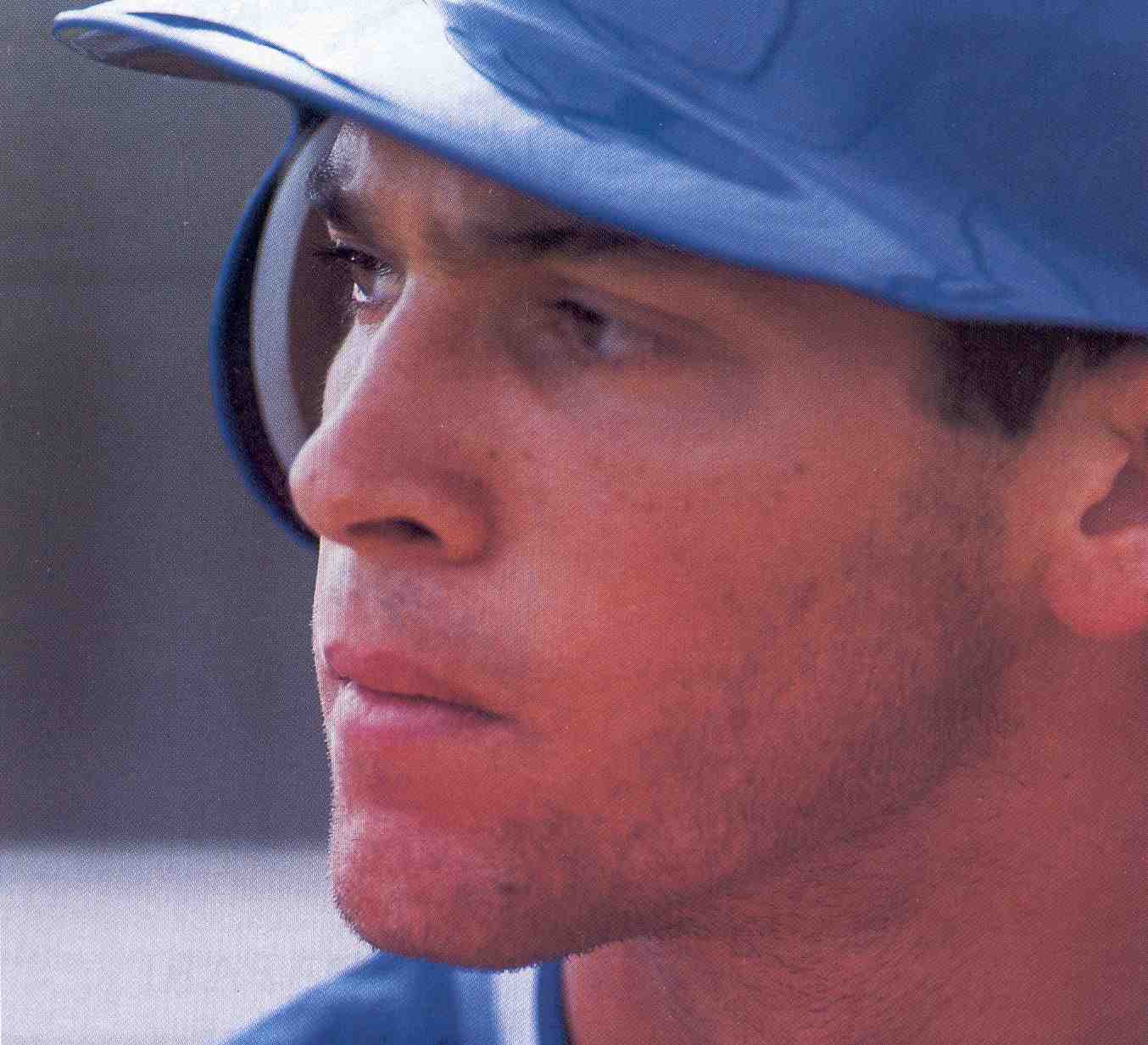
When a weekly baseball mag had disparaging remarks about Shawn Green, Toronto officials hit the roof. Shawn just hit. And hit
Syracuse, N.Y. – The guy who had the most reaosn to be angry was probably the least upset.
When Baseball Weekly placed outfielder Shawn
Green in the “Prospects Are Fading” category in it’s off-season look at the
Toronto Blue Jays’ minor leaguers, several members of the Toronto organization
hit the roof. Green, Toronto’s No. 1 selection in the June 1991 amateur
draft, is hardly a has-been. He started this season with the Triple-A
Syracuse Chiefs and will probably finish it with the Blue Jays- and he won’t
turn 22 until November 10.
“That was unfair,” says Gord Ash, Toronto’s assistant
general manager. “Quite frankly, they don’t know what they’re talking
about.”
The article also rankled Green’s parents, Ira
and Judy Green, who say they read and clip everything that’s written about
Shawn and have two bulging scrapbooks to prove it. But they say it
didn’t bother Shawn because he hasn’t read anything written about him since
high school.
Green says he was aware of the Baseball Weekly
appraisal, but he ignored it because it's “one person’s opinion.” Some
players would use it as motivation, but Green prefers to forget it.
“That’s negative motivation, trying to prove
people wrong,” Green says. “That’s not what I’m trying to do.
I’m trying to set positive goals. If you’re trying to prove people wrong,
you put too much pressure on yourself.”
Through the first seven weeks of the season, Green
let his bat answer his critics. He was among the International League
leaders in batting average and hits, and he was among the Syracuse leaders
in runs, doubles, RBIs and stolen bases.
A chat with outfielder Scott Pose, his teammate
in the Arizona Fall League last fall, made Green determined to start fast
this season. They were talking about the cold and rainy spring weather
in Syracuse, and Pose told Green that he couldn’t throw away the first two
months of the season just because of the weather.
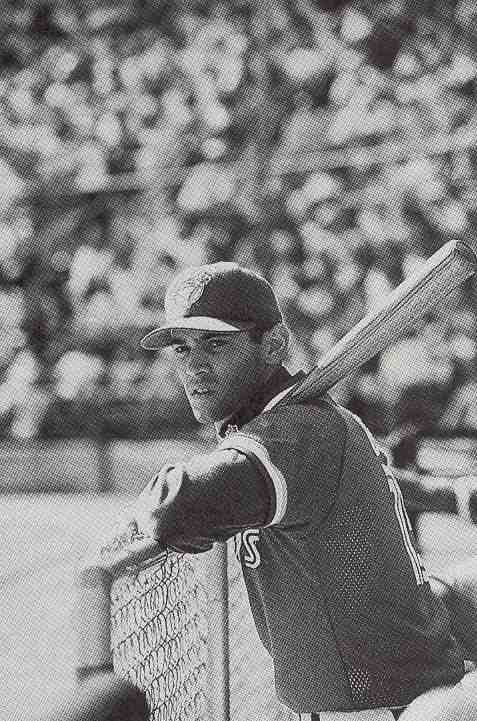
“I always heard people
complain about how cold it is the first couple of months in Syracuse and
the whole league, really,” Green says. “Scott Pose told me that’s the
time you have to get those hits. Anyone can perform when its 85 degrees
out and sunny. I really took that to heart.”
Green and Chiefs infielder Eddie Zosky
were the team’s most consistent players early in the season. Green
had at least one hit in 32 of his first 40 games, and he had hitting streaks
of 13, nine and five (twice).
Green, a left-handed hitter with a swing
that has been compared to John Olerud’s, was at his best in day games, hitting
.396 in the Chief’s first 13 games under the sun.
“This is the best I’ve felt up there so far,”
Green says. “In the past if I felt uncomfortable at the plate, it would
last maybe a week or so. This year, maybe it lasts a day or two or
three at the most.”
It seems silly now, but the Baseball Weekly rap
on Green was that he had no power. But in 783 professional at-bats before
this season, Green had five home runs- not an encouraging number from a player
who plays a power position (right field).
But of his first 55 hits this year, Green had 12 doubles,
one triple and three home runs. Still not Griffey-like, but a sign
of improvement.
“I tell myself that the home runs will start to come
because after the doubles, the next thing is home runs,” Green says.
“If I can keep driving the ball, then the home runs will take care of themselves.”
Like one of his idols, New York Yankees first baseman
Don Mattingly, Green has the potential to develop from a gangly contact hitter
into a power hitter. Mattingly hit a combined 12 home runs in his first
two years as a professional, and he didn’t hit more than 10 home runs in
a season until 1984, when he clubbed 23 for the Yankees in his sixth pro
season.
“Shawn was never developed to be a home run hitter,”
Ira Green says. “He was developed to be a contact hitter. In high
school if he hit a home run, it was a line drive.”
To increase power, Green must do two things: Continue
to fill out his 6-foot-4, 190-pound frame, and learn to attack the ball instead
of just making contact. In spring training, Green worked with roving
hitting instructor Bill Buckner on getting a slight lift in his swing.
“That’s something I never had until this spring,” Green says.
“You can’t hit home runs until you get the ball in the air.”
Green, the 16th player selected overall in 1991, is one of
Toronto’s famous draft gambles. After starring at Tustin High School
in Tustin, California (he tied the California Interscholastic Federation hit
record with 147 in his senior year), Green received a scholarship to play
at Stanford University.
“He was really excited about being a part of the Stanford
program,” Ira Green says. “He started working out with the team and
attending orientation programs. Up until the last day he was going back
and fourth.”
Hours before he attended his first class, Green agreed
to a contract worth $750,000, at that time the second largest signing bonus
in baseball history. Had Green not signed before attending class, the
Blue Jays would have lost his rights.
“When I look back, it doesn’t seem to be as hard a
decision as it was at the time,” Green says.
Green signed with Toronto because the Blue
Jays allowed him to continue his education at Stanford in the fall and winter
from 1991-93 and has more than half his credits toward a psychology degree.
Green’s parents were pleased with the agreement because it allowed him to
concentrate on one thing at a time- school or baseball. And Green has
promised his parents he’ll finish his education.
“When he makes a commitment, he sticks to it,” Judy
Green says. “That’s one of his strongest points, he is strong mentally.
He focuses on what he has to do and does it. That will help him in
baseball and life.”
From a baseball standpoint, Ira Green says if Shawn
had played at Stanford, the competition would have remained the same.
But by playing professionally, Green has climbed from Class-A to Triple-A
in three years.
“This year if he came out of college, it’s doubtful
he could play in Triple-A,” says Ira Green, a former semi-professional baseball
player in the Chicago area. “Now he’s so far ahead experience-wise.”
But Green has faced many obstacles along the way.
Attending school robbed Green of valuable playing time in the instructional
league and winter ball.
He made his pro debut in 1992 with Dunedin of the Class-A
Florida State League, which is considered the most difficult of the Class-A
leagues. And then last season at Double-A Knoxville, Green was just
starting to feel comfortable at the plate when he broke his right thumb diving
for a ball.
“We started him at Dunedin, which was probably over
his head, and he handled that well,” Ash says. “Then he moved to Double-A
and he handled that well. I don’t see any reason why he can’t meet
the challenge (of Triple-A).”
Green skipped school last fall and played in the Arizona
Fall League for top Double-A and Triple-A prospects. He .272 with no
home runs, 16 RBIs and 11 stolen bases in 158 at-bats and was named by AFL
managers as the league’s fourth-best prospect.
“I’d like to have his future,” says Bill Evers, who
managed Green in the AFL. “Maybe I’ll ask to be his agent.”
Here’s a wild guess: Evers doesn’t work for Baseball
Weekley.
Matt Michael

|