|
JAMES K. BAXTER'S OTAGO WORLDS Lawrence Jones
|
Page 31
|

|
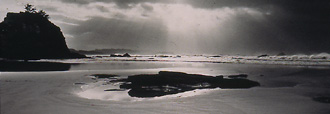
But Gea is not the ultimate reality in Baxter's symbolic Brighton world. Rather it is the sea. If he finds peace in contact with the Earth Mother, a return to the womb in her caves, he still finally turns to the ocean, where . . . the sea aisles burn cold In fires of no return And maned breakers praise The death hour of the sun. Its meaning is paradoxical: as symbol of death and oblivion; as symbol of regeneration. In the semi-autobiographical 'The Prisoner Describes Himself', the speaker remembers how powerful was the formative presence of the sea when he was young on the Kuri Bush farm: I began my life within sight of the sea. Looking out through the gap in the brushwood fence I would see the blue-grey waves where currents moved like great serpents, and at night the smell of the sea was in my nostrils when I fell asleep. . . . All night the sea moved in my blood. . . . The sea carried me always on its breast like a floating bundle of kelp. |
 |
 |