|
JAMES K. BAXTER'S OTAGO WORLDS Lawrence Jones
|
Page 19
|

|
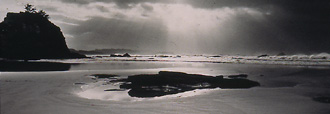
In his own poetry, the first of these meanings is associated with the Bay at Brighton, where the Brighton River flows into the sea. The image of his Gaelic-speaking ancestors arriving at the place and crossing the river becomes the central image in a tribal myth, a myth that incorporates the third, the historical Fall, the Fall into modern rational and technological secularism, but a myth that also looks back to the dream of building a Pastoral Paradise and a Just City. In the uncollected 'Ancestors', the poet has a vision of those first settlers, 'heirs of hopes', as they cross the river, but realises that they are all 'hunched in their last cradles' . . . leaving our plight To be fed only by shreds of windy light, Fibres of dark in the river's rope and fable. The image is picked up in the prose of 'Conversation with an Ancestor', where Baxter describes the image of the crossing, sees the dawn sky as intimating 'a new thing, a radical loss and a radical beginning', sees the settlers, as Scott Fitzgerald's Nick Carraway imaginatively saw the Dutch sailors before Long Island in The Great Gatsby, and eloquently expounds their significance for him: . . . and the earth lay before them, for that one moment of history, as a primitive and sacred Bride, unentered and unexploited. Those people, whose bones are in our cemeteries, are the only tribe I know of; and though they were scattered and lost, their unfulfilled intention of charity, peace, and a survival that is more than self-preservation, burns like radium in the cells of my body; and perhaps a fragment of their intention is fulfilled in me, because of my works of art, the poems that are a permanent sign of contradiction in a world where the pound notes and lens of the the analytical Western mind are the only things held sacred. I stand then as a tribesman left over from the dissolution of the tribes. |
 |
 |