|
JAMES K. BAXTER'S OTAGO WORLDS Lawrence Jones
|
Page 17
|

|
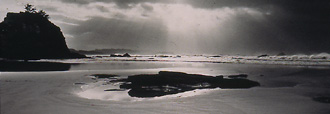
The middle-aged poet watches the winter river carrying 'a freight of floating pine cones' as it runs out to the Bay, remembers his unhappy adolescent sexual yearnings, and thinks of the objects of his resentful lust as they now 'sag on porches, in back rooms, flabby as I am'. He remembers following the river back to its source 'among broom bushes / In a gully above the dam', but all he found there was a deserted house and a tree with 'one bitter shrunken apple'. The experience taught him 'nothing but how to die'. Where the river runs out between two rocks into the cattle flats with the rotting weed and logs in the swamp like the bones of giants, he and his 'crooked shadow / Bring with us briefly the colour of identity and death'. He cannot return to 'the rock bend' up river 'past the cattle ground' as it was when he was a boy, when he could glide in his canoe over 'a hole going down to the world's centre, / Waiting to swallow the sun' or could drop his line into 'the bog-black water' while sitting on 'a branch of the oldest tree'. When he was a youth 'He'd swum in that cavern, down to the bottom' to discover a 'riddle' which the man now answers with death. The adult thinks that if he were there now he would be 'the invisible drowned man' beneath, 'too tightly held / By the weed's arms to rise / Again to the dazzle of the day '. If the adult returns, the river is no longer like'a smaller Amazon', but rather now The river is foul weed and sludge narrower than I had supposed, fed by
a thousand drains.
|
 |
 |