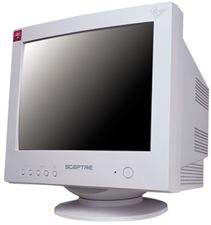
 | CRT (cathode ray tube) monitors
These
monitors employ CRT technology, which was used most commonly in the
manufacturing of television screens. With these monitors, a stream of
intense high energy electrons is used to form images on a fluorescent
screen. A cathode ray tube is basically a vacuum tube containing an
electron gun at one end and a fluorescent screen at another end. |
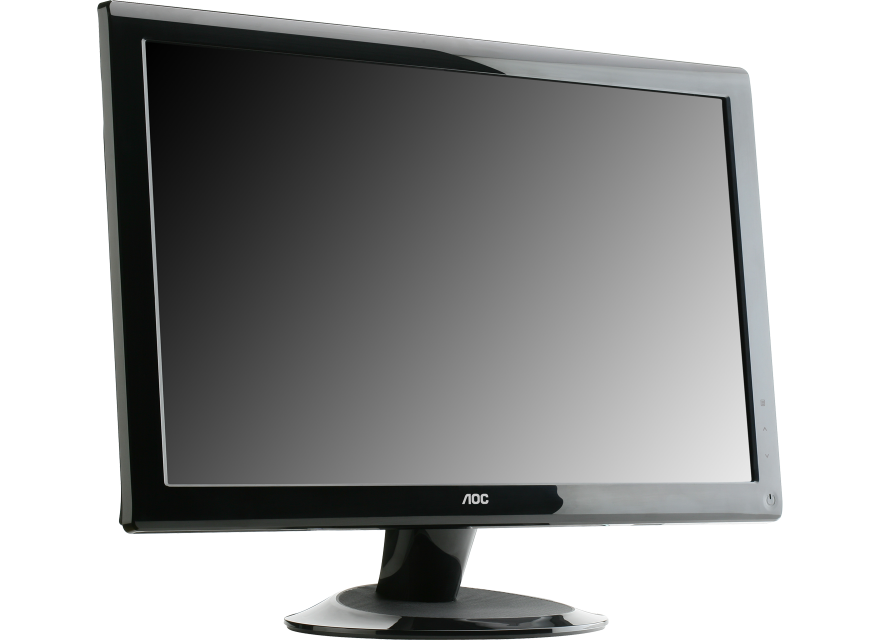 | LCD (liquid crystal display) monitors
The
LCD monitor incorporates one of the most advanced technologies
available today. Typically, it consists of a layer of color or
monochrome pixels arranged schematically between a couple of
transparent electrodes and two polarizing filters. Optical effect is
made possible by polarizing the light in varied amounts and making it
pass through the liquid crystal layer. The two types of LCD technology
available are the active matrix of TFT and a passive matrix technology.
TFT generates better picture quality and is more secure and reliable.
Passive matrix, on the other hand, has a slow response time and is
slowly becoming outdated. |
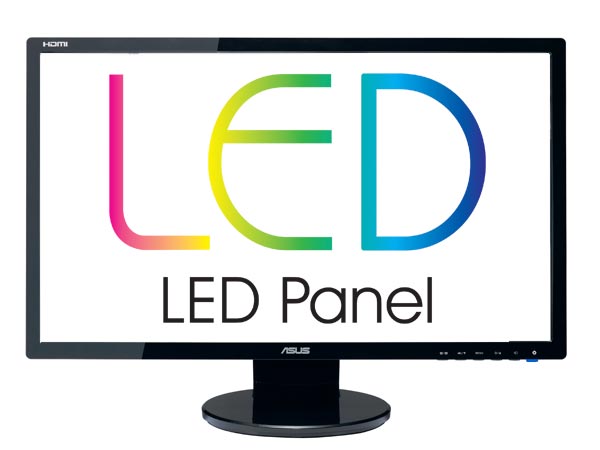 | LED (light-emitting diodes) monitors
LED
monitors are the latest types of monitors on the market today. These
are flat panel, or slightly curved displays which make use of
light-emitting diodes for back-lighting, instead of cold cathode
fluorescent (CCFL) back-lighting used in LCDs. LED monitors are said to
use much lesser power than CRT and LCD and are considered far more
environmentally friendly. |