| Tauhid- Oneness of Allah |
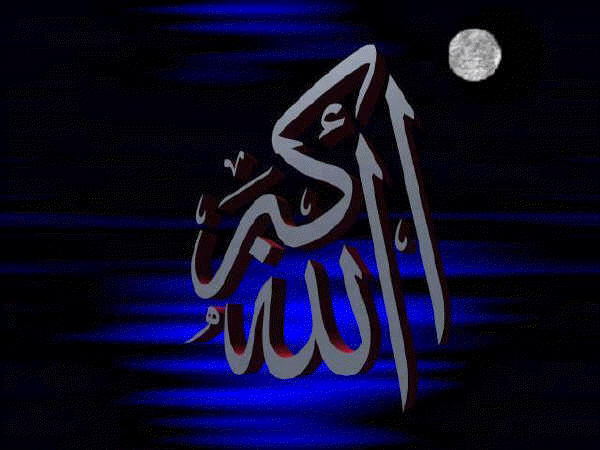 |
| Tauhid- Oneness of Allah |
|
The first of the declaration that there is no god but Allah attests not only to the Oneness and Uniqueness of Allah, but also signifies the Oneness of Lordship, the Sovereignty and the Authority in the universe and in this world. As there is no other Creator and Sustainer of the universe, there can likewise be no other Ruler, Law-giver and Supreme Authority for mankind. Allah is the Lord of the creation; He creates what He pleases giving each of his creatures the nature, role and function which He desires for it; in this He is accountable to no one and all things are under His absolute control
The primary emphasis of the Quran is upon the doctrine of Tauhid. There are numerous verses in the Quran which highlight the concept of Tauhid which is the cardinal principle of Islam. In the very opening chapter of the Holy Quran, Surah Fatihah, it is said:
"You alone do we worship and You alone do we ask for help."
Similarly, in chapter 4, verse 36, it is said:
"Worship Allah and join no partner with Him."
The most concise expression of this principle is to be found in Surah Ikhlas.
"Say, He is Allah, the One. The eternally besought by all. He begetteth not, nor was He begotten. and there is no one comparable to Him." (Translated by Marmaduke Pickthall).
True unity of Allah means that Allah is:
"Don't take two gods. He is surely One God. " (16:54)
All the messengers of Allah have conveyed the message of his unity:
"O my people", said they, "Worship Allah. You have no other object worthy of worship save Him ." (7:59,73,85).
The role pf the Prophet of Islam was to bring out the acceptance of this principle of religion by entire mankind. The Quran says:
"Not an apostle did We send before you (Prophet Muhammad (PBUH)) without this revelation from Us to him that there is no being worthy of worship except Me. Therefore, worship and serve Me." (21:25)
The doctrine of Tauhid confers dignity on man who is otherwise a slave to every manifestation of power. Only Allah becomes his Refuge, Security and Stability.
Associating partners with Allah is called Shirk. Shirk is not only the worship of idols, but also offering prayers and supplications to anyone. dead or living, believing that they hold the same attributes in a lesser degree than Him, Thus, the belief that Allah is not sovereign or independent and sole dispenser of affairs of the world and that other deities can intercede with Him and that any attempt to implore any other being besides Allah for the grant of any wishes of the believer or to answer his prayers is Shirk.
The Quran considers Shirk as an unpardonable sin. It says :
"Allah forgives not that partners should be associated with him; but he forgives anything else to whom He pleases; to set up partners with Allah is to deviate a sin most heinous indeed." (4:48)
Man has been created as lord of creation and everything in nature has been placed under is control. By worshipping other beings besides Allah man debases himself, as the Quran says:
"What! Shall I seek for you as god other than Allah, while He has given you superiority over all creation." (7:14)
"To hold partners with Allah is just like anyone falling from the heaven and falling into pieces." (Surah Araf :194)
The Holy Prophet (PBUH) is reported to have said:
"Shirk is the greatest of all sins."
Meaning and Importance of Prophet hood
The next basic requirement in Islam is faith and belief in all the prophets of Allah. This belief means that a Muslim believes tat the prophets are devoted servants of Allah, selected and appointed by him, to convey His commands to mankind without any addition or deduction. Prophet hood is thus a gift of Allah and only He can bestow this gift on whom He wishes.
Allah deputed prophets in different periods of time to communicate His guidance to human beings. They were raised from the nations to whom they were sent as messengers. They preached in the language of their nations, as the Quran says:
"And We never sent a messenger save with the language of his folks that he might make( the message) clear for them. " (14:4)
"And for every people there is (sent) a guide." (13:7)
According to the Quran, all prophets sent by Allah were men, had human bodies and were mortal. At the same time, the Quran tells us that the prophets were Allah's chosen and elected. They all received revelation from Allah and were sent for the guidance of their people. The holy Quran insists that the prophets were raised to be obeyed and followed; they called their followers to profess and follow the Divine Code of rules to regulate their life.
The Quran says:
"We sent no messenger save that he should be obeyed by Allah's leave." (4:64)
"Say, (O Muhammad! ), if you love Allah, follow me; Allah will love you and forgive you your sins." (3:31)
Many prophets came to this world. The last in the line of prophets is the Holy Prophet Muhammad (PBUH) who is termed as "the seal of the prophets."
The Quran says that the appearance of the Holy Prophet (PBUH) was foretold by previous prophets. His distinguishing feature was that he confirmed the truth of all the prophets that preceded him. he not only conveyed the message revealed to him, but also explained and acted upon it himself and after demonstration, urged the people to follow it for their own benefit.
The Prophet hood of Prophet Muhammad (PBUH) is distinguished in many ways:
"And We have sent thee (O Muhammad ) save as a bringer of good tidings and a Warner to all mankind. " (34:28)
And the Holy Prophet (PBUH) also confirmed this:
"Every prophet who preceded me was sent especially to his own people but I have been sent as a Prophet for all mankind."
Jesus Christ had said:
"When the spirit of Truth comes he will guide you to all truths."
"But he is the messenger of Allah and the last of the prophets." (33:40)
The Holy Prophet (PBUH) said:
"With me the edifice of prophet hood has been completed and with me the chain of prophet hood has come to an end."
"No doubt, no prophet will come after me."
"This day I have perfected your religion for you and completed my favor upon you, and have chosen Islam as religion for you." (5:3)
It was through Prophet Muhammad (PBUH) that a perfect law was given to suit the requirements of all ages and for all countries and this law i.e., the Holy Quran was guarded against all corruptions.
The life of the Holy Prophet (PBUH) is an explanation of the Holy Quran as confirmed by his wife Hazrat Aisha:
"His morals are the Quran. "
It means that while the Holy Quran was the command, The Prophet's life was an example of the teachings of the Quran.
The Quran compares his personality to the sun, while the previous prophets were like lamps. Just as the light of the sun cannot be substituted by any other light and is universal, similarly, after the advent of the Holy Prophet (PBUH), no necessity is felt of any other prophet to follow him.