
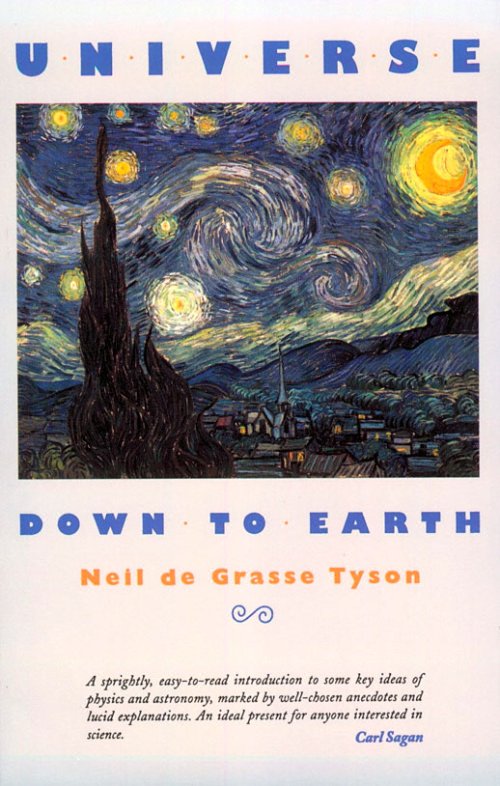
yup,,, reading 2 books at once. This book seems like a fun, easy to read journey through science.
Some quick notes from each chapter ---
Part 1
10 raised to the 81 power represents the number of atoms in the universe !
A milli-Helen is the amount of beauty required to launch just one ship ! lol
The greeks called a very bright star, a nova, meaning 'new star', but actually it is a star that
has exploded and died !
Part 1 includes an introduction to scientific jargon. I would have preferred this section at the end of the book.
Part 2
Missing Mass problem of the universe - the total mass of the universe is off by a factor of one hundred, if you compare the figures between gathering the data by measuring star clusters or individual galaxies.
"And the self-organization of complex forms of matter is expected" - a very interesting quote straight out of the book.
Want to burn 40 calories quickly and easily ? Drink an ice cold glass of water !
'A standard 5 gallon fish tank at room temperature contains over sixty times the total heat energy that is found in an eight ounce cup of hot tea' !
Stars only come in 3 colors - red, white and blue !
The coolest stars are red, the hottest stars are blue.
Hertzsprung - Russell diagram displays the luminosity versus the surface temperature for stars in the universe.
A Nobel Prize awaits the person who devises a way to measure directly the distances to everything in the universe.
Part 2 ends with an excellent introduction to the Periodic Table of the Elements.
Part 3
The brightest star in the night time sky is Sirius, the dog star. Not the north star.
The nearest star to our sun is Proxima Centauri.
The zodiac contains fourteen constellations, not twelve. The extra 2 are named Ophiuchus and Cetus.
There is no 'dark side' of the moon.
The moon always has the same side facing earth.
The moon is the only satellite in our system that does not have a name !
This author is witty, and the book is a very interesting read for an introduction to physics, chemistry and astronomy.


