| COOLING |
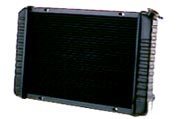
| One of the most common problems 4x4's have when pushed hard is "Overheating" or boiling over. The trouble lies in how long it takes to get just a matter of feet at times. 30 min. of trying a hole 15' long can easily max a temp gauge out. And when there are no water hoses to grab, it can make for a very bad situation. The best way to fix overheating is to make sure it can't happen. There are several things that can be replaced or modified to keep the Temp down. 1. RADIATOR: Swap your 2 or 3 fluke in for at least a 4 fluke. 5's are bout as good as they get but also very rare and expensive. Brand new 4 fluke runs $150 to $225 normally. Remember, the bigger the system is, the better it cools! 2. WATER PUMP: Make sure it's new. If unsure, replace it anyway. And be SURE to get the Hi-Volume or Hi-Perf type for your motor. Most all engines have 2 or 3 different types and whichever pumps the largest amount of water through it is the best. 3. THERMOSTAT: Make sure you have the Lowest Temp available for your engine. They open the quickest. They also now have some that claim to have more water flow than normal ones. Your choice. Some disagree, but, I have had less troubles by NOT even running a thermostat! That way there is nothing at all holding back the water flow. 4. FAN: Clutch type? Flex? Extra Blades? Electric? Single? Dual? There are many kinds out there and most work quite well for certain kinds of driving. On a true 4x4, the fact that there will be lots of water involved cancels several out. Flex fans do pull great amounts of air but they pull the same amount of water all over your motor also. Their speed is connected directly to engine RPM. And though you can't go wrong with an Electric "Aux." fan, never use one as your primary fan. Water and Electricity just don't get along well at times. Which leads us back to the OEM "Clutch" type fan. They aren't very pretty, they don't really cool quite as good as others, but they do their job and do it quite well in deep water. When a Flex fan hits water, it either keeps spinning(dumping gallons of water all over motor) or the fan belt slips(which can burn it up quickly). When a clutch type hits water, the clutch senses the extra drag on the blades causing it to disengage and spin freely or not at all. Once the extra drag is gone, the clutch re-engages and it functions normally. (TIP: An easy way to tell the condition of a clutch-type is to try and spin it by hand. If it spins freely, it is no good, replace it. If you spin it and feel a good drag or thick feeling, it is fine.) Normally, bigger engines come with bigger fans, so try and find the largest possible. Doesn't do much good to put a 302CI fan on a 460CI, but a 460CI fan on a 302CI works great. 5. Hoses: More or less, hoses are all created equal. Some are a bit thicker than others, but all that really counts is that they are in GOOD shape. At the first sign of a bulge in one, plan on replacing it. Easier to do in driveway than in 6' of Gumbo. (TIP: Try to always get a hose that is 2 or 3 inches longer than what you need. This way it will still fit, plus if it blows in the woods, chances are good that you can just cut the 2 or 3 bad inches off and put it back on.) (TIP: If you are overheated and have to cool it down somehow quickly, you can sacrifice yourself for your engine! Turn your heater on full blast! This re-routes the water flow through the heater core which acts as another radiator. All the extra heat you feel inside is being drawn away from the motor.) (WARNING: If you are at the boiling point or past, DO NOT think parking in a very deep water hole will help cool down your engine! Odds are good that you will be replacing a cracked engine block tommorrow. Especially in the Winter. 325 degree metal and 40 degree water don't go together very well at ALL! ) |
 |
 |
 |
 |