CAHIRMEE FAIR Cahirmee
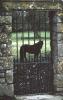
Fair is held on the streets of Buttevant on July 12th every year. In the pre-1914 days, Cahirmee was the venue of what was the greatest horse fair in the British Isles, if not in Europe. The origin of Cahirmee, like many more Irish fairs, cannot be explained. It has existed since time immemorial, and is described in the ancient documents of the reign of Charles II. Cahirmee Horse Fair has been a lively annual event every summer for centuries and it is claimed that Napoleon's horse, Marengo, was bought at this fair from a Kerryman named O'Connor. |
|
 |
BUTTEVANT,
COUNTY CORK IN LEWIS TOPOGRAPHICAL DICTIONARY 1837 by Samuel Lewis Buttevant,
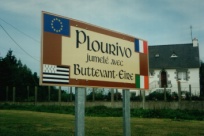
a post-town and parish in the barony of Orrery and Kilmore, County of Cork and province of Munster, 22 miles from Cork and 121 from Dublin, containing 5535 inhabitants, of which number 1536 are in the town. The parish which is situated on the River Awbeg and is on the road from Mallow to Charleville, was anciently named Bothon and was said to have derived its name from the exclamation "boutez en avant", push forward, used by David de Barry, its proprietor, to animate his men in a contest with the MacCarthys, which was subsequently adopted as the family motto by the Earls of Barrymore, who derived their title of Viscount from this place. It appears to have attained considerable importance at an early period after the first invasion, from the notices of it, which occur in ancient records still existing. The
town is situated on the banks of the River Awbeg, over which are two bridges, one on the old and one on the modern road from Cork to Limerick; it consists principally of one main street extending along the mail coach road and in 1831 contained 204 houses. Immediately adjoining on the north-west, are the barracks, an extensive range of buildings, occupying a spacious enclosed area of nearly twenty-three statute acres, divided into two quadrangles by the central range in which is an archway surmounted by a cupola and affording communication between them. The
ruins of the abbey are finely situated on the steep bank of the river Awbeg, and consist chiefly of the walls of the nave, chancel and some portions of the domestic buildings; the upper part of the central tower, supported on arches of light and graceful elevation fell down in 1814; the tomb of the founder, David de Barry, is supposed to be the centre of the chancel but is marked only by some broken stones which appear to have formed an enclosure. Near
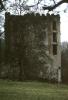
the centre of the town are the remains of Lombard's Castle, a quadrangular building flanked at each angle, by a square tower, one of which is in nearly perfect condition, and with a portion of the castle, has been converted into a dwelling house. At
Lisgriffin are the ruins of an ancient castle of the family of Barry. Some remains of the old town walls may yet be traced; and in a burial ground at Templemary are the remains of an ancient church or chapel. The
title of Viscount Buttevant, conferred on the Barry family in 1406, has been dormant since the death of the last Earl of Barrymore, but is now claimed by James Redmond Barry, Esq., of Glandore in the county of Cork. |
|
 |