If you are looking at this item you most likely are an Acupuncturist already or you are a student of TCM. (Traditional Chinese Medicine.) So, you are already aware of what ion pumping cords are and how effective they can be in your treatment strategy. If not here is a quick run down: The technique has its roots in Japanese Acupuncture (Yoshio Manaka) They provide an excellent means of working with the bodies natural polarity, by means of a specialized diode they allow the energy in the body to travel in one direction only. Traditionaly they are used in eight extra meridian therapy, and divergent channels (as taught by Miki Shima), and energy/emotional balancing with the five element system.(Worsley Acupuncture.)
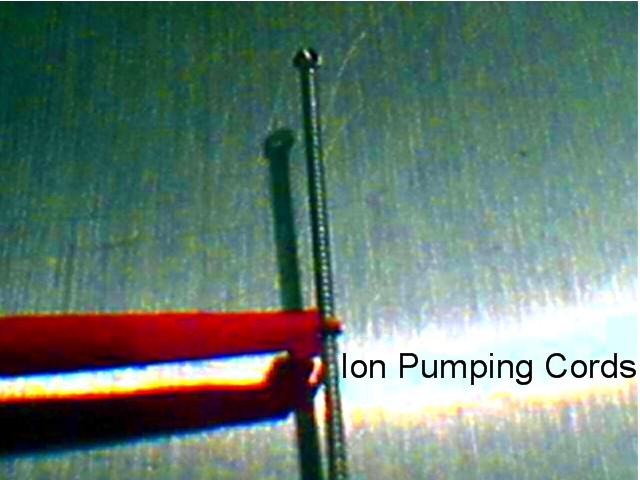
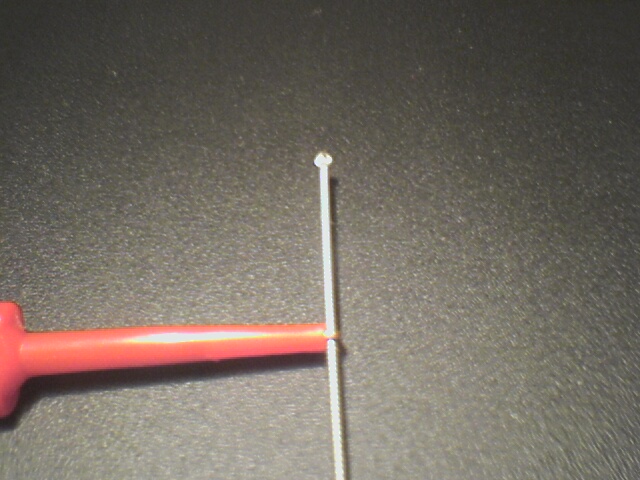
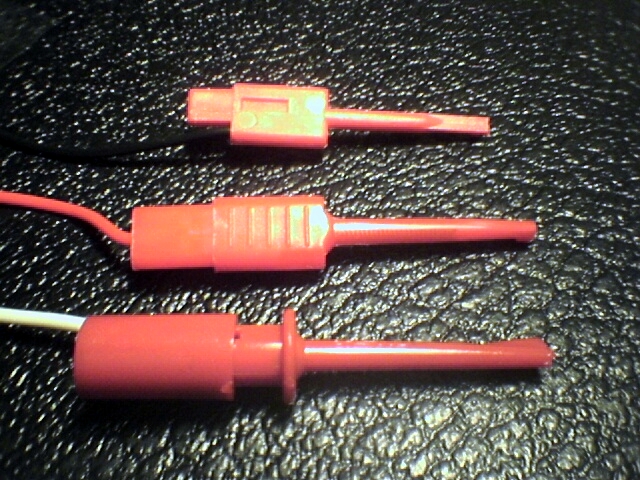
I am an Acupuncturist who questioned how and why this technique could work. I purchased cords from every distributor I could find and tested them. I offered to test all of my fellow students cords at my old school. I also happen to have a good deal of experience with microcircuitry so when I say I tested them, it was not with a simple current flow device like you may have seen advertised for sale along side of a companies ion cords. No, I REALLY TESTED THEM. The wiring, the diode load, the diode itself, the forward bias, the resistance, the soldering, etc. If something didn't work, I found out why. There was almost no consistency from company to company. Some had the diode facing one direction, some had it going the opposite. Two pairs I tested HAD NO DIODE AT ALL. Some had good wiring and soldering, some could only be described as poor at best. Some companies had discrepancies within their own products. One set I tested had the polarity of the cords flowing in one direction in one cord, and the opposite way in the other cord. Many used diodes of various resistances from cord to cord. When looking up information on the correct placement and specifications books and web pages vary from source to source as well. (particularly Japanese versus English sources, or English translated from Japanese.) Another major problem I had even before I looked at the internal structure of ion pumping cords, was the HUGE, HEAVY aligator style clips that are used because they are cheaper. These, as you surely know already, bend the needle in an uncomfortable angle to the skin. Try using one on ST-1 for a divergent treatment. Its nearly impossible. (I make a pair specifically for this delicate work...see below.)
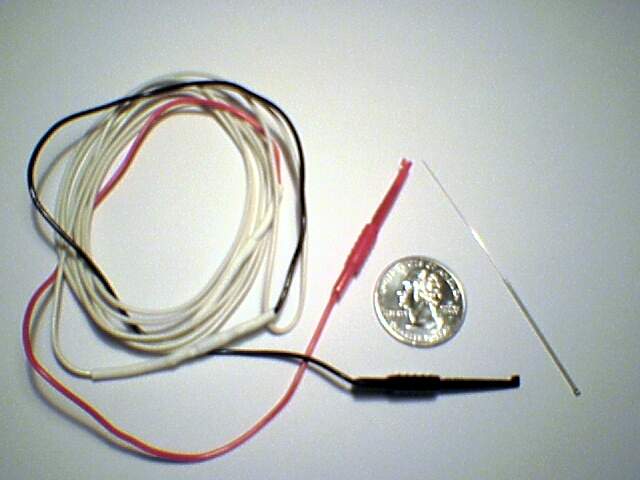
I hand craft each and every one of my cords personally. I use the very best quality materials in my cords and test each one for consistency. I use the latest hook-style clip that is both TINY and ULTRA-LITE. My cords match the research specifications in the Japanese literature on ion pumping cords. You can confidently place the red clip on the needle you wish to tonify (+), and place the black clip on the needle in need of sedation (-). You can easily connect DU-20 to KI-1 on a seven foot tall person. When you are dealing with such subtle energies to begin with it is absolutely necessary to use standardized, consistently high quality cords. Not to mention you are supporting your fellow Acupuncturist in paying back those student loans! |