IWIN LOGO.gif


Chapter 8

Poverty

8.1 Experience of Poverty

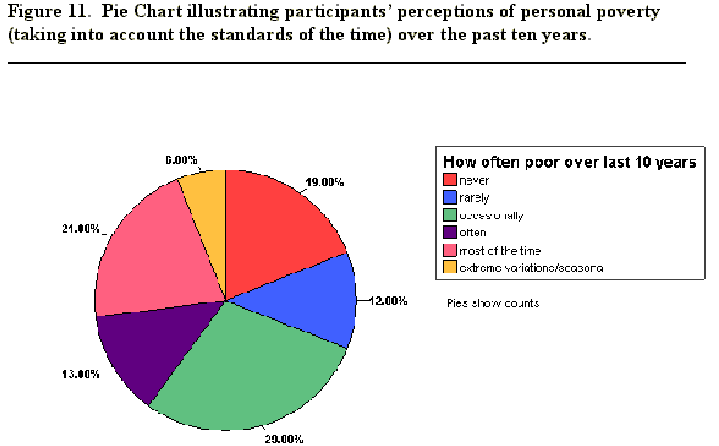
In keeping with the spirit of the current research, the participants were acknowledged to be the experts in their own lives - and they were, therefore, the only persons capable of indicating how poor they really are and were in the past.  Question 27, therefore, asked the women respondents to look back over the previous 10 years (taking into account the standards of the time) and say how often they thought they had been poor during that time.  The Pie Chart in Figure 11 illustrates the variety of responses obtained, where 1 in 5 reported that they were never, or rarely, poor in those ten years.  A further 1 in 5 were poor occasionally, while the remaining two fifths were poor often, most of the time or they suffered extreme variations.

This perception of poverty in the past has worrying implications for attempts to better women's situation in the present; a strong relationship exists between current poverty and lifetime experience of poverty; 
"The more often they believe that they have been poor in the past, the more likely they are to be found to be poor in the present" (Gordon et al, 2000).  In the current research, those who reported that they were poor 'most of the time' in the past ten years were more likely to be 'just about managing' in the present.


8.2 'Doing Without' - Women


In an effort to establish levels of deprivation, women were shown a list of items in Question 30 that people sometimes go without when money is tight and asked to indicate which items they had personally gone without in the last year because of a shortage of money.  One in five women either never go without or money is never tight for them.  The remaining four out of five go without at least one of the items on the list, and some have gone without the entire eight items offered.  The most common number of items 'gone without' is four, with 23 women indicating this number.  The top six items are listed in Table 19, where it can be seen that a holiday heads the list, closely followed by going out/socialising in second place, with clothes and shoes in third and joint fourth position respectively.


           arrow41_N.gif

Hosted by www.Geocities.ws

1