|
men
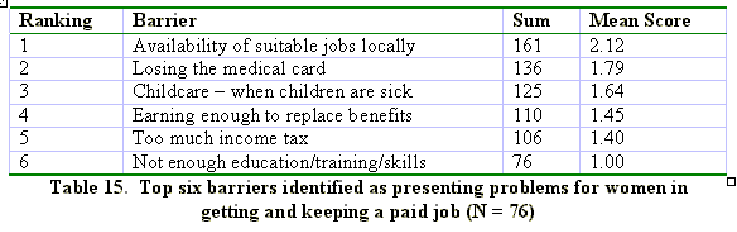
and women, this finding is not surprising - if there
are no
jobs,
this is, logically, the most important barrier.
Add to this the lack of adequate public
transport, any emphasis on jobs that are 'locally' available
becomes very clear. This element is especially
important to women, who frequently have to juggle school
and childcare journeys while negotiating the use
of the family car (assuming there is one) - and all
before they get to work at all. Recent interview
data recorded locally (Kelly, 2002, Unpublished Dissertation)
confirms that the provision of both childcare and public
transport in Inishowen is inadequate to meet women's
needs. With 'restricted travel patterns' and decreased
employment opportunities, they are 'made more susceptible
to incidences of poverty' was Kelly's conclusion (p.36).
The loss of the medical card and the low income
limits that apply represents another major hurdle for
women - if the income that one is likely to earn results
in large medical bills for the family, this can more
than cancel out any benefits. As this report was
about to be completed, news of the Government's plans
to 'roll back' on increasing the number of medical cards
was being released. This represents a further
blow to the prospects of employment for women in Inishowen
- IWIN has made a commitment to lobby on this issue
as a result of its importance to the women in this survey.
The fact that childcare issues did not emerge
in the top six barriers, apart from "When children
are sick", which was ranked third, was, initially
a matter of concern for the research as a whole.
It was decided to refer the findings to a focus group
of local women for discussion and evaluation (see Section
12.5 for further information). However, leading
on from previous discussions about the top rated barrier,
the "Availability of suitable jobs locally";
before considering any other issues that are important
barriers for women workers nationally, especially childcare, it is important to realise that if no actual
job is available, recognising or rating any impact becomes
academic.
|
|