
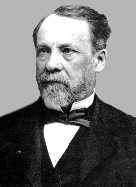
In 1865, Louis was called to southern France to help with the silk industry, for an excessive amount of the silkworms had been striken with a disease known as pebrine. Louis found (through inspecting the worms, as well as the moths and their eggs) that pebrine was contagious and hereditary. The only way to end the epidemic was to kill off all the infected and save the disease-free eggs.

This concept is that disease arises from germs attacking the body from the outside. This theory was debated by doctors and scientists all over the world, and those against it argued that the role germs played during the course of disease was unimportant, and the notion that tiny organisms could kill greatly larger one seemed ridiculous. But through the course of his career, Louis proved himself correct.
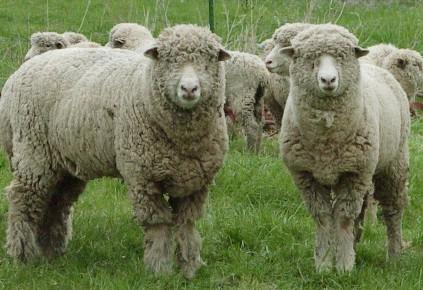
Louis also did work with research, which is a fatal disease of cattle. He proved that it caused by a bacillus, and believed that animals could be given a mild form of anthrax by vaccinating them with weakend bacilli, providing them with immunity from fatal attacks. His experiment was this: He first inocculated 25 sheep, and a few days later he inocculated the same sheep, as well as 25 more, with a stronger dose. His hypothesis was that the second group of 25 would all die. His experiment ended with him revealing the second group of 25 sheep all dead.
The remainer of Louis' life was spent researching diseases and their vaccinations, including septicemia, cholera, diphtheria, fowl cholera, tuberculosis, and smallpox. Most famous is his work with rabies. By experimenting with saliva from rabid animals, he was able to find that the disease is in the body's nerve center. He also found that, when injecting samples from the spinal column of a rabid dog into a healthy animal, it produced symptons of rabies. Louis was able to create a vaccine by studying the tissues of infected animals (he mainly used rabbits). In 1888, after the success of the rabies vaccine, the Institut Pasteur wsa founded, an institute in Paris dedicated to the research of infectious diseases.
"I beseech you to take interest in these sacred domains so expressively called laboratories. Ask that there be more and that they be adorned for these are the temples of the future, wealth, and well-being. It is here that humanity will grow, strengthen and improve. Here, humanity will learn to read progress and individual harmony in the works of nature, while humanity's own works are all too often those of barbarism, fanaticism and destruction."
Pasteur's research and findings have had a great impact on the world today. If it weren't for Louie, then our milk would be full of bacteria, rabies and anthrax would be horrible incurable diseases, germs would be unstoppable, and stereochemistry and spontaneous generation would be unheard of. So we should all be thankful that Louie didn't become an artist.