“history, wars and an ancient heritage”
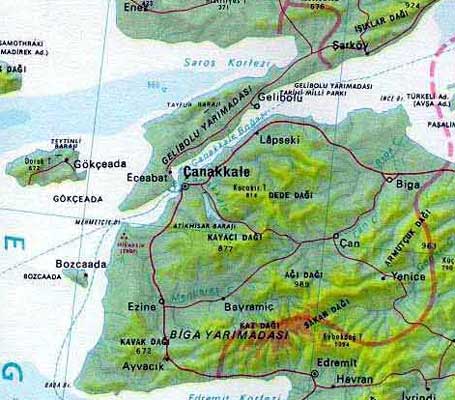
Çanakkale, on the straits of Dardanelles, a host to such civilisations as Troy and Assos, proves to be the perfect spot for a holiday..
Çanakkale, centrally located on the Dardanelles straits, is
the route one must take to get to the islands of Gökçeada (Imbroz), Bozcaada
(Tenedos), Gallipoli national park and all cities and towns along the Aegean
coast. One can get to Çanakkale by crossing the straits on ferry boats from Eceabat
or Kilitbahir. Çanakkale proper is sufficiently equipped to entertain any
number of visitors. Those wishing to get to the Aegean region by car, to take
in the fantastic view on the trip, should prefer the Çanakkale route. Çanakkale
proper is named after the Çanakkale (Dardanelles) straits which separates
European and Asian Turkey.
The
city was known as Hellespontos and Dardanel in ancient times continues its role
as a major residential center since 3000 A.D. The province bearing the name
Çanakkale is 9,737 km squares with a 671 km coastline. Its geographical
positioning gives the province a taste of the transient Mediterranean and Black
Sea climate’s. It includes two islands, eleven towns and 568 villages with a
population of 448.815.
Çanakkale’s economy is based on agriculture and livestock farming. However,
recent advances have shown developments in fisheries, specifically tuna, fruit
and vegetable farming and related industries. Cement, ceramics,
petro-chemicals, synthetic leatherwear and wine sectors have also advanced
rapidly in recent years. Mining is also an important sector for the province.
Çanakkale is home to many historical sites, beautiful natural wonders and a
vital inheritor of cultural tourism potential. The Gallipoli peninsula is where
history’s bloodiest war’s took place during last century. The region has
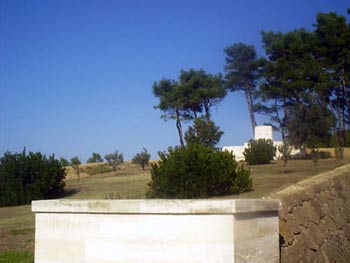
numerous gravesites and memorials dedicated to the war. The peninsula also
houses the Gallipoli National Park. Çanakkale is also the home of the worldly renown
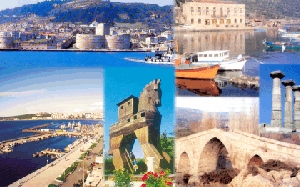
tourism sites of Troy and Assos which are considered to be classic relics of
early civilisations.
Some
sites of attraction in Çanakkale include the Archeology museum, the mine
clearing ship “Nusret” which is a valued historical treasure of Turkey’s
defence of the Dardanelles located within the compounds of Naval museum, The
Piri Reis (leading Ottoman admiral) museum, war martyres memorial in Gallipoli
National Park and Çamyayla Atatürk (the founder and the first president of the
Turkish Republic) residences.
“HISTORICAL PLACES OF INTEREST TROY”
The ancient
city of Troy, dating back to 3000 A.D. to 400 B.C., was settled nine different
times on top of each other at different times throughout history. It is also
the home to Trojan wars as mentioned in Homeros’s ancient legends. It is
located 30 km to from Çanakkale. Transporation is provided by frequent bus and
minibus tours and by taxi’s around the clock.
Assos was the
home of the “school of logic and reasoning” founded by Aristotle in the seventh
century. Transporation is available every half hour from Ayvacık.
“OTHERS”
There are also numerous other places of interest in Çanakkale such as the Hamaxitos, Alexandria, Troas, Neandria, Sankrea and the Dardonos tumuli, not to mention the ancient city ruins of Sestos, Gargara and Lamponia. the castles of Kilitbahir, Babakale, the island of Bozcaada, Seddülbahir, Bigalı, Nara, Gelibolu castles, the woodlands of İntepe, Güzelyalı and Kazdağı (Ayazma) where, according to mythology, is the location that held history’s first beauty pageant. There are various therapeutic spa’s as Ezine Kestanbol, Bayramiç-Külcüler, Çan-Tepeköy, Kirazlı’s Şifalı İçmesuyu, Biga’s Kırkgeçit and Ayvacık’s Aphrodite which can be visited throughout the year. These attractions are even more enjoyable under the Aegean sun and and its salty sea.
 Take a
look at impressive landscapes of Turkey,Bosphorus...
Take a
look at impressive landscapes of Turkey,Bosphorus...
“The Gallipoli National Park”
Gallipoli
peninsula national park spans an area of 33 thousand hectares. Those who wish
to visit the World War I battlegrounds and war memorials can take the road
leading to Anzac cove, northwest of Eceabat’s and start their discovery of the
region crammed with history. Another excursion route would be to take the
southern direction from Eceabat through to Kilitbahir-Seddülbahir-Alçıtepe-Kum
Limanı (wharf) and see southern regions of this serene world. The Kabatepe
promotion center is nine kilometers from Eceabat. There are scheduled minibus
and bus services to villages of the region.
Kilitbahir
which means “the lock of all seas” is the name given to the castle constructed
in 1462 by “Mehmet the Conqueror” who conquered İstanbul (Constantinople) only
5 years before. The clover shaped inner castle built with stones from the ancient
city of Sestos and the more than 6 meter in width walled round tower are the
most unique aspects ofthis catle. Kilitbahir also houses many memorials and
gravesites of soldiers.
“Seddülbahir”
The village of
Seddülbahir is located 28km to Eceabat, 23 km to Kilitbahir in the southern
reach of the peninsula. The Seddülbahir castle was built in 1659 by “Sadrazam
Köprülü Mehmet Pasha” for defensive purposes against the Venetians. This region
is also the home to many war memorials and gravesites of Turkish war martyrs
from the successful defence of the Dardanelles straits against allied forces in
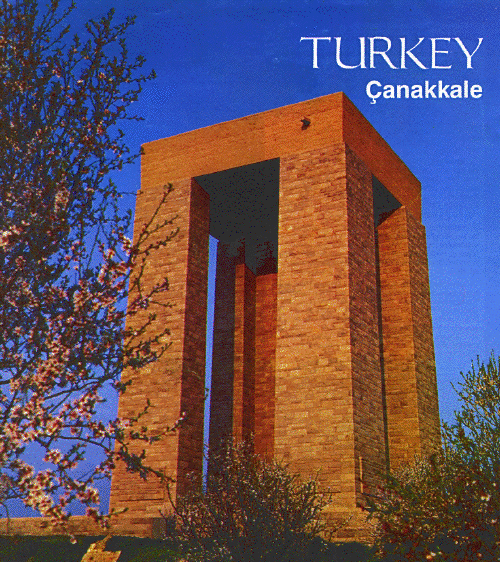
1915. The symbol of the defensive campaign for the Dardanelles, entitled
Dardanelles Martyrs Memorial, is located just 3 km northeast of Seddülbahir
village in the eastern tip of Morto cove on Hisarlık Tepe.
The memorials of “Cape Helles”, Fort of “Ertuğrul” and “Yahya gravesite” and
memorial, the “Beach” gravesite of allied soldiers, the “French war memorial”
and graves, “Lancashire Landing” graves, “Pink Farm” (Pembe Çiftlik) gravesite,
“Twelve tree” woodlands (12 Ağaç Koruluğu) gravesite and memorial, “Redoubt”
gravesite, “Alçıtepe Garrison” memorial, “Sargıyer”i gravesite and memorial,
“Mareşal Fevzi Çakmak” war headquarters and memorial, “Lieutenant Hasan Bey” gravesite,
“Gözetleme Tepe” memorial and gravesite are some of the other treasures of
Seddülbahir.
“Anzac cove”
Anzac cove is
the site where Australian and New Zealand soldiers began their attempt to
invade the Gallipoli peninsula. It is located west of the peninsula, 12 km from
Eceabat and 3 km from Kabatepe. The “Conkbayırı” foreign soldiers gravesite and
memorial is located 3.2 km northeast of Anzac cove. The “Atatürk” memorial on
route to Çimen Tepe, the No. 2 Outpost gravesite “New Zealand” gravesite, “Embarkation
Pier” (Tahliye İskelesi) gravesite, the “Seventh Mobile” Hospital gravesite
(Yedinci Sahra Mezarlığı) and the “60 Hill” gravesite and memorial are also
some of the sits of attaction here.
“Kanlısırt”
“Kanlısırt”
memorial is located east, 6 km from Anzak cove and 3 km from Kabatepe on the
road connecting Kabatepe-Conkbayırı. Lone Pine (Kanlısırt) gravesite to the
northeast is also worth the trip.
On Cesaret
Tepe, to the north.
Tuzla lake and
environs 7 km to Anzak cove and 20 km to Eceabat.
“How to get there”
Çanakkale
proper is fully accessible by roads from all provinces. İstanbul is 310 km,
Bursa 260 km and İzmir 320 km from Çanakkale. There are bus services between
all towns and villages in Çanakkale. The island of Gökçeada (Imbros) can be
reached year around via Kabatepe wharf. Bozcaada (Tenedos) is accessible via
the Yükyeri wharf.
“Places to stay”
Grand Truva Hotel: 217 10 24
İris Hotel: 232 81 10
Anafartalar Hotel: 217 44 54
Tusan Hotel: 232 82 10
Anzac Hotel: 217 77 77
Behram Hotel: 721 71 99
Eden Beach Hotel: 721 74 40
Assos Hotel: 721 70 17
Back
Turkish
view Anzac
view Turkish Legends
Anzac
Poems Portraits
Forward