

|
Beverages
|
|
 A few tips:  Most of the
tsipouro you find in restaurants or other touristic places is not of good quality. The real thing is usually found in people's houses or small family hostels and traditional cafeneia. Good tsipouro
is inexpensive. DONT MIX IT!
Tsipouro is very pure and doesn't create unpleasant side-effects or bad hangovers. But if you mix it with beer or other drinks can become very nasty. It has different
effects to different people. Some claim it is slightly hallucinating. Others have very vivid pleasant "waking" dreams after a few shots of it. Some others find it can make you "float" without making you really drunk. Commercially made
tsikoudia can be purchased from shops mini-markets and supermarkets in Greece in exactly the same way as other spirits. It makes an interesting change, as do Greek brandies and ouzo's, from the usual northern European spirits. 
|
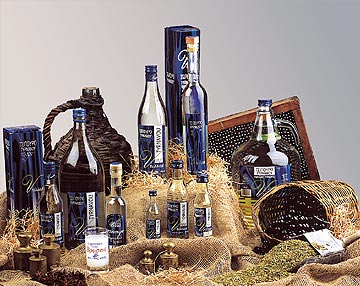
| Coffee & juices | - | Sweets & cakes | - | Beverages | Tsipouro 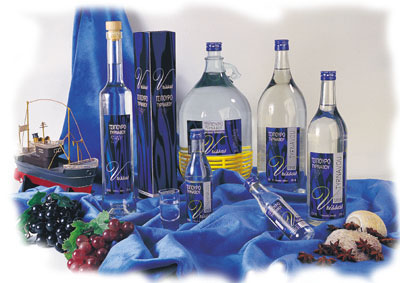 Tsipouro, affectionatelly known as the "Greek fire water" or "Holy water", is a strong distilled spirit containing approximately 36% - 65%(!) alcohol per volume and is produced from the must-residue of the winepress. The taste is somewhere between Gin and Vodka flavoured with a faint grape aroma. If you haven't had it before you may be in for a surprise. Whether the surprise is good or bad depends on many things. The Greek music in the background; good company; a little laughter; maybe a little Greek dancing or maybe just the smiling waiter. Whether it arrives before you meal, after it or... Or both! Whatever, try to enjoy a warm experience. Tsipouro is a genuine Greek product. It is not produced in any other part of the world except Greece. Ouzo, tsipouro, tsikoudia and the distillation of Corinthian currant have been marked as exclusive Greek products. In some areas it is named "Raki" even though it is different from that oriental drink. In Crete it is produced a unique variety with stronger flavour which is called "Tsikoudia". It is also known as "zivania" in Cyprus and "souma" in the Cycladic islands. The best Tsipouro is produced in Thessaly, Epirus, Macedonia and on the island of Crete. It is served plain in small shot glasses even though it is not advisable to drink it as a shot if you are not accustomed to it no matter what the locals do! Rarely people add ice and they always drink it with the company of mezedes.  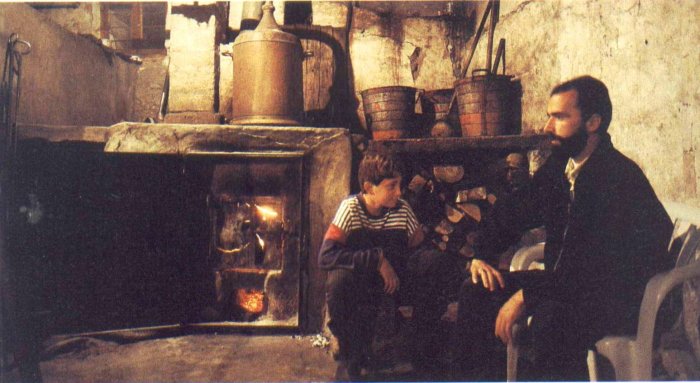 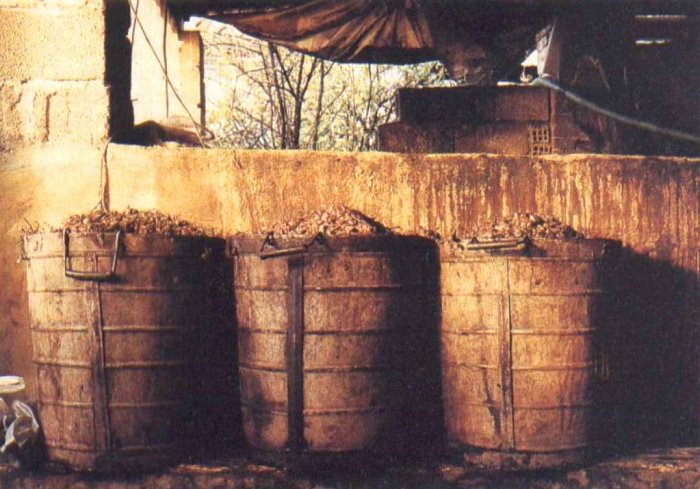  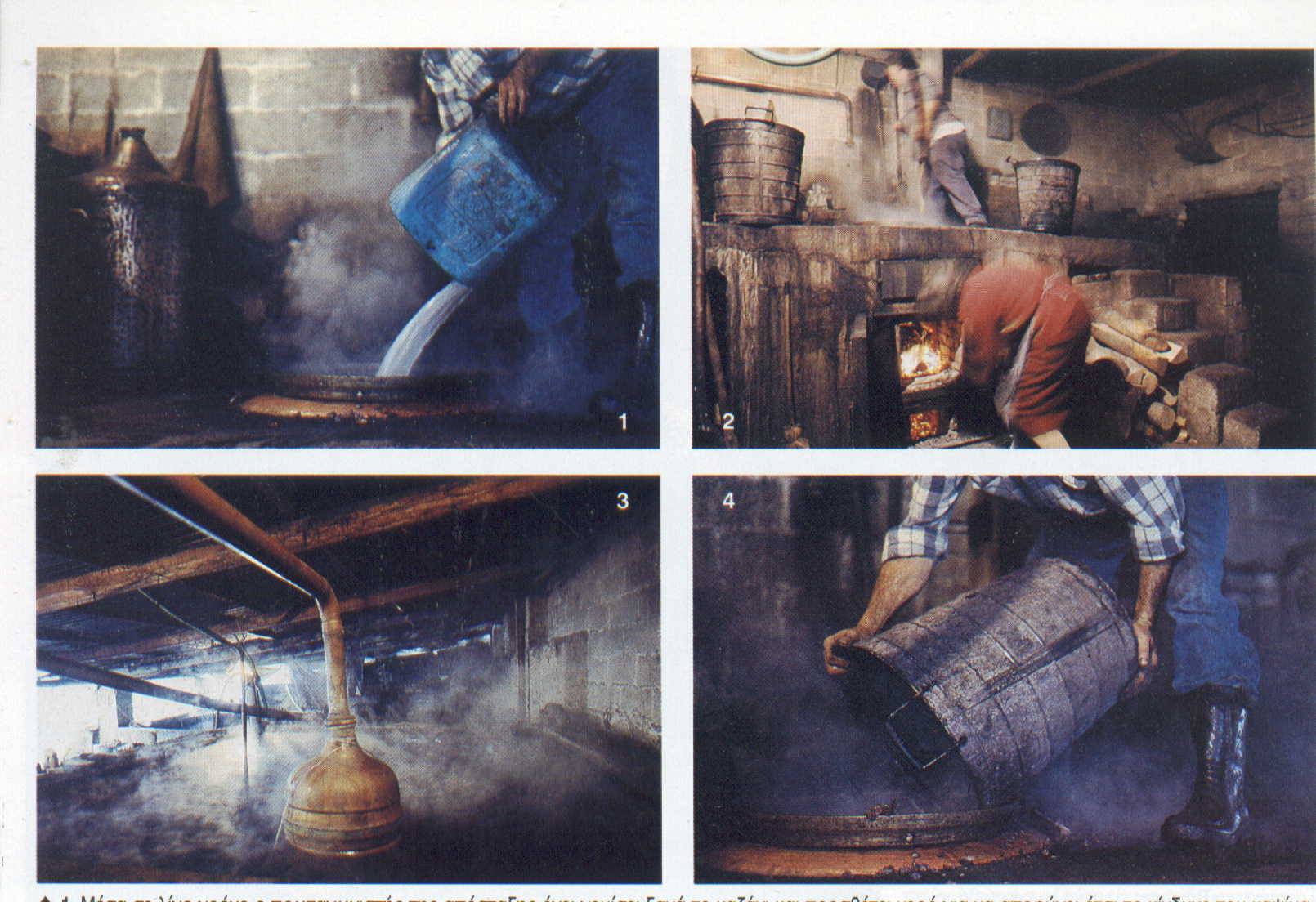
The distillery process (Rakizio)
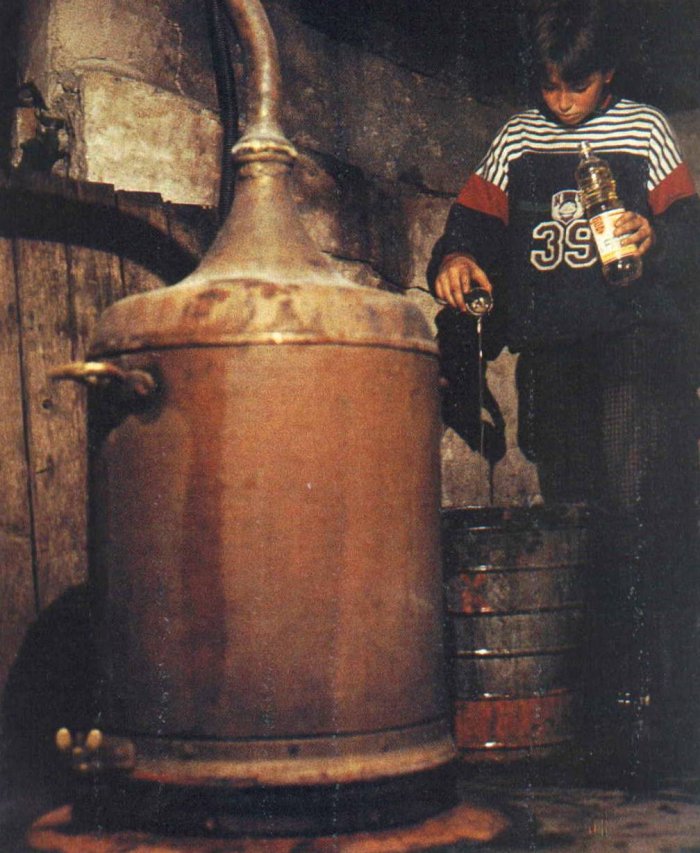
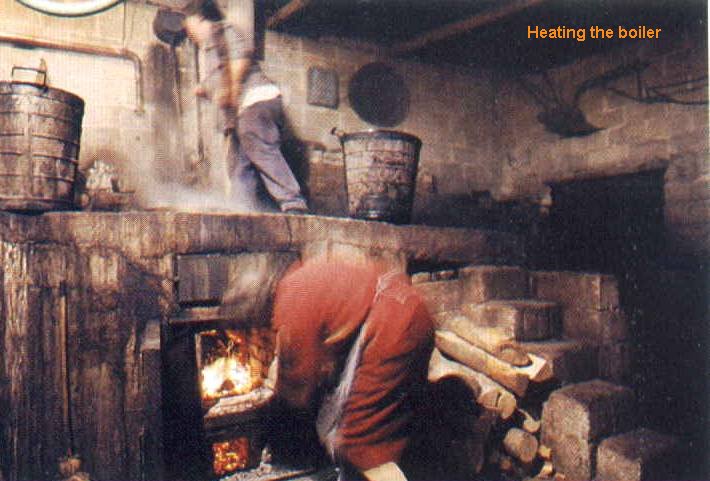
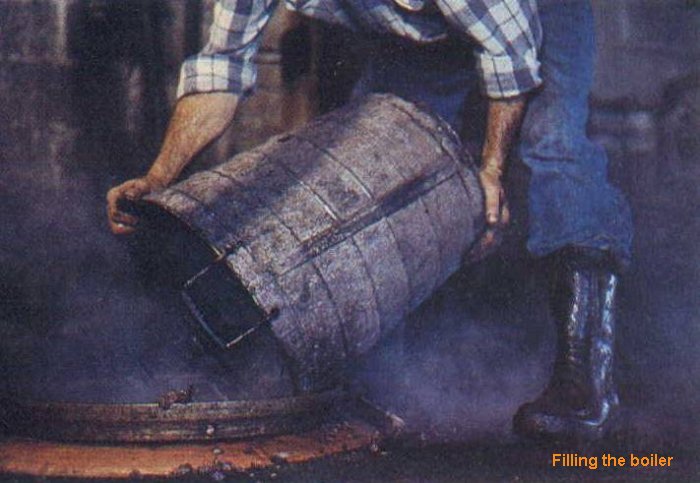
The must residue which is left after the crushing process is allowed to ferment and then distilled with the adittion of various aromatic herbs. The first product of the distillery process is very pure and very high in alcohol and it is used as a pharmaceutical, even though some locals do drink it! The entire process becomes a celebration in which friends and relatives take part by bringing food and sampling the drink as it is being made. Each step in the distillation process has a particular ritual and the presence of friends is a must.
The grape-stalks are used to feed the fire for the distillery as the locals claim they create just the right temperature for the boiling and the remnants of the distillation, which are rich in potassium, are used as compost or animal food.
Tsipouro, the illegal
In areas known for their tsipouro, modern industries produce about 500,000 litres of bottled liquor, guaranteed for its quality. The remaining 10,000 tonnes, which is the estimated amount of the total production of tsipouro and tsikoudia, are produced by individual farmers who receive licenses to open their alembics for four two-day periods a year.
As more and more consumers became aware of tsipouro, however, more taxes were imposed on its production. Tsipouro producers have been protesting these taxes which resulted in price increases, making the drink's promotion difficult. They claim that the traditional methods of tsipouro production are a custom and, therefore, should go on surviving as a custom.
| Coffee & juices | - | Sweets & cakes | - | Beverages | |
|
 Every Automn there is an annual celebration of the grape harvest. During these "celebrations" of the wine producing families, relatives, friends, neighbours and sometimes the entire village is invited to participate in the festivities. Among music, dance, drinking and lots of food, people have to crush the grapes in the patitiria that is, large stone structures especially made for that purpose, and gather the grape juice begining a totaly recycling process which makes use of all the vine plant. Most of it will be used to produce wine but a small part of it will be mixed with flour and it will become moustos, a sweet kind of jelly which is been eaten as a dessert or it is used for the preparation of many traditional pastries and cookies. The leaves of the plant are beeing gathered to be used in a dish called dolmades, which is used some times as a mezes.
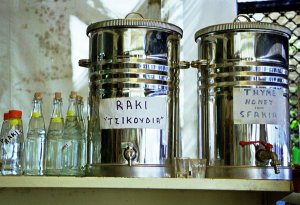 Before 1988, production licenses for tsipouro were granted only to farmers who were usually viticulturists in poor areas. These licenses were valid for certain days of the year. There were viticulturists, however, who ignored the law and continued the distillation process secretly (similar to the days of prohibition in the United States). Today, the situation has changed as tsipouro has been acknowledged and appreciated by consumers and is recommended by wine drinkers from all over.