
|
HOME INDEX 
Hand with Globe M.C. Escher Buy This Art Print At AllPosters.com |
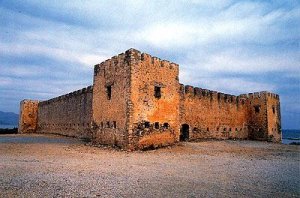 Sfakia - Crete.
11 km east of Chora Sfakion. Near the beach of Frangokastelo lies an old Venecian fortress, abandoned for centuries but stil in a very good condition. It is oftenly visited by tourists and various visitors who get attracted by the history and the architecture of the building and the very picturesque beach next to it. The Frangokastelo area has a big reputation as a holiday resort in Sfakia but the locals have one more reason to know about it: Drosoulites, the dew people who allegendly inhabit the old fortress. The Castel Franco, or Frangokastelo as it is known to the locals, was built in 1371 by the Venetians to protect themselfs from both the pirates and the locals who would rebel against them every now and then. It is quadrangle in shape and above the entrance there is carved the lion of Saint Mark between the grown of Quirini and Dolfin. The castle carries a blood-drenched history one chapter of which is related to the struggle for freedom against the Turks. In 1828 the famous Frangokastelo battle took place. Commander Hatzimichalis Dalianis from Epirus came to assist the Cretans in their struggle for independance against the Turks. The Cretans would prefere to take up on a guerilla war against a conqueror they thought stronger in both arms and men. Commander Dalianis though insisted on an open confrontation in the plain in front of the castle. The Turks under the leadership of Mustafabey arrived with thousands of soldiers to face the few hundred men of Dalianis. They besieged the castle for seven days during which half of the Creatan soldiers got killed. The rest were forced to retreat and with the help of the locals they escaped from the castle. After that Mustafabey demolished a big part of the castle and started to proceed towards northeast. But the locals, waited for them in the gorges and slaughtered many his army.
During the pasage of time many have tried to give an explanation. a mirage from the coast of north Africa, an example of upper reflection which displays images from Libya,
but still there is no accepted consensus. Drosoulites look so real that there are documented sightings of them through the ages. In 1890 a transient Turkish army, took the images for rebels and opened fire on them. Even during the last World War, a German patrol opened fire on the visions.
|
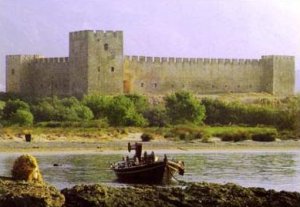 Since then most of the year Frangokastelo lies silent next to the waves of the Lybian Sea. It is on the dawn of May 17 of each year, the anniversary of the battle of Fragokastelo, that a weird phenomenon begins to take place near the walls of the fortress. With the first rays of the sun the visitor sees a long procession of visions, a line of men dressed in black, some of them on foot others on horses, holding weapons that seem to shine under the sunlight, that march from the ruined church of Agios Charalambos towards the fort. They reach the sea and disappear into it, with the first rays of the sun. The shadows are dissolved when light wind blows. These men, made from morning dew as everything indicates, are called by the locals Drosoulites, the dew men. The phenomenon lasts for about 10 minutes and only between the end of may and the first few days of June. The legend says that Drosoulites are the soldiers of Dalianis as the battle took place the same period.