|
Subject: LOOM-page #.3 or; Simple Coverings
I find that using a double twisted warp for each of these
cords is
the proper size for this operation.
Double the width of our piece is the proper length for each. With these
three cords, we will set the end loops of warps into the traditional
twisted cord that
is found on the two ends of this primitive weave, and sets it apart from
all others. So to begin. It appears that the three have been tied to each other, at one end, and also to the two that that have yet to be mentioned, and that will make the two sides or selvage cords.
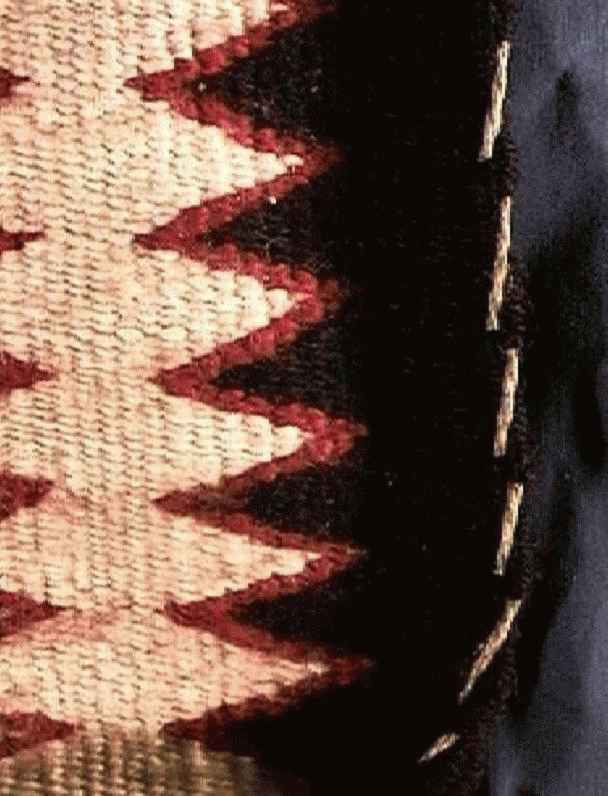
To see the way the two selvage cords are twisted and brought outside and then inside the weave, and to know enough about this process to know that what is twisted at one end must be UN-twisted at the other, and also to know that most all of these weaves are woven toward a place to the inside of its body, to finish it, will point to the impossibility of this being so.
In other words, it is turned up-side down and right-side
up, and woven
at both ends first, before it is finished. As opposed to
weaving from
one end to completion at the other, as you would think.
This will tell
you that it is impossible to have these five cords tied
together at all
the ends from the start.
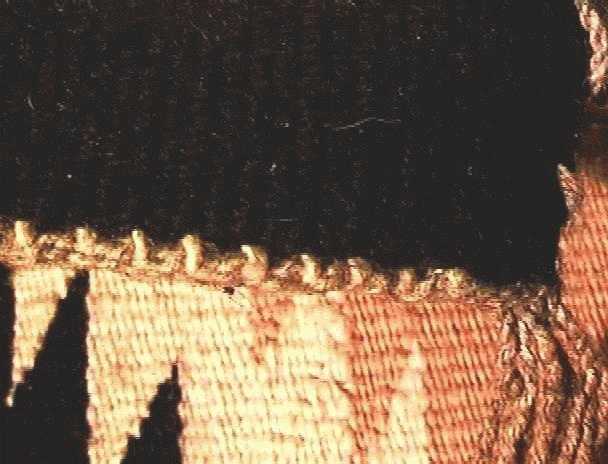
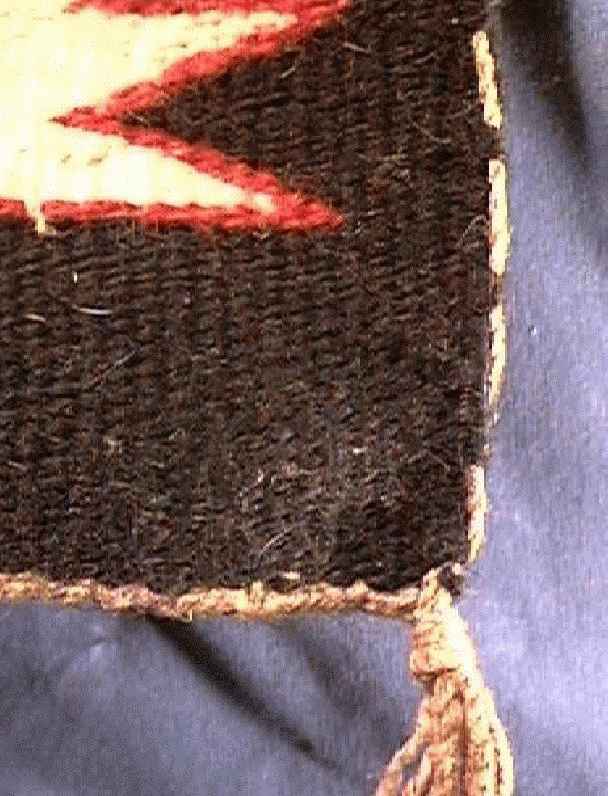
Looking at the twilled end cord will show it to be three cords twisted together and around the end loops of our warp, at both ends of our piece. This is not so, either. If we were to try and do what appears to have been done. We would not be able to skillfully place the warp cords apart from each other with the skill they have been set apart from each other for hundreds of years. What appears to have been done is not what has been done.
The simple truth is that one of the three is passed
through the inside,
or behind the loops of warps and tied to something at both
ends. While the other two wrap
around this one
and at every other wrap of it, they also take a wrap of a
loop of the warp.
The process is repeated at the other end, and on the
opposite side from where it was done previously. We have yet to address the tying of these three cords, in order to start this process, however. So it will be mentioned, here. It is only necessary that the three cords be tied to something on the side of the edge one wishes to start from. Away from and out of the way of where the weaver is working. This is a temporary tie and should only be the same height on the piece that the twisted cording will be placed. Also away from the area that is being worked.
As an example of this, picture a light rope that is tied between the
ends of the
poles the warps are looped around and going from top to
bottom pole, so
that you have a stout cord running beside the edges of your
piece, but a
distance from it.
It should also be mentioned at this point that these
three cords are each wrapped into a ball or a "skein" to
keep them separated from each other and to keep them from
becoming tangled while working them. So it has become time
to learn the function and use of a "Navajo Skein." | ||||||||
| ||||||||