A giant statue (a weathervane) was placed on the top of the tower. As the weathervane turns ("gira" in spanish), the name of the sculture soon became "Giralda (meaning "the turning one"). Later, the tower got to be known as "the Giralda" (weathervane former name) and the statue "giraldillo" (meaning a part of the Giralda).
An old legend says many Roman and Visigothic objects were used to lay the foundations for the old mosque, as these kind of pieces were forbidden by Islam rules. Other legend even talk about fabulous treasures. All we know for certain is that large stones from other existing buildings in Seville were used. Two dressed stones with latin inscriptions can be seen near the Giralda ground.
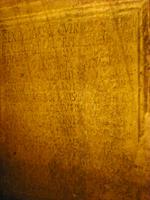
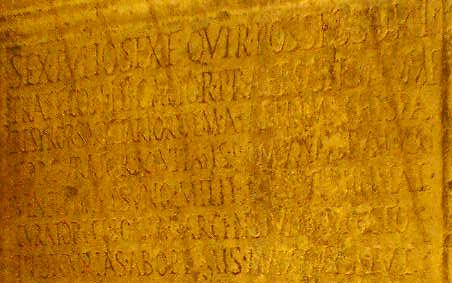
Dressed stone referred by the legend, left. Detail, below.




Anecdote
East façade, image used during the old council meetings.
The Giralda
It formely had a defensive mission so was joined to the Alcazar (Royal Palace) by a piece of wall. That is the reason why it has ramps instead of stairs (riding a horses inside was easier that way). March 11th 1198 can be taken as the inaguration date. That day, three huge and golden Spheres were placed on the top and remained there until the fateful day of August 24th 1356 when the earthquake pulled them down. The Giralda got its definitive shape on august 13th 1568 when the belfry and weathervane were added.