Additional Taxonomy.
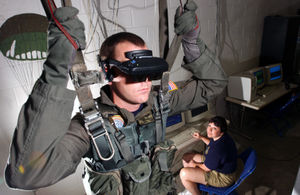
"Virtual Reality is a way for humans to visualize, manipulate and interact with computers and extremely complex data"The visualization part refers to the computer generating visual, auditory or other sensual outputs to the user of a world within the computer. This world may be a CAD model, a scientific simulation, or a view into a database. The user can interact with the world and directly manipulate objects within the world. Some worlds are animated by other processes, perhaps physical simulations, or simple animation scripts. Interaction with the virtual world, at least with near real time control of the viewpoint, in my opinion, is a critical test for a 'virtual reality'.
Some people object to the term "Virtual Reality", saying it is an oxymoron. Other terms that have been used are Synthetic Environments, Cyberspace, Artificial Reality, Simulator Technology, etc. VR is the most common and sexiest. It has caught the attention of the media. The applications being developed for VR run a wide spectrum, from games to architectural and business planning. Many applications are worlds that are very similar to our own, like CAD or architectural modeling. Some applications provide ways of viewing from an advantageous perspective not possible with the real world, like scientific simulators and telepresense systems, air traffic control systems. Other applications are much different from anything we have ever directly experienced before. These latter applications may be the hardest, and most interesting systems. Visualizing the ebb and flow of the world's financial markets. Navigating a large corporate information base, etc.