

2002 Robert F. Sibert Medal
Written by Susan Campbell Bartoletti
"You landlords of Ireland I'd have you beware,
And of your poor tenants I'd wish you'd take care
For want of potatoes in the present year
From the crutch to the cradle they are trembling with fear.
-From 'A new Song on the Rotten Potatoes' " ( Bartoletti, p. 50).
From 1845 to 1850 more than one million people perished and another two million emigrated to the United States and Canada during the Great Famine in Ireland when the staple crop of the nation, the main source of food for the majority of the poor, potatoes, was decimated by blight, or the fungus Phythophthora infestans. Susan Bartoletti recounts the effects of the crop loss through the eyes of the people of Ireland in her book, Black Potatoes: The Story of the Great Irish Famine, 1845-1850, winner of the 2002 Orbis Pictus Award and Robert F. Sibert Medal.
Utilizing a vast array or primary and secondary sources, Bartoletti tells the trials and tribulations of the common people of Ireland when blight struck the potato crop in five successive years, from 1845 to 1849. In recounting the history, Bartoletti, provides readers with snippets of Irish culture and history including their belief in fairies, "They said that the dark sky occurred because the different fairy tribes were battling over the potatoes" (Bartoletti, p. 9), and the oppression of the predominately Catholic Irish at the hands of the Protestant English who ruled Ireland at the time. Catholics, who accounted for eighty percent of the inhabitants of Ireland, were forbidden many rights that were granted to Protestants: purchasing land, voting, and educating their children. This animosity led to many grievances that were compounded when the Irish peasants lost their only source of food, the potato. "For the Irish, British rule and English landlordism remained the greatest curse" (Bartoletti, p. 16).
Through her use of first person accounts derived from diaries and journals, Bartoletti draws readers into the lives of the Irish as they sought to cope with tragedy after tragedy. "Bartoletti humanizes the big events by bringing the reader up close to the lives of ordinary people" (Rochman 2001). In spite their repeated setbacks, Bartoletti also manages to instill in readers the indomitable spirit of the Irish. "Yet for every tragic story, you will also meet people who held on to hope, who committed heroic acts of self-sacrifice, and who fought to survive and to preserve their dignity" (Bartoletti, p. 3).
Each chapter of Bartoletti's text, taking readers chronologically through the years of the famine, begins with a quote from Irish folktales, songs, or poetry which provides readers with another facet to increase their understanding of the spirit of the Irish people. Her extensive use of black and white drawings, many of which were taken from the English periodical, Illustrated London News, further extends the plight of the Irish people. In addition, Bartoletti includes maps showing the counties of Ireland, a timeline and index for quick reference of major events. The narrative bibliography provides complete documentation of the sources used and useful tips for those who want to expand their knowledge of this period in history through further study.
Older students and adults will gain valuable insight into the history and people of Ireland through reading Black Potatoes. When paired with the historical fiction, Nory Ryan's Song, by Patricia Reilly Giff, even younger students can begin to build a base of knowledge of this time and place in history.
Bartoletti, Susan. 2001. Black potatoes: the story of the great Irish famine, 1845-1850. Boston: Houghton Mifflin Company. ISBN 0-618-00271-5.
Giff, Patricia Reilly. 2000. Nory Ryan's song. New York: Delacorte Books for Young Readers. ISBN 0-385-32141-4.
Rochman, Hazel. 2001. Review of Black Potatoes: The Story of the Great Irish Famine, 1845-1850. Booklist. http://www.amazon.com/gp/product/product-description/0618002715/ref=dp_proddesc_0/002-9351882-3122452?%5Fencoding=UTF8&n=507846 (accessed February 18, 2005).
George Ancona
"The most natural, purest and strongest form of painting is the mural. It is also the most generous, since it cannot be turned into an object for personal profit; it cannot be hidden for the benefit of the privileged few. It is for the people. It is for everyone."
(quote of Jose Clemente Orozco, Ancona 2003, p. 3).
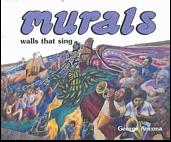
Drawing on the memory of a brief trip to Mexico City in his youth to study art, George Ancona, pays tribute to the great muralists he met there, Diego Rivera and Jos� Clemente Orozco, and muralists everywhere, in his photo-essay, Murals: Wall that Sing. Following a general to specific pattern, Ancona first gives a brief history of the art of mural painting which dates back to the early drawings of men on the walls of caves and later evolved into frescoes, which he defines for young readers unfamiliar with the term stating, "They covered the walls with plaster and painted on them before the plaster dried. These murals are called frescoes" (Ancona 2003, p. 4).
Following the introduction of the topic and its history, Ancona's book features specific murals from across America that highlight the people and culture of their neighborhoods, paying tribute to various cultures including Mexican-American, Native American, Jewish, Black, and Asian cultures. "In their own way, community murals seem to say, 'This is who we are, and we are here!'" (Ancona 2003, p 13). Many of the murals featured make political statements such as one featured on page 27 bearing the inscription "S�, se puede" and highlighting the influence of Emiliano Zapata, Subcomandante Marcos, Archbishop Oscar Romero, C�sar Ch�vez, and Rigoberto Manchu.
In giving specifics of mural painting, Ancona briefly discusses the various mediums used, including paint, mosaic tiles, and more recently, spray paint. He mentions graffiti, defining it for younger readers unfamiliar with the term, and concluding that it is now considered an art form by many. He also says that the presence of murals seems to discourage the practicing of tagging, or vandalism by writing on public or private walls. "It is rare that the murals get tagged with graffiti" (Ancona 2003, p. 34).
Every page of Murals: Walls that Sing contains one or more of Ancona's photographs of murals from across America. The bright and colorful photos enhance the text where Ancona describes the location and significance of mural, giving credit to the artists adjacent to the photos in a smaller font from the main text. The photographs of the murals from across America dictate the layout of each page, with text sometimes presented in one column and sometimes two columns, depending on the amount of space that has been taken up by the photograph of the mural which is the highlight of the page and the subject of the text. Although he gives city and neighborhood for each mural, those seeking to find them in unfamiliar areas would be aided by exact addresses which are not given.
Murals has no access features and because of its brevity, readers can easily find specific murals by just flipping through the book, but the addition of a bibliography would aid those who wanted to perform a more in-depth study of specific murals or techniques and an index would facilitate finding specific references within the book. Those who were inspired to actually see some of the murals from the book would benefit greatly from a listing of specific addresses of the featured murals since the only reference that is given is the city and occasionally the neighborhood within a large city.
Murals: Walls that Sing is a great addition to any collection, providing information on an often overlooked art form. Kirkus Reviews says, "A unique chronicle of our country's diversity and an engaging look at the connection between the arts and activism: Ancona's latest is first rate" (Kirkus 2003).
Ancona, George. 2003. Murals: walls that sing. New York: Marshall Cavendish. ISBN 0-7614-5131-5.
Kirkus Reviews. 2003. Review of Murals: Walls that Sing. From Marshall Cavendish. http://www.marshallcavendish.us/mcc/container.asp?series_id=1&imprint=Cavendish+Children's+Books&element=display.asp&sku=0-7614-5131-5 (accessed March 21, 2005).
Patricia Lauber
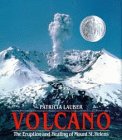
On May 18, 1980, Mount St. Helens, a volcano in Washington that had been inactive for over a hundred years, erupted, killing fifty-seven people and altering the land nearby. Patricia Lauber captures this tragedy in her book, Volcano: The Eruption and Healing of Mount St. Helens. Despite the devastation caused by the eruption of Mount St. Helens, as the title indicates, Lauber manages to convey to young readers that while volcanoes destroy, in their wake, the awesome power of the earth to heal itself and start afresh is also exhibited.
Lauber, a respected author of children's nonfiction, particularly in the field of science, works from specific to general in this account of the eruption of Mount St. Helens. Her book is presented in five chapters. The first two chapters describe the eruption, the next two tell how life returned to the mountain after the eruption, and the final chapter deals with the importance of volcanoes in building the earth and the interdependence of all life forms.
Using short, declarative sentences that make the account of the eruption accessible to young readers, Lauber describes in detail the eruption of the volcano. "For many years the volcano slept. It was silent and still, big and beautiful. Then, the volcano, which was named Mount St. Helens, began to stir" (Lauber 1986, p. 1). As she details the healing of the mountain in the third and fourth chapters, Lauber offers students explanations of many scientific concepts, establishing for them a foundation of scientific knowledge on which they can build. When explaining how the decaying trees, plants, and animals that were killed by the blast enrich the soil with minerals, Lauber conveys the interdependence of all life forms and explains how minerals are constantly reintroduced into the soil. "Decay is caused by many small forms of life, such a as bacteria, fungi, mites, springtails, beetles, millipedes" (Lauber 1986, p. 44). Even in writing about a tragedy, she instills hope in young readers: "Volcanoes destroy, but they also build. And after each eruption life does come back, finding small footholds and spreading" (Lauber 1986, p. 55).
Photographs, diagrams and drawings appear on every page, enhancing and further explaining the text. Each photograph is accompanied by a caption that gives young readers additional information. "How the Earth itself creates new environments for living things which in turn reshape the Earth is demonstrated visually as well as verbally" (Silverstein 1986). The book includes a table of contents, and an index to guide young researchers to pertinent information. While lacking a bibliography, in the "acknowledgments" on the verso of the title page, Lauber cites numerous scientists and geologists from the United States Forest Service and United States Geological Survey who aided her research and read her manuscripts for accuracy which serves to verify the facts presented in this book. The addition of a bibliography would be helpful for those wishing to perform additional research on the topic.
"This provides an excellent example of the interdependence of all plant and animal life" (Silverstein 1986). Volcano: The Eruption and Healing of Mount St. Helens provides a factual and interesting look at the eruption of the volcano and makes informative insights into the interdependence of all forms of life on Earth. It is a welcome addition to elementary and middle school libraries.
Lauber, Patricia. 1986. Volcano: the eruption and healing of Mount St. Helens. New York: Bradbury Press. ISBN 0-689-71679-6.
Silverstein, Meryl. 1986. Review of Volcano: The Eruption and Healing of Mount St. Helens. School Library Journal. http://reviews.schoollibraryjournal.com/bd.aspx?isbn=0027545008&pub=sl (accessed March 21, 2005).
911 Sartain Drive
Andrews, TX 79714
E-mail: [email protected]
Updated: March 21, 2005