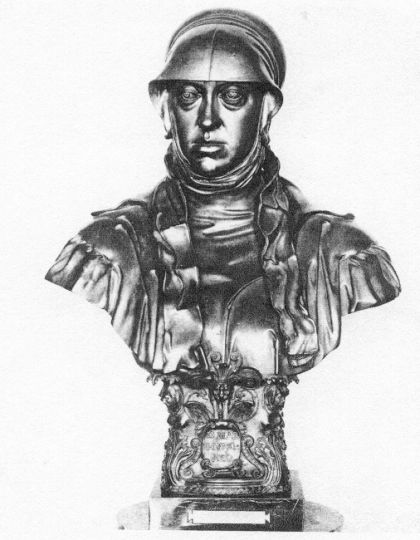
Mary wasn't raised at her parents' Court, for Philip and Juanna had to leave the Netherlands several times to claim their throne in Castile and Leon, after the death of Juanna's mother, Isabella of Castile, in 1504. Her aunt, Margaret of Austria, took the task of Mary's education on her.
Mary's father, Philip, died a year and ten days after her birth, and so Mary was left with her two sisters, Eleanora and Isabella, and her brother, Charles, at the Court of her aunt in Mechelen. Ferdinand, her brother, was raised at the Spanish Court by their grandfather, Ferdinand of Aragon, and her little sister, Catharina, was raised by her mother, who was put of the throne by her own father after the death of her husband.
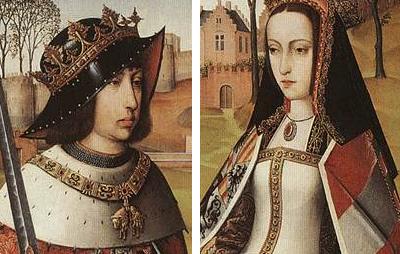
In Vienna, in 1515, there was a huge feast kept to celebrate the engagement. It was here that Mary and Lajos met for the fist time. In 1521, Ferdinand and Anne were married and a year later, Mary and Lajos. The two were 17 and 16 years old.
Hungary was a very poor country at that period, and were constantly threatened by Turkey. But with the coming of Mary, it had a short period of intellectual greatness. In 1521, Erasmus of Rotterdam, on of the greatest humanists of that period, paid a visit to Mary. He later described her as one of the greatest women of her age.
In 1526, Lajos took twenty-five thousand men with him on the battle of Mohacs. Hundred thousand Turks defeated his army, and Lajos was killed. This meant the ending if Mary's happy life at the Court of Buda, and was now, aged 21 year, a widow. Mary had to run away from her palace in Buda, but stayed in Hungary until her brother, Ferdinand, was installed as king, since he now was the heir to the Hungarian throne.
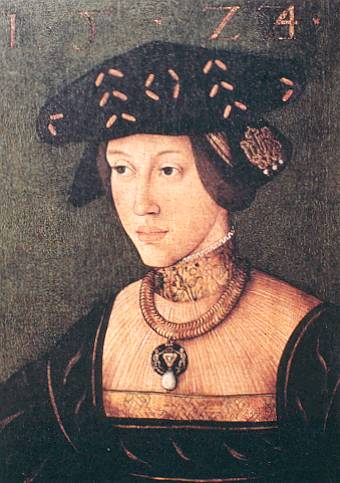

Mary accepted his request, because that would give her a new challenge and would help her out of her financial problems.
The people in the Netherlands loved Mary, for she was one of them. She had a good sense of leadership. And although she was very loyal to her brother, she would not merely do what he commanded her, for she would do what was best for her people. This way, she could prevent that several opposition-parties would revolt against Charles, something her successors would never succeed.
Mary was, besides a very intellectual and cultural woman, also a woman who loved falconry. This was her main outlet.
In 1555, she laid down her position in the Netherlands, and retired together with her brother Charles and her eldest sister Eleanora, to Spain.
Three years later her nephew, Philip II of Spain, asked her to come back to the Netherlands again, but when she finally agreed to, she passed away.