
Humpback Whale
|
|
|
|||
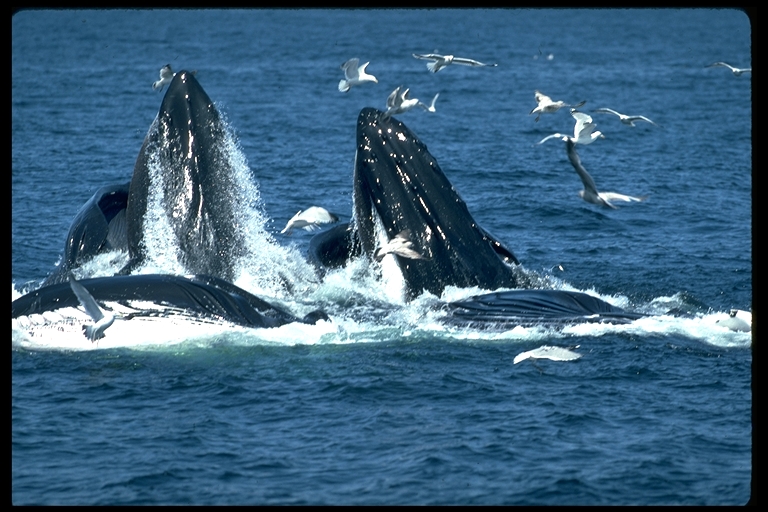
Description: The Humpback Whale is a very large animal, the male can reach up to 13m, 14m for the female. The weight of the whales can vary from 25 to 40 tonnes, which is very heavy. The body of the Humpback Whale is black on the dorsal side, and mottled black and white on the ventral side. This color pattern extends to the tail, where the distinctive markings are unique and allow for the identification of each individual whale. The flippers alone can make up about one third of the Humpback Whales weight. Humpback Whales are active, acrobatic whales. They can throw themselves completely out of the water, and swim on their backs with both flippers in the air. They also have the tendency to raise their tail flukes above the surface when they dive.
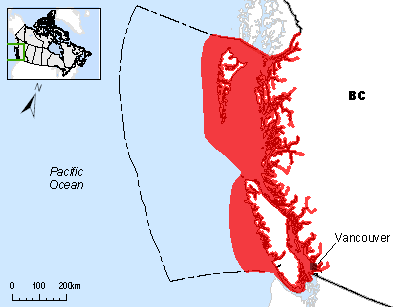
Habitat: Humpback Whales are found in tropical, temperate and sub-polar waters worldwide. In Canada, Humpbacks are found on both the east and west coasts, and belong to separate populations. The range of the Western North Atlantic population of Humpback Whales extends north to Labrador. Humpback Whales migrate seasonally between high-latitude feeding areas in summer and low-latitude breeding and calving areas in winter. Canadian waters are used primarily for feeding.
Diet: Humpback whales are seasonal feeders and carnivores that filter feed tiny crustaceans (krill - mainly Euphausia superba, copepods, etc.), plankton and small fish (including herring, mackerel, capelin, and sandeel) from the water. They are gulpers (not skimmers), filter feeders that alternatively swim then gulp a mouthful of plankton or fish.
Threats: The population of the whales, have declined over the years mainly due to human activities. The population that is endangered are along the British Columbia waters. They become entangled in fishing nets, be exposed to noise and chemical pollution, and suffer from habitat destruction. Over-fishing is also a major contribute to the decline of the Humpbacks prey. Another problem that is rising over the years is collision with big cargo ships. As the ships get bigger, the harder it is for the whales to move out of the way.
What Is Being Done: Well the Humpback Whale is protected under the federal species at risk or (SARA). But within Canada the Whales are protected under Department Of Fisheries & Oceans. People are not to disturb the mammal unless you get authority form Marine Mammal Regulations. If you like to get more information on the humpback whale click here.