
Beluga Whale
|
|
|
|||
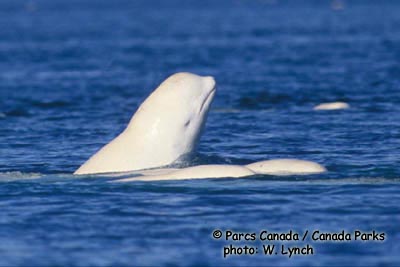
Description:
The Beluga is a pure white, toothed whale
with a prominent, rounded forehead. Its thick skin and
lack of dorsal fin are believed to be adaptations to cold, icy waters, to most
scientists. The
Female Belugas average length is 3.5 meters in length. Well the males, average
in length from 3.6 to 4.0 meters.
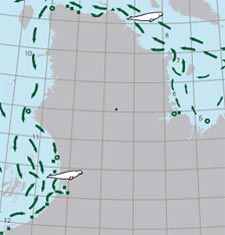
Habitat: The Beluga Whale lives in the cold
Arctic Waters of Hudson Bay. But as the season changes so their habitats. In the
winter they stay in Hudson Bay, in the summer they move close to the Labrador
Current.
Diet: Well the belugas diet consists of many different species, such as squid, tube worms, caplin, Greenland and Atlantic Cod. Well the young will stay close to shore and eat bottom fish. The young stay in warm water and eat small food, while the adults move in the deep and eat bigger types of food.
Threats:
Over
exploration is the main cause, to their decline in their population.
What's Being Done: Scientists are tracked movements and diving patterns to assist in the interpretation of aerial surveys and further understanding of stock boundaries. Projects also investigated the effects of noise disturbance. Ongoing every year, Inuit hunters report their harvest and provide skin samples from the hunt for genetic analysis. To assist in the identification of different beluga stocks and which stock the hunt is affecting. If you would like to find more information about the Beluga whale click here.