 |
| ome conomics & ivelihood ducation |
| Teacher Ivy Lobramonte |
ducation |
| H E L E |
| H E L E |
 |
| Grade |
| 5 |
| SEWING MACHINE |
TWO TYPES OF SEWING MACHINE and ITS PARTS |
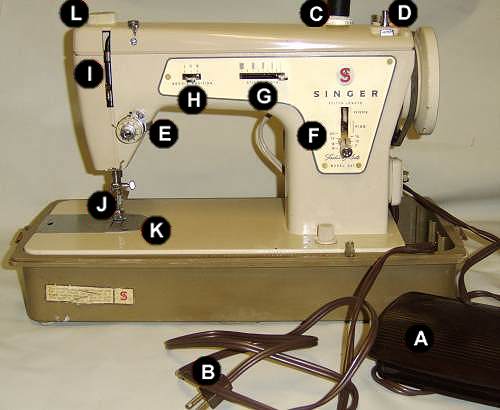
| I. ELECTRIC SEWING MACHINE - runs by electricity and instead of the push and pull method of creating stitches and patterns an electrical impulse literally shoots and returns the needle to place it in the proper area to coincide with the feeding mechanism and create patterns PARTS: A. FOOT PEDAL - The sewing machine foot pedal controls the speed of the sewing machine by how much pressure you apply to the pedal, in the same fashion that a car gas pedal works. B. POWER CORD - The power cord feeds electricity to the machine. The power cord should always be tightly connected to the sewing machine for a consistent flow of electricity. C. SPOOL HOLDER - The sewing machine spool holder does more than just hold a spool of thread. The spool holder is the first step of the thread being evenly fed to the sewing machine needle. There are many spools of thread and many spool holders to achieve this vital first step the thread will take as it travels to the sewing machine needle. D. BOBBIN WINDER - Bobbin winders can be found on the top, front or end of the sewing machine. Some sewing machines have a bobbin that is filled in place in the bobbin case. Most of these machines have a lever to lock the machine into winding the bobbin without un-threading the sewing machine. E. TENSION DISCS - Tensions disks control the amount of pressure applied to the thread for an even feed to the machine needle causing an evenly formed stitch. F. STITCH LENGTH ADJUSTMENT - The stitch length adjustment adjusts the length of the stitches your sewing machine makes. The adjustment takes place at the feed dog not the machine needle. G. STITCH WIDTH ADJUSTMENT - Stitch width adjustments allow you to vary the width of the stitch. This adjustment became available with zigzag capabilities being built into sewing machines. H. NEEDLE POSITION ADJUSTMENT - Some sewing machines offer you left, right and center needle positions, but you can adjust those settings by making adjustments in the stitch width. Most electronic machines have needle position built in to the stitch width adjustment. Adjusting the stitch width changes the needle position on a straight stitch. Where the needle falls in alignment with the presser foot changes with the stitch width adjustment. I. TAKE-UP LEVER - The take-up lever is an important part of threading the sewing machine and knowing the upward position of your sewing machine needle.' J. PRESSER FOOT - The presser foot exerts downward pressure on the fabric as it is fed under the needle. K. THROAT PLATE and FEED DOG - The throat plate is a removable part, which protects the bobbin and underside of the sewing machine. The feed dog feeds the fabric under the presser foot while you guide the fabric L. PRESSURE ADJUSTMENT for PRESSER FOOT - The pressure adjustment sets that amount of pressure that the presser foot will exert on the fabric. Downward pressure on the presser foot, holds the fabric between the feed dog and sewing machine foot. The amount of pressure would need to vary if you were switching between light weight sheer fabric and multiple layers of denim for the machine to feed the fabric. Reference: http://sewing.about.com/od/sewingmachineindex/ig/Sewing-Machines.--9k/Sewing-Machine-Parts---Front.--9m.htm NEXT PAGE |
 |
 |