
Blacksmith Hill
Blacksmith Hill, a major interpretive area of the museum, sits above the former black powder manufactory on a hillside midway through the Hagley Yard. Blacksmith Hill is representative of the many workers' communities that were scattered in the area of the powder mills founded by E.I. duPont.
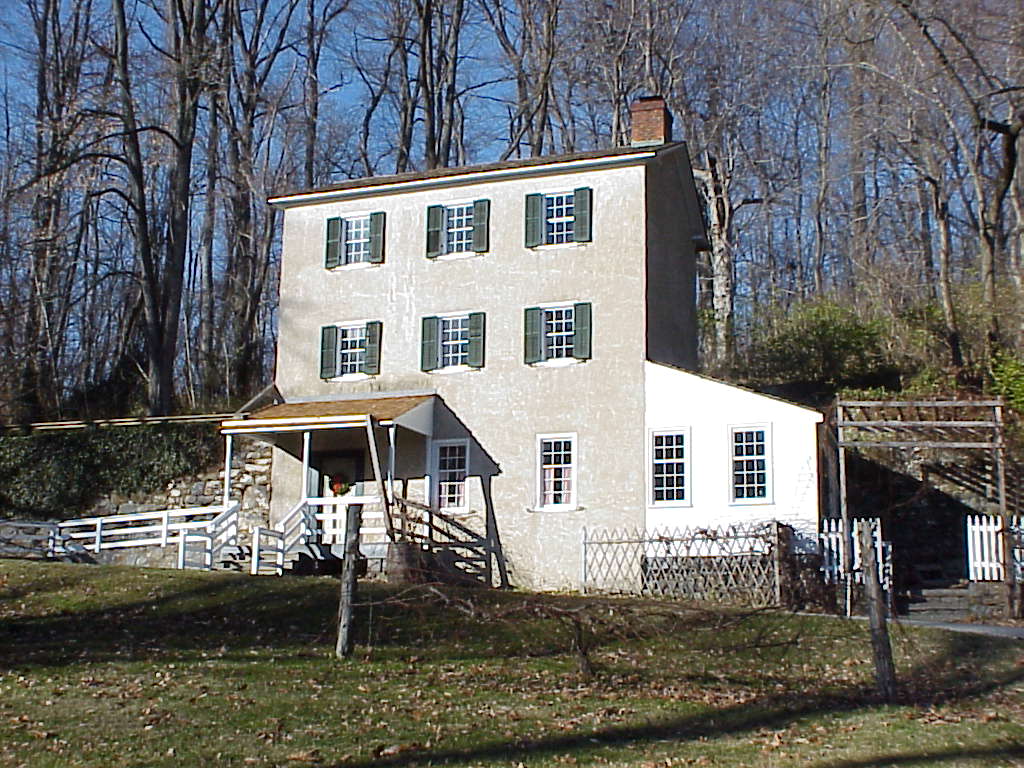 |
The Gibbons
House
This house was referred to in 1846 as the "New House for the foreman at Hagley". In 1859, John Gibbons was made foreman of the Hagley Yard and began to live rent free in the foreman's house which today bears his name. |
|
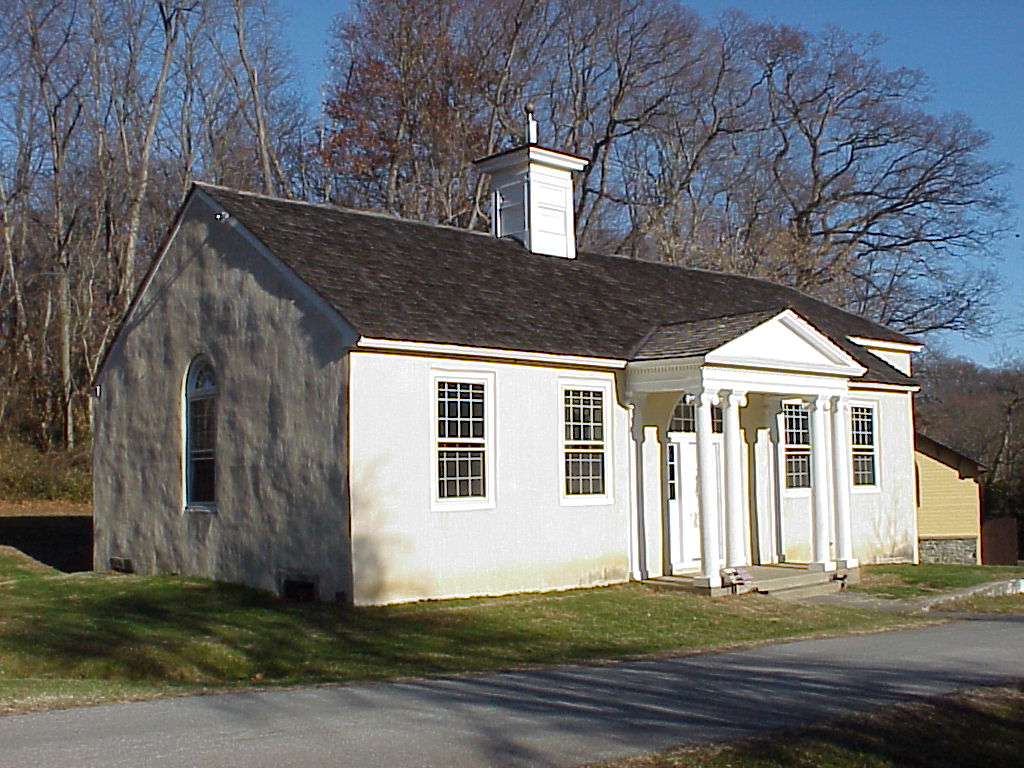
The
Brandywine Manufacturers' Sunday School
From 1816 to 1856 a school for children of workers in the manufacturies and from farms in the Brandywine region operated on Sundays. Children from catholic families as well as protestant demoninations attended the school. Reading, writing, recitation, and catechisms of all religons were taught by volunteer teachers. |
 |
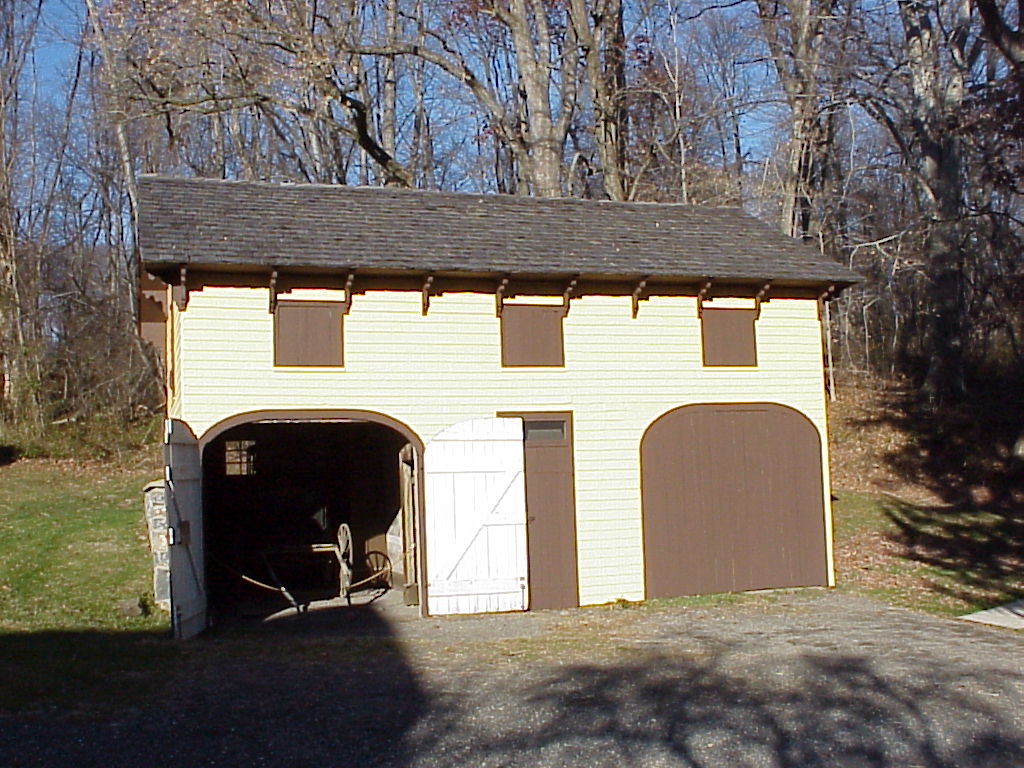 |
Belin Carriage
House
Henry Belin, Sr. built a carriage house in 1857, located across the road from his house on the downhill side of the Sunday School. Keeping a horse and carriage was a sign of affluence and status in a community where most traveled on foot. |
|
Belin
House
In 1818 company construction records show evidence that a house was built for Cardon de Sandrans. Sandrans came to the Brandywine in 1815 as secretary to E.I. duPont's father. He was involved in the tanning process downhill from his house. From 1826 to 1870 three men from the same family served as company bookeeper and lived with their families in the house. The house acquired the name from Augustus Belin, his son, Henry Belin, Sr., and Henry Belin, Jr. who all served as head bookeeper of the DuPont Company. |
|
| Other structures
once standing
Spring House Chicken House Cheyney House Hagley House |


Back
Forward
|
Introduction
| Henry
Clay Mill | Blacksmith Hill | Hagley
Yard | Eleutherian
Mills |
|
Navigation |
Teacher
Resources |