| PREACHING CHORDS IN bB |
THIS UTILISES THE DOMINANT 7TH IN THE I & IV, THE 3RD CHORD GOING INTO THE IV CHORD, THE DIMINISHED LEADING INTO THE V CHORD. THEN I USE THE FLATTED 3RD OF THE Bb TO START A NEW PROGRESSION, (( C#M7(b5) )) THEN I STAY ON THE C# IN THE LEFT HAND AND PLAY THE DOM. 7TH OF C#, (B) IN MY RIGHT: [ BM7(b5) ] THEN I PLAY THE 4TH OF C# IN THE LEFT HAND, ( Gb) AND THE 3RD OF Gb IN MY RIGHT: (Bbm7), TO FINISH IT OFF WITH THE 5TH OF Bb, (F), BY PLAYING THE DOM 7TH IN THE LEFT HAND: FEb AND THE 3RD OF THE F IN THE RIGHT HAND: AM7(b5), AND BACK TO THE I L.H. / R.H. BbF / AbM7 DF#C / Bb EbBb / DbM7 EBb / Edim FBb / AbBbEbGBb BEbA / DbEbAb BbF / DbM7(b5) ~~~~~~~~~~~~~~~~~~~ DbFB / BM7(b5) Gb / Bbm7 EbA / AM7(b5) BbF / AbM7 |
 |
| click on box to hear midi |
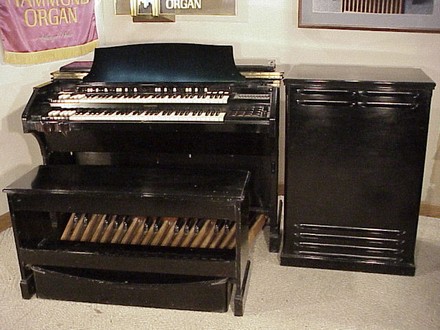
| Some of the most difficult songs to grasp for beginners are the �call and response� songs. Like �I�m a Soldier �,� Jesus On the Mainline, �God�s Not Dead��. and a host of others. These types of songs follow a particular pattern of: I__4__2__5__1 like this: Call: � God�s not dead� � CG / Cm Response: �He�s yet � CG / CM_______ alive� � EBb / EM7(b5) Call: � God�s not dead� � FEb / EbM7(b5) Response: �He�s � GbC / Gbdim6____ yet � FB / F6_____ alive� � EBb / DGC Now all you have to do is to get used to the pattern of the progression, this is the general way to play these types of songs. Usually on a keyboard, piano, or organ, you�re doing bass with your left hand of feet, unless you have a bass player. Now, remember the other theory post I did with the chord subs? That�s there it comes into play, NOTE: when you play a song, play it straight the first couple of times! Ok, now figure out what you can do for the I chord: CG / Cm, you can do a few things, either stack the chord: Cm / Bb, and you can travel with the Bb, what is meant by that is: in Bb, you have the Bb and Cm to play while holding the Cm chord in the left hand. Then you can alter the passing chord: EBb / EM7(b5), which is a nice passing chord in itself, the theory behind this chord is that it�s based of the 3rd of the key you�re in, instead of it being a minor, it�s a major w/ a flatted 5th, on the organ, you�ll play the Gb pedal. Now another way you can play that is, use the same left hand ( EBb), and in the right use the Ab chord! Why? Well you�re in E in the left hand�go three scale degrees and it�s what? Ab!!! Neat huh!?! To really trip out, you can use both chords right after the other, if you�re fast enough!! Now the 4th chord, the same principal can be applied like the I chord, Fm / Eb , or you can go this route: Fm / C, which is a FM7-9(b3) and it�s based off the 5th of the chord you�re playing, it also makes a great ending chord. Now for the last part, the 2_5_1 progression�the altering of these chords are fun. It�s a different take on the traditional 2_5_1, now the ii being usually minor, in the traditional progression, it�s not, you�re playing a tri � tone in the left hand: EBb and a diminished in the left: GbACEb, why is that? Well the left hand is playing the tri-tone of the D, the 7th and 3rd, and your diminishing the 3rd scale degree of the D chord which is Gb! (there�s that 3rd again) The altered chord for that can be a superimposed chord of the D, which is GbC / E, That�s the 3rd and 7th of D in the left hand and a MAJORED II of the D, which is E, in the right! The altered chord for the 5th, will be the same premise as the passing chord going to the IV off of C, [ EBb / EM7(b5) ] remember that chord? We�ll do that for the G now, which is based off the 3rd scale degree of the G chord: GEb / BM7(b5) = FBbBEb, but since it�s the 5th and it�s a lead in chord to the I, you have to play the root in the left hand with a b6th , (GEb ), then back to your I chord. The midi provided will let you hear what I�m talking about in call and response songs, I hope this has blessed you and helped you in your playing! |
 |
| CALL |
| RESPONCE |
| click on organ to hear midi |
 |
 |