 |
|
|
|
|
|
|
|
|
|
|
|
|
|
|
|
|
|
|
|
|
|
|
 |
|
|
|
Radical Christianity |
|
|
|
��������������� Today the western world faces a paradoxical situation. While collectively we claim to celebrate rebellion, freedom, nonconformity and idolize diversity we have, at the same time, become so intoxicated by liberal slogans that we have little real diversity of thought, especially at the higher levels of society, we have lost a great deal of our independence and are as radically conformist as any society in history. Think about it for a moment: we all watch the same TV shows and movies, wear the same clothes, are taught the same values in schools and all have about the same sort of governments. Hollywood tells us what is popular and the majority follows along, and those most often in the lead are those who most claim to be nonconformists, fighting the system and sticking it to the man and all that sort of stuff. But, obviously, these are nothing more than popular slogans. Thanks to one popular TV show women across America (and many other countries for that matter) rushed out like lemmings to get the Jennifer Aniston hair style. Why do you think basketball players get paid so much money to endorse a pair of shoes? Where the elites lead the masses follow, shouting about how liberal and revolutionary they are the whole time. |
|
|
��������������� Yet, it is actually even worse than that, because we are not simply talking about fashion trends but politics, culture, values and morality as well. Oddly enough, it has been the baby boomer generation, which was foremost in waving the flag of diversity, freedom and nonconformity which has enacted a horde of restrictive laws to protect people from their own judgment. This has come to include everything from banning smoking to fattening foods. They have also been just as adept at trying to control thought by passing laws against praying in certain places, forcing acceptance of liberal values and have even gone so far as to enact so called hate crimes laws which effectively state that the life of an African American or a homosexual is worth more than a Caucasian or a heterosexual. Things are even worse in Europe where, in Germany for example, the effort has been made to outlaw parents from home schooling their children because of fears that they will be taught Christian values instead of the liberal values of the state. There is no other conclusion to come to, if looking at the state of western civilization honestly, than to say that being an authentic Christian is the most radical, nonconformist thing a person can do today. |
|
|
|
��������������� Such a statement would, of course, be dismissed by the majority today who worship the term rebellion while at the same time marching lock step with what is handed down to them by the liberal elites of society. For so long Christianity has been associated with the establishment and the powers that be that to be a Christian is to be labeled an unthinking, totalitarian servant of despotism. It seems people have forgotten just how basically revolutionary Christianity is and how often even the most prominent and organized group of Christians, the Catholic Church, have struggled against the status quo, established thinking and the powers that be. Consider for a moment the things taught by Christ, the apostles and the early Christians and just how revolutionary these teachings were to the powers and mindset that existed at the time. |
|
|
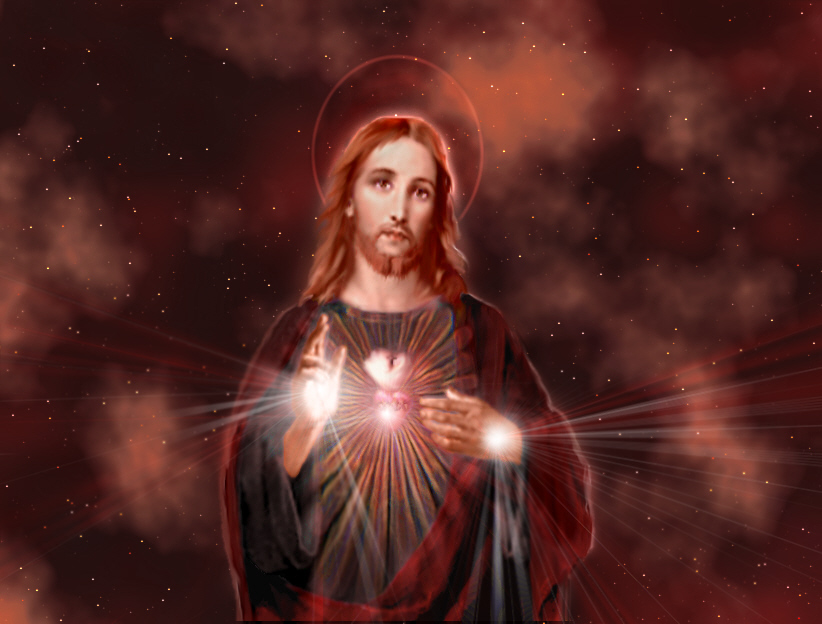
��������������� The Jews, over a long period of time, had become rather legalistic concerning the Law of Moses. They had embraced the letter of the law to such an extent that they forgot the spirit of the law and Jesus and His ministry were a radical wakeup call for this mindset. Whether it was performing some task on the Sabbath or showing mercy to a sinner who was in obvious violation of spiritual law, Jesus turned the establishment of His time on its head. Jesus was also radical in what He did not do. He did not throw out the Law of Moses entirely, rather He commanded all people to obey the commandments but to recall that the greatest commandment is to love God above all and love our neighbors as ourselves. He tore down the traditional Jewish belief that God was totally apart from man, unseen, and untouchable and beyond all human experience. Here was God becoming man, accepting our burdens, walking in our shoes, enduring temptation and suffering. God was visible, God was among us, and God could be seen, touched, adored and understood as never before. He walked with His people, shared their life, taught them, healed them and comforted them. He also sacrificed Himself and commanded us all to share in that sacrifice and become one with Him; even, in His most radical teaching, commanding us to eat His flesh and drink His blood to have eternal life. This was something even the majority of his disciples could not accept; it was just too radical! |
|
|
|
 |
|
|
��������������� Likewise, for those who accepted Jesus as the Messiah, he was radical as well in what He did not do. He did not come advocating war and rebellion as everyone expected the Messiah to do. He did not come riding in on a great, white charger wearing a crown of gold and holding a sword to destroy the Roman conquerors of Israel. Quite the contrary, He came in a humble way, as a helpless babe born to two common people and commanded the Israelites to give their taxes to the Emperor of Rome but to give their souls to God, which was the greater tribute. Unlike the so-called radicals of today, Jesus taught the principle of loyalty and to effect change through personal example rather than through force, upheaval and disobedience and it was in this way that His apostles changed the face of the Roman world. Imagine, for a moment, how shocking it was, and even how shocking many who call themselves Christians would find it today, to see St Paul walk among the altars to the pagan gods in Greece and to even point to one of those pagan altars and claim it for his own, the altar to the unkown god, saying that was who he worshipped. St Paul and the other apostles, by preaching the gospel of the crucified Christ, were turning every established religious principle on its head. |
|
|
|
��������������� At a time when throughout the world people believed in gods that were numerous, erratic and fallible, the early Christians taught about one, supreme God who was all knowing, good, holy, merciful and forgiving. They rejected the gods who were foremost of and for the elites; the chiefs and kings and said that rather there is one God who sees all as equal before Him, recognizing no classes, no genders, no slaves and no masters but is for all. The Christian God was Trinitarian in fact and in method, three in one and to be worshipped by all humanity, divided, but united in Him. The Christian God made a sacrifice of Himself and desired only our love and that we serve each other rather than wealth and material sacrifices. It was a totally radical teaching and for this very reason first spread rapidly among the slaves and the lowest echelons of Roman society, yet offering salvation equally to the mighty as well as the weak. It was the Christian God who said He would in fact use the weak to defeat the strong, the foolish to confound the wise and that which is not to be to ruin that which is. It was a totally revolutionary way of thinking and a radical view of God and the human condition. The Romans often made gods of their emperors but the Christian God said that Caesar, in all of his power, majesty and glory, was in just as much need of the salvation of Christ as the lowest slave in the land and both could come to Him the same way and accept or deny Him as the free will of each decided. In all of human history to that time, nothing so radical had ever been suggested as the teachings of Christianity. |
|
|
��������������� Consider, for example, the contrast between the Christian and the Muslim understanding of the supreme power in the universe. To the Muslims, Allah was a god of wealth, power and worldly comfort who could not be seen or touched but only mindlessly submitted to. In the Christian world, Almighty God humbled Himself, coming to the world as a helpless infant, obeying mortal parents and suffering a gruesome death willingly. The Christian God became visible, incarnate and desired that we accept Him freely and come to know Him through our own thoughts, reason and understanding as well as in our feelings. The Christian God did not promise material comfort or sanction plundering but said we should love our enemies, that the last would be the first and that the reward of God is not a garden paradise of worldly pleasures but the unimaginable spiritual joy of becoming one with God Himself and beholding the Beatific Vision. One of the radical ways in which the changes of Christianity was seen was in the end of the gladiatorial games of the Coliseum. Quite apart from the way of thinking in pagan Rome, Christianity taught that no human life was worthless and whether one was a Roman citizen or a slave, no human person could be killed simply for the entertainment of others. Likewise, the attitude toward people of differing faiths was originally very different. The Christians were originally persecuted for refusing to worship as the pagan Romans did, but the Christians were different and did not put people to death for their religious beliefs, something unheard of in the world at that time. |
|
|
��������������� Many people mistakenly think that once the Emperor Constantine converted, the Roman Empire became Christian and thus the Roman Catholic Church became part of the ?establishment? and not something associated with youth and vigor. However, these people would be wrong. Constantine only converted at the end of his life, and though he openly favored Christianity, he won no great favor by doing so as Christianity was far from being dominant even at this period. It was not until the reign of the Emperor Theodosius the Great that Christianity became the official religion of the Roman Empire, but even then, it was set off in a radical, revolutionary way. When Emperor Theodosius carried out a massacre he was admonished by St Ambrose of Milan and forced to do penance before being forgiven and accepted back into the good graces of the Church. Imagine how truly unprecedented and revolutionary this was. Here was the Emperor of Rome, the last to rule both east and west, the leader of the most powerful empire on earth, the commander of the almighty Roman legions, a man whose predecessors had often been deified and worshipped as gods themselves, submitting to the moral authority of a simple, penniless, celibate churchman. To say that such an event was unprecedented is an immense understatement. |
|
|
|
��������������� Further though, even with Christianity growing by leaps and bounds and coming to be accepted by the Roman emperors, the Christian lifestyle did not become mainstream until much later. When the Western Roman Empire fell, it fell as a result of decadence and a totally non-Christian attitude by many of the people who gloried in their gratuitous sex and violence (much like today) which led to their downfall. The true Christians were still very much in the minority and throughout much of the history of the Roman Empire it was the Christians who were being persecuted for their beliefs, who were forced to meet in secret, whose views were held to be radical and dangerous by the established powers and who offered mankind a totally knew way to look at God, the world and ourselves. Christianity totally upset the traditional way of thinking and for that very reason was held to be a dangerous ideology by both the Jewish authorities in Israel and the pagans of Rome before their example, courage, faith and love managed to convert enemies too powerful to destroy. Even the most hardened pagan Romans were astonished by the Christians and how they loved one another. But, you might be thinking, how radical could Christianity be after that, after it had been adopted by the Romans and become the official religion of the empire? The answer is quite a bit as the Christians faced the threat of heresy within and barbarian invasions without. |
|
|
|
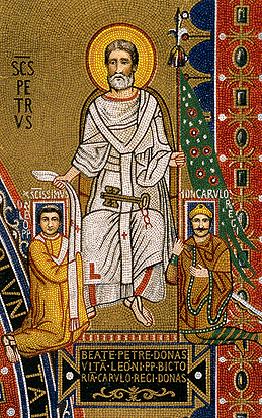
��������������� As far as heresies go, probably the most damaging was the Arian heresy, which denied the divinity of Christ. At one point in Christian history, almost the entire Christian world, including the Roman Emperor and much of the Church hierarchy, was going along with the heretical beliefs of Arius. While the Arian heresy was triumphant, being a true Christian was a dangerous thing and it was not until the death of the Emperor Constantius and the accession of Emperor Valentinian that the persecutions of Christians stopped and Arianism began to decline in power. It is often forgotten that the Goths and Vandals, so feared by Rome because of their ferocity, were in some ways the last gasp of the Arian heresy and demonstrate the brutality that went with it. Struggling against the sea of barbarian invasions really brought out the radicals in Christianity. The Church, and civilization as it was, would have vanished were not for the zealous monks in their mountaintop fortresses and the secretive missionaries going throughout Europe who kept the faith alive. These heroes of Christianity lived lives quite different from the mainstream. In Ireland, for example, many lived as hermits on the most remote and inhospitable islands on the edge of the known world. |
|
|
 |
|
|
|
|
|
|
��������������� Eventually, as we know, because of Christian men and women who kept faith and learning alive, Europe did emerge from the Dark Ages and entered the Middle Ages. This was the peak of Catholic Christendom, and a time associated with Christian triumph. Surely, during this time, no one could think of the Christians as the underdogs, right? Actually, it is quite possible considering the hugely powerful enemy forces surrounding Christendom and threatening her on every side. The Muslims, especially, were a threat with Islamic armies conquering previously Christian lands throughout the Middle East, North Africa and southern Europe. Likewise, though the Middle Ages represent the peak of Church power, throughout most of this period the Church was in a constant struggle with the secular powers such as the attacks on the Church in England by King John and the Investiture Dispute between the Pope and the Holy Roman Emperor in Germany. |
|
|
|
|
|
��������������� It was this rivalry between the Pope and the Holy Roman Emperor, caused by the Emperor trying to seize spiritual power to add to his political power, that there arose in Italy the long and bloody struggle between the Guelf and Ghibelline factions. This is not something widely remembered today, especially since many people have been misled to associate Catholicism with absolutism. The Guelfs, who supported the Pope, were particularly widespread among the Italian city states of the north which were locally ruled and even had republican governments. Keep in mind, they were not exactly what we would consider republics today as they were very traditional and hierarchical but more in keeping with the true definition of republicanism; and they supported the Pope to oppose being ruled by the Holy Roman Emperor in Germany. They wanted to maintain their independence and keep control of their own local affairs. On the opposite side, the Ghibellines tended to be drawn from the aristocracy and the transplanted German elites in northern Italy who wanted to extend the power of the Emperor and carve out privileged positions for themselves from the lands and wealth that the free city states had accumulated. This is not to say that either of these groups were exclusive, in fact one of the most zealous defenders of the Pope was an aristocratic lady named Matilda of Tuscany. In fact, the Middle Ages stands in stark contrast to the image painted of the Church today as being misogynistic. It was in the Middle Ages that Catholic women like Matilda of Tuscany or St Joan of Arc in France, were leading Catholic armies on the battlefield and held hugely important positions. |
|
|
All throughout this period it was the Church which protected the people from political tyranny and likewise provided the only network of social welfare available to the lower echelons of society. Long before public welfare systems controlled by the government and funded through heavy taxes it was the Church which built universities, educated the young, provided poor houses, hospitals and supported widows and orphans. Nearly everything championed by liberals today was originally provided by the Church and was only possible because the Church existed throughout Europe, independent of secular power, in unity. This should be remembered when people attack such things as the Crusades or the Inquisition since these were for the benefit of the common people of Europe. The Crusades were called to protect the defenseless Christian pilgrims to the Holy Land who were being attacked by the Muslims and the Inquisition, likewise, was necessary to weed out traitors and false converts who, had they been allowed to prosper, would have undermined the social network which cared for the physical needs of the poor in addition to protecting religious truth. |
|
|
|
��������������� Even as the Middle Ages gave way to the Renaissance, it was Christianity which protected human freedom and specifically the Catholic Church, as opposed to the Protestant churches which sprang up thanks to Martin Luther. This commitment can even be seen in the lives of some of the popes who are not generally well thought of today. Pope Alexander VI, probably the most notorious Renaissance pope, was aware of all the ugly and lurid tales being told about him, but famously commented that he did not care because Rome was a free city where a person could think, say and write whatever they pleased. Pope Julius II, often remembered as the Warrior Pope, we must remember, was not fighting for his own personal advancement, but rather to maintain the independence of the Church from the French and German secular powers as well to ensure that Italians continued to rule Italy; things we would regard as quite noble today. In England especially we see how the Catholics were the rebels fighting for justice against a corrupt government. Henry VIII dissolved the monasteries, robbing the poor of the social welfare these had provided, seized control of the church in England, making himself master of it, and dividing the spoils among his well to do supporters. The reaction was that the Catholics, particularly in northern England, rose up against the King in what was called the Pilgrimage of Grace in an effort to force Henry to revoke his unjust and harmful policies, Sadly, due to the sheer deceptive cruelty of the king, they did not succeed. Henry broke with Rome and so the Church was no longer able to act as a brake on secular power and the government seized absolute control over the lives of the people, claiming spiritual as well as temporal authority over them. |
|
|
��������������� On the continent conditions were much the same. People often forget that the only reason Martin Luther succeeded in his rebellion was because of his backing by the powerful elites in northern Germany who saw their chance to enrich themselves at the expense of the Church and seize even more power. History makes much of the Peasant Revolt against the Catholic authorities, but what is often not remembered is that Luther himself was shocked by this and stated that the nobles should massacre all the peasants! Likewise, on the spiritual front, the Catholic Church was fighting for hope and freedom against those who preached tyranny. One of the major ideas to spring from the Protestant Revolt was predestination; which stated that from birth we are all predetermined to go to Heaven or Hell and that nothing we do can make any difference in that regard. The Catholic Church opposed this and stood for the free will of the people, the freedom all people have to choose between good and evil and arguing that our salvation is not a predetermined thing but that we make the choice between accepting or rejecting God and that how we live our lives does matter in the end. Of course, many of the elites loved the Calvinist idea of predestination because the signs given to determine if one was preordained to go to Heaven was health, wealth and prosperity. The elites were certainly wealthy and prosperous and so of course they liked the idea that their privilege was a sign that they were destined to go to Heaven and no matter how wickedly they behaved they would be rewarded rather than punished. The Protestant Revolt was very much a revolt of the rich as G. K. Chesterton described it. |
|
|
|
��������������� Being a devoted Catholic soon came to mean being a rebel throughout much of northern Europe. England is a good example of this where nonconformity with the Protestant Church of England meant persecution by the government including fines, confiscation of property and even imprisonment and death. Priests had to be educated abroad, smuggled back into the country and then had to move incognito from place to place, being hidden in homes and saying mass in secret. During the reign of Queen Elizabeth I many Catholics were put to death for refusing to embrace the state religion and in Ireland especially the persecution of Irish Catholics by the English government was particularly brutal and led to the Nine Years War. For a time there was also, in Scotland particularly, an association of Catholicism with the dignity of women; something seldom thought of today. The Scottish Protestant leader, John Knox, wrote virulently against the ability of women to rule countries, mostly because at that time there were so many Catholic women holding power in Western Europe. Far from being part of the establishment, Catholics in England, Scotland and Ireland were fighting against the established powers and refused to conform to the state mandated religion. |
|
|
��������������� One example of this, even in the upper echelons of society, was Mary Queen of Scots. She was viewed by English Catholics as the rightful heir to the throne and there were many romantics who imagined leading a fight against the Protestant authorities in England and placing the lovely Queen Mary on the throne. Because of this threat she posed, Elizabeth I eventually had Mary, her own cousin, put to death. There is also quite a long list of English saints on the Church calendar who were martyred for their refusal to submit to Protestant supremacy. Few of these were as illustrious as St Edmund Campion, a very charming, well spoken convert to Catholicism who joined the Jesuits, was trained abroad and then returned to England to deliver the sacraments in secret. He was eventually executed by Queen Elizabeth I for treason, giving a very dramatic and articulate defense of himself; asking quite simply how preaching the same religion of all the kings and queens of England back to Saxon times and before could be considered treason. During these years, known as the Elizabethan Persecution, being a Catholic was a very rebellious, counter-cultural thing to do. While official government writings praise Elizabeth I as a benevolent, tolerant and beloved monarch, Catholics had to tell their side of the story secretly. In the works of Shakespeare, for example, who may well have been a Catholic himself; there are coded references to the Queen and the establishment hinting at how they were not as popular as they would like everyone to believe. |
|
|
|
��������������� Things became so bad during this time that the Pope actually absolved English Catholics of their obligation to submit to the Queen and supported efforts, such as the Spanish Armada, to remove her. One might ask how the situation in Spain, an officially Catholic country, was any better. The answer may be surprising considering how many writers have tried to associate Catholicism with absolutism. The old kings of Spain were not absolute monarchs and in fact ruled over each of their provinces separately and under specific conditions. The law was absolute in Spain, not the king, and this can be seen in the old oath of allegiance given at the accession of new Spanish kings. The oath stated that the people were as good as the king and the king no better than they, and promised true faith and allegiance only as long as the king obeyed the laws of the land and if he did not the promise was void. The Church cared for the people and kept a watchful eye on government whereas in England, and soon many other countries, the government took over the Church, confiscated her wealth which had been for the benefit of the poor, and distributed it among the new elites who were not the old nobility but up and coming sycophants surrounding the king or queen. |
|
|
|
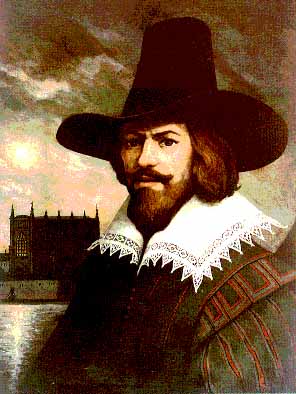
��������������� English Catholics were given some hope when Elizabeth I died and was replaced by James VI King of Scots who became King James I of England. He wanted the English throne desperately and tried to appear to be all things to all people. He allowed Catholics to believe he would be a more tolerant monarch and at first did stop enforcing the laws against them, though he kept them on the books. However, to his shock, Catholics began to come out of hiding in shocking numbers. It was believed then, and is still believed by many, that following the reigns of Queen Mary and Elizabeth I England was solidly Protestant with only a tiny minority of Catholics remaining. James I found out that this was not so and with his Protestant elites around him, they viewed the growing number of Catholics with contempt and paranoia and the laws against Catholics were enforced again. This, as everyone knows, led to the most memorable act of rebellion in English history which was the (supposed) plot by a group of English Catholics to blow up the king and the House of Lords on November 5 and install a Catholic government in their place. The plot did not succeed, and indeed might even have been a set up, but James I commanded that November 5 be celebrated from that day on as a holiday to honor the victory of the state over the Catholics and the Pope. Named after one of the plotters, Guy Fawkes Night is still celebrated in England and Northern Ireland to this day, though perhaps not always in the way James might have intended. Today, when some people chant, Remember, Remember the Fifth of November, they mean it more as a warning to the government than a celebration of the suppression of the plot. James I became even more anti-Catholic after this, but still not as bad as Elizabeth I had been. He was, however, even more egocentric than his predecessor. Whereas Elizabeth liked to portray herself as the Virgin Queen, in a subtle effort to make an icon of herself to replace the Virgin Mother, King James went a step further and liked to speak of himself as a god. The Divine Right of Kings was an idea he liked very much and his writings are full of references to his idea of kings being little gods who were absolute, above all reproach and beyond question. |
|
|
 |
|
|
|
|
|
 |
|
|
|
|
|
|
��������������� There were, of course, some Catholic monarchs who liked this idea too, but they had the problem of a powerful, independent Church to deal with which James did not. The most famous example is King Louis XIV of France who liked to imagine himself as one god in particular, that being the sun god Apollo. However, Louis XIV had the Pope to deal with and the Pope was constantly at odds with him. Even the famous Bishop Jacques Bossuet, who many consider the most eloquent defender of royal absolutism, was not an absolutist in the way we think of it today. Bossuet believed a king was absolute in that he held a sacred position and could not be removed; however, he did not believe that a king should be arbitrary and in fact Bossuet fell out of favor with Louis XIV several times for criticizing him on his morals and behavior. Whether it was his wars of conquest, his neglect of the poor, cynical behavior or his many mistresses, Louis was constantly at odds with the Church and the Pope throughout his long reign. Catholics could bask in some of the glory of the Sun King, since he did support, somewhat, the Catholics in Ireland, fought the Protestant Dutch and made his alliance with Charles II of England on the condition that he become Catholic. This also, however, had the adverse affect of making Catholicism more feared in Britain where it came to be associated with the French and the absolutism of Louis XIV. |
|
|
|
 |
|