
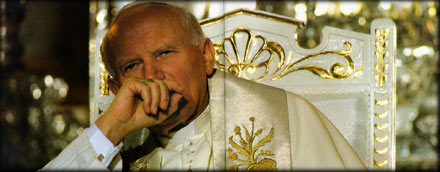
If you want to be different, if you want to be a rebel: be a Christian.
|
|
|
|
|
|
|
|
|
|
|
|
|
|
|
|
|
|
|
|
|
|
|
|
|
|
|
|
| In Great Britain, Catholics did finally have space to breath under Charles I who not only stopped persecuting Catholics but married one himself. He was also friendly enough toward the Church for the Irish Confederates to support his cause when the English civil wars broke out. By this time though, Catholicism was becoming more and more a minority as England became more radically Protestant, even Puritanical. Because of this, the Catholics supported the King in the civil wars, but even then it was a very anti-establishment thing to do. As most of the wealth in the country came to be in increasingly radical Puritan hands Parliament came to be dominated by these men. When the King stood up to them they attacked him and so the Catholics opted to fight for the King and against the government. In the end Charles I was defeated but the success of Parliament only proved how right the Catholics and other Royalists were. England, and by extension Scotland and Ireland which she dominated, came under tyrannical Puritan rule led by the dictator Oliver Cromwell. Just as the Calvinists had once set up Protestant police states in Switzerland, Cromwell did the same in Britain. He massacred Catholics in Ireland and was so strict and absolute in his Puritanical rule in England that it became illegal to go to the theater, go dancing or celebrate any of the traditional religious holidays, all of which had Catholic roots. As a result, Cromwell would go down in English history as the man who abolished Christmas. This was the absolutism the Royalists opposed by fighting for the King and Puritan rule was bad enough that when Cromwell died the monarchy was quickly restored. | |||||||||||||||||||||||||||
| ��������������� However, conditions did not automatically change for Catholics. Charles II wanted to have freedom of religion but did not want to provoke the Protestant elites. He was succeeded by his brother King James II, who was Catholic and who did try to enact freedom of religion; however he ended up losing his throne by doing so. Again, Catholics were the rebels of the country, but also among those fighting for the true king and legitimate authority. These adherents of James II, known as Jacobites, were to be rough and romantic thorn in the side of the British Protestant government for some time to come. James II attempted to restore himself in Ireland but was defeated by the Dutch usurper William of Orange who then betrayed the Irish after signing a treaty with them and the persecution of Catholics became worse than ever. In 1715 the son of James II launched a rebellion from Scotland but made little progress and was eventually defeated. His son, however, Prince Charles Edward Stuart, led the most famous rebellion against the government, then under the reign of the German George II of Hanover, in 1745. Charles led his army of Jacobites, predominately highland Scots but also including English and Irish troops in liberating Scotland and marching into England as far south as Derby before finally being driven back north and ultimately defeated at Culloden. | |||||||||||||||||||||||||||
| ��������������� Surely though, even if Catholics were the rebels of the British Isles, the same cannot be said for France where there was a revolution against the Catholic monarchy, right? Here again people seem to be forgetting what a rebel is. A rebel, a nonconformist, is someone who goes his or her own way rather than the popular direction everyone else heads in. The French Revolution, it is often forgotten, started with the liberal ideas of the idle rich who had the time and means to sit around writing condemnations of the Church and the King. After the Revolution broke out it quickly became more tyrannical than the monarchy had ever been. Once again, the government was telling people how to think, how to worship, even how to keep time! The mob may have been swayed by the silver tongued demagogues but the true Catholics were not and they rose up in rebellion against the Revolution. There were several areas in which this occurred, but the most famous is the Vendee where the counterrevolution was most successful for the greatest length of time. Remember also that there were nobles, even princes and sadly even clerics who went along with the Revolution because they wanted to maintain their positions and be acceptable to the powers that be. On the other hand, it was in the Catholic and Royal Grand Army of the Vendee that true egalitarianism was displayed. The nobles who led the people were requested to do so, because they had remained close to the people and had cared for them and at the same time there were generals in the Vendee army who were peasants. In fact the first commander of the army was a simple peddler! Further, beyond the Revolution, throughout the Bonaparte tyranny and the republics that followed, it was always the Catholics who stood in opposition to these governments and their cultural trends by remaining loyal to the rightful king. See the trend throughout history, how being loyal is often the most rebellious thing one can do? | |||||||||||||||||||||||||||
|
|||||||||||||||||||||||||||
|
|||||||||||||||||||||||||||
| ��������������� All across Europe things were no different. When the French invaded Italy and tried to impose Bonaparte tyranny on the people it was the peasants, under the leadership of a Cardinal, who rose up to oppose them and did so successfully even though many were armed with little more than pikes and pitchforks. When the disease of liberal absolutism hit in Spain it was the devoutly Catholic Carlists who opposed them and fought for the restoration of the legitimate king as well as a return to a more free and decentralized form of government. These were, in many ways, the religious and political equivalent of the Jacobites in southern Europe. The Portuguese had a similar situation as did the Pope himself ultimately when liberal, centralist, forces conquered Italy. Today, especially in Spain and Portugal, these rebel groups are often associated with rather radical nationalism, but no one could generalize all Catholic resistance movements in that way. As stated before, the Jacobite army included soldiers from England and Ireland as well as Scotland. Even more so, in the battle for Papal Rome, the army defending the States of the Church included soldiers from across Europe and even as far away as Canada with a defense minister from Belgium and a French and later Austrian field commander. | |||||||||||||||||||||||||||
| ��������������� During the 19th Century the Kingdom of Belgium was formed when the Catholic Belgians rebelled against the Protestant Dutch who had ruled over them. The Church played a key role in the uprising and it should come as no surprise. Before the French Revolution the Belgians had revolted against their Austrian ruler, Emperor Joseph II, because they would not tolerate his attempts to make the Church subordinate to the state. This led to the declaration of the short lived United States of Belgium, but eventually the rebellion was put down and a settlement was reached. It is rather unusual that the 19th Century, so often viewed as a conservative idealistic period, was also the period in which there were Catholic rebellions in Ireland, Portugal, Spain, Holland and Poland, which then belonged to Russia. However, it does not seem so unusual when one keeps in mind that even though Europe was ruled by kings, queens and emperors in the 19th Century it was also the century of the liberal revolutions of 1848, the century of nationalism and of Karl Marx. There is no period of history in which one could say that conditions were ever totally ideal for true Christian people. | |||||||||||||||||||||||||||
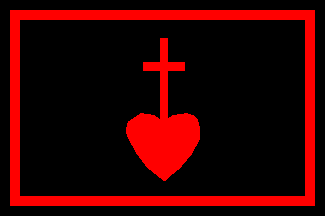
| Even in the Americas the same situation holds true. In Mexico people often think of the President Benito Juarez as the revolutionary leader opposing the French installed government of Emperor Maximilian. Yet, such a view is out of context. Long before the Austrian Archduke or the French arrived on the scene it was the conservative, Catholic Mexicans who were in rebellion against the government of President Juarez. The victory of Juarez established a liberal grip on Mexico that has yet to be broken to this day. In the early 20th Century this liberal tyranny became so unbearable that another Catholic rebellion rose up, again among the peasantry, known as La Cristiada. This was an event most liberal historians choose to ignore; a rural, poor, peasantry in rebellion against an atheist, oppressive government with the Blessed Virgin Mary on their banners and Christ the King as their ideal commander. They faced a brutal government which had desecrated their churches, hounded most of the bishops out of the country and which tried to obliterate the Catholic faith from Mexico. They lacked fancy uniforms and modern artillery but their fought with courage, skill and conviction, supported by a secondary army known as the feminine brigades which kept them in beans and bullets to continue the fight and time and again they defeated government forces. The rebellion reached a stalemate and was only ended when an agreement was reached which, just like the Pilgrimage of Grace or the Jacobite rebellion in Ireland, the ruling government quickly betrayed. | |||||||||||||||||||||||||||
| Mexicans at the time though, would not have viewed this as anything unusual. The so-called Father of Independence in Mexico was a Catholic priest who led a rebellion against the Spanish. However, he was far from being an orthodox priest and his revolt was more racial than religious. It was later, when Mexico actually won her independence from Spain, that the Catholic influence played a major part. Discontent with the liberal absolutist King of Spain, Ferdinand VII, brought about a change in attitude among Mexican Catholics who joined the rebellion against Spain under the leadership of General Agustin de Iturbide who guaranteed them unity, independence and religion. General Iturbide won the war and became the Emperor of Mexico, establishing a Catholic monarchy. He soon lost his throne, but even in the early Republic of Mexico, Catholicism was still the official religion for some time to come. Like many other countries, the rural peasants of Mexico were the strongholds of the faith while it was the wealthy, educated elites who often opposed the Church and who wanted to eradicate the faith from the country. | |||||||||||||||||||||||||||
| Mexico is an extreme example, but what happened there was happening to a lesser extent around the world. The newly united Germany was a prime example. The Catholics of the Rhineland and Bavaria were a major group but the new Germany was dominated by the militaristic and Protestant Prussians who, under Bismarck, launched a culture war against the Church. The result was dramatic. One of the areas under attack was Catholic education. This is something American Catholics should be able to relate to somewhat. Just like in the early U.S. the Catholic of Germany were unwilling to have their children taught by government schools, filling their heads with government propaganda. So, they developed a very independent streak when it came to education. In the U.S. this worked quite well and set the standard early on for Catholic schools being the very best in the country. Bismarck, however, saw this as dangerous. He did not want children who put God first, who thought on a local rather than national level and he wanted a public that would obey the state. The German Catholics resisted by clinging ever more to their faith and involving themselves in politics through the creations of the Catholic Center Party. | |||||||||||||||||||||||||||
| The Catholic Center Party in Germany stood for things many Catholics of today would find relevant. Some the issues in their platform were independence of the Church, freedom of Catholic education and the defense of marriage as a religious institution, not simply a legal one. The Church itself does not become involved in politics but certainly the leading opponent of Bismarck and his culture war was Pope Leo XIII, himself one of the shining examples of Christian rebelliousness. Leo is a man who still defies categorization. Considered a liberal by many for accepting the French republic and encouraging Catholics to vote, he is just as often considered the last of the princely pontiffs and stressed himself that he was a monarchist and did not believe in human equality. He was, and remains, however, most known as the Pope for the working man. He took the unprecedented step of supporting Catholic trade unions and criticized the modern, industrial world for treating workers like machines and putting greed ahead of Christian compassion. The Church had long stood opposed to socialism and communism but now Leo XIII was making clear that unregulated capitalism could be just as harmful and that the inhuman conditions under which many poor laborers and factory workers lived at that time were nothing short of sinful. At a time when Bismarck was threatening to shoot workers who went on strike, Pope Leo was applauding them for standing up for their human dignity. | |||||||||||||||||||||||||||
| Nationalism, humanism and the many ills which the Church had been warning about for some time came to a head in 1914 with the outbreak of World War I, a tragic conflict in which it seemed that the Christian west had determined to use every means possible to kill itself. It was a calamitous war and one of the greatest calamities to come out of it was the Russian Revolution. Sadly, the Bolshevik coup in Russia has been taken by many people to be the ultimate revolution; the sort of modern day standard to follow in peasant rebellions against a totalitarian government rather in the same way the French Revolution had done previously. Yet, like the French Revolution, the Russian Revolution is built on lies and half truths. For one thing, it must be remembered that, much like France in the old days, the Russian peasants were the most religious, conservative and loyal people in the whole country. They were often disgruntled with their local elites and landlords who oppressed them, and often rebelled against them, but never extended this attitude to the Tsar. Most peasants kept a picture of the Tsar in their humble homes and called him the Little Father. This was encouraged by their devout faith in the Russian Orthodox Church and if it seems odd that people like this would back a Communist revolution it should; because they did no such thing. | |||||||||||||||||||||||||||
| Today some people seem to imagine democracy as being some sort of mystical thing that only a privileged few are capable of understanding. This is, largely, nonsense as everyone can understand self government and everyone can tell the difference between freedom and oppression. The Russians had no experience with freedom and democracy but that does not mean they were incapable of grasping the concept. In fact, they had long sought for a more free and democratic society in Russia, though still in keeping with their ancient traditions. This movement came about, not by elitist political theorists or men like Karl Marx, but rather through the work of Jesuit priests. When the Jesuit order was suppressed many of the priests were welcomed into Russia by Tsarina Catherine the Great. She was no friend of the Catholic Church and certainly no friend of her own peasants, but she did value education and the Jesuits had a great reputation for their learning. The Jesuits in Russia planted the seed for the first democratic movements which were not radical or anti-Christian. Unfortunately, these Russians were overshadowed by those who were Communists yet even by the time of the Russian Revolution, the Bolsheviks were still very much in the minority. It is a sad but underreported fact that the Soviet Union was inflicted upon the Russian people by money and forces outside of Russia to benefit the new elite and no one else. | |||||||||||||||||||||||||||
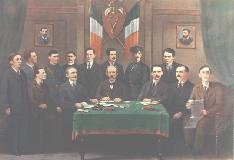
| The World War I years also saw one of the most romanticized Catholic rebellions of modern times which was the Easter Uprising in Ireland. Under the leadership of the gifted writer Patrick Pearse, the Easter Uprising was a short-lived effort to create a Republic of Ireland. The rebellion was quickly and mercilessly crushed by the British army, but it accomplished a great deal in the minds of the Irish people. Because it was so badly organized and failed to succeed, various groups of diverse political thought could unite behind it. Some of the plotters were avowed socialists while others wanted to make the German Prince Joachim the new King of Ireland. Pearse certainly saw the rebellion this way, writing of the need for a sacrifice for Ireland to achieve her independence in the future. Certainly many Irishmen who opposed the rebellion as senseless nonetheless joined the nationalist cause out of revulsion to the British reprisals that followed it, so no one can say that the Easter Uprising was not a significant event in the struggle for Irish independence. | |||||||||||||||||||||||||||
|
|||||||||||||||||||||||||||
| The inter war years were difficult for Catholics most everywhere. In France Catholic opponents of the government were becoming increasingly marginalized. In Italy the kingdom and the Church were still at a standoff, the Catholic party in Germany struggled against the chaos that ensued following the loss of the monarchies and even as independence came for the Irish Free State, British control remained in Northern Ireland where Catholics continued to be discriminated against. However, none of these examples were as dramatic as the fate which befell what had once been the most Catholic country in the world: Spain. In 1931 King Alfonso XIII left the country and Spain became a republic, soon becoming dominated by the communists. The Catholic population especially was singled out for persecution and thousands of Spaniards, men, women, children, priests and nuns were massacred by the republican forces. The Spanish Phalanx, a nationalist group, rose up to oppose the republican government as did the traditional Catholic Carlists who had long resisted the ruling government and remained loyal to the legitimate kings. A civil war ensued and soon Spain became a battle ground for the dominant radical ideologies of the time. | |||||||||||||||||||||||||||
| Joseph Stalin, the bloodthirsty dictator of the Soviet Union, sent arms and support to the republican government. Eventually, the USSR would become the primary source of support for the Spanish republic and communists and assorted leftists from other countries volunteered to fight for the state. One such group was the Abraham Lincoln Brigade from the United States, composed of communists, socialists and assorted American leftists. The rebel forces formed a coalition to oppose the government under the leadership of General Francisco Franco. Volunteers also came from other countries to support the rebels and whereas the Soviet Union supported the government side, Antonio Salazar of Portugal, Adolf Hitler of Germany and Benito Mussolini of Italy came to the aid of Franco and sent military forces to aid the rebels with Mussolini providing the most assistance. This time the rebels were successful and after a life of eight violent and bloody years the republic was overthrown and General Franco became regent of Spain. | |||||||||||||||||||||||||||
| The Spanish Civil War has been widely called a dress rehearsal for World War II, a war focused on Nazi Germany. Here again, the Catholic Germans played a leading role in the opposition to Hitler and the Nazi regime. One of the earliest and most famous was the Cardinal Archbishop of Munich Michael von Faulhaber who never ceased to preach his opposition to the Nazi state despite two assassination attempts against him. Considering that the overwhelming majority of the German | |||||||||||||||||||||||||||
|
|||||||||||||||||||||||||||
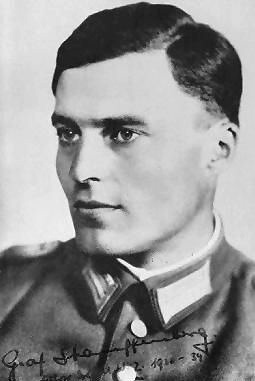
| population were or became zealous supporters of Hitler, any opposition to his regime too amazing courage. Perhaps the most heroic of those Germans who did so was Colonel Claus Schenk Graf von Stauffenberg, a veteran of the campaigns in Poland, France and North Africa. As a committed Catholic he was ashamed of the anti-Semitism of the Nazi government and of the atrocities carried out in Poland and Eastern Europe. He and other Germans, many of them Catholic, dreamed of getting rid of Hitler and establishing a peaceful, decentralized, Christian monarchist Germany even if it meant losing the war. As a German officer, Graf von Stauffenberg felt it his duty to save his country from her dictator and his oppressive government and that meant assassination. He discussed this with the Bishop of Berlin who assured him that tyrannicide was not an offense to God. On July 20, 1944 Graf von Stauffenberg planted a bomb with the intent to kill Hitler and allow for a military coup in Berlin to overthrow the Nazis. However, the bomb failed to kill Hitler and the coup was crushed. Graf von Stauffenberg was shot and the other plotters were eventually captured and died horrible deaths. Nonetheless, Graf von Stauffenberg is still honored in Germany today for his heroic effort of resistance to what was the prevailing popular opinion of the time. | |||||||||||||||||||||||||||
| Hitler lived on and took all Germany to ruin along with him before the war ended in 1945. However, for many Christians in Europe the situation did not improve. The Soviet Union was not fighting to liberate countries like the other Allies, but to dominate them and impose communist governments on them. Around the world communism was taking advantage of the fall of the Axis powers and the weakness of the colonial empires of Europe to dominate much of the world. All of Eastern Europe was under the rule of the Soviets and their puppet regimes and just as they had done in Russia these governments inflicted oppression on the people and particular cruelties on Christianity. Once again, the Christians were at the forefront of resistance to what was politically correct and leading the rebellion against the dictates of an unjust government. Just imagine the soul crushing sadness of the peoples of Poland and Czechoslovakia who had been conquered by the Nazis, struggled against German rule throughout the war only to then have the Russians inflict yet another totalitarian tyranny on them at their weakest point! Resisting took immense courage, but there were Christians of sufficiently radical faith to do it. | |||||||||||||||||||||||||||
| In 1956 some of these radicals sparked a rebellion against the communist government in Budapest, Hungary. The authorities threw the full weight of their military against the Hungarian Freedom Fighters who held out one day after another through sheer determination. The angered communists butchered helpless civilians in retaliation but this only further outraged the populace and strengthened the will of the Freedom Fighters. The situation became so bad that Moscow began to worry that the rebellion might succeed and could then inspire other people to revolt against their communist rulers. After a week of street fighting tanks of the Soviet Red Army invaded Hungary to crush the rebellion. The rebels called on the United Nations for help but the UN did nothing. As the Soviets butchered their way through the capitol city the Hungarians called desperately for help from any source in the free world, but no help came. The only acknowledgement of their suffering was a UN resolution advising the USSR to stop interfering in Hungary. The Soviets probably had a good laugh before throwing the message in the trash. Budapest was practically destroyed and hundreds of Hungarians were massacred, thousands of more shipped to concentration camps in Siberia and a new government was put in that placed Hungary directly under Russian control. | |||||||||||||||||||||||||||
| From this time onward Christian people were forced to take up arms against communist oppression on the other side of the world too in French Indochina, what we know today as Vietnam. The communists had taken advantage of the confusion of World War II and the Japanese occupation to supplant the French and declare themselves the new masters of the country. The Catholic population was not prepared to tolerate this situation and they had a glorious tradition to inspire them. For centuries the Catholics of Vietnam had been persecuted and had become quite adept at leading rebellions against the pagan emperors who tormented them. Now they did so again, this time fighting the government of the dictator Ho Chi Minh. In South Vietnam a Franco-Vietnamese army officer named Colonel Jean Leroy formed what he called the UMDC or Mobile Christian Defense Units to fight against the communist forces in their region. Within one year, operating solely on his own, Leroy and his Catholic brigades made the entire province communist free. Similar actions were carried out by the prince bishops in the Catholic areas of central Vietnam where the local clergy acted as the secular as well as the spiritual leaders of their dioceses. It was truly amazing what these Catholic people were able to accomplish but, sadly, in the end the strength of their enemies and the weakness of their own opposition government and allies nullified all they had fought for. | |||||||||||||||||||||||||||
|
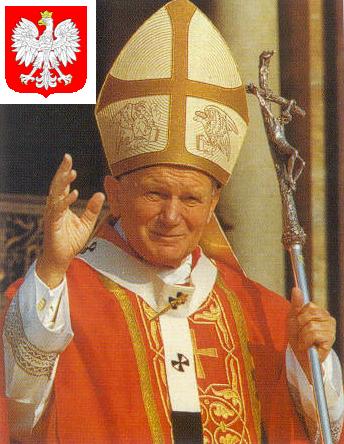
In Asia the communist forces were eventually successful and remain in power to this day, however the same can not be said for Europe where the Soviet Union collapsed and a large part of the effort behind that collapse goes to the Catholics of Eastern Europe and the inspiration of one of their own Pope John Paul the Great. The dominos started falling in the papal homeland of Poland and came to a head after 1980 with the rise of the anti-communist Solidarity movement. The people of Poland | ||||||||||||||||||||||||||
| had endured some of the worst hardships imaginable, first under Nazi rule and then under communist rule but they clung to their faith all the more tightly and having one of their own on the papal throne reinvigorated them to even greater courage. The communists arrested them, they went to mass anyway. The communists murdered them, they went to mass anyway. When the communists destroyed their churches they held mass outdoors; nothing would stop them from living their faith. John Paul the Great inspired them, promising that if Soviet troops invaded Poland to stop the Solidarity movement he would leave Rome and stand beside his countrymen in Poland. He traveled to his homeland where, despite communist threats, hordes of people came out to see him and he openly challenged the government to stop their brutal practices. So worried did the communist authorities come that they actually set up a Muslim fanatic to assassinate the Pope in 1981. Of course, he did not succeed since, as the Pope said, the Holy Mother intervened to save him. Faced with such massive opposition along with the political opposition of leaders like Ronald Reagan and Margaret Thatcher the Berlin wall came down, the Soviet Union collapsed and freedom at last came to Eastern Europe. | |||||||||||||||||||||||||||
| This collapse, as most social upheavals do, also brought about new problems as well as opportunities. One communist country where Catholics had been particularly mistreated was the Republic of Yugoslavia, a conglomerate of nations patched together after World War I under the overall domination of the Serbians. Among these subject peoples were the Catholic Croatians who had long dreamed and struggled for a return to independence. With the communist regime falling apart the Croatians saw their chance and boldly declared independence. They were met with hostility from the Serbs and indifference from much of the rest of the world. Nonetheless, their hunger for freedom refused to die and they battled fiercely against the Serbian military to secure the sovereignty of Croatia. It is a mark of the hypocrisy of the secular world that when the tiny oil sheikdom of Kuwait was attacked by Saddam Hussein an entire coalition of nations from around the world stepped in with stunning military force to liberate them. Yet, when little Croatia was attacked by brutal Serbian forces hardly anyone took notice and no one came to their aid. The fighting was brutal and atrocities were common but here again the resistance was successful and by 1995 the war was over and the independence of Croatia was secured. Here too Pope John Paul the Great played a role as the Vatican was one of the first powers to open diplomatic relations with Croatia and in 2003 the Pope visited the country where he was received with wild enthusiasm. | |||||||||||||||||||||||||||
| In recent times though, Christians have not often had to take up violent resistance, at least not in the western world. However, Christians have very much become the true counter cultural rebels. One only has to take a look around at the state of modern, popular society to see that it is contrary to all Christian morals and the most nonconformist, radical rebels around are the hard core Christians who refuse to follow the crowd, who refuse to bend to popular opinion but continue to go their own way. Modern, secular society says children are a hindrance to personal comfort. Christians have big families anyway. The crowd says that religion is outdated, harmful at worst and a rather useless private thing some people do at best. Christians say that their faith is the center of their lives and influences everything they do. Popular opinion says the government should educate your children; determine what is right and wrong, moral and immoral. Christians say we will educate our own children and God tells us what is right and wrong and His law is above the laws of man. Popular culture pushes sex and a promiscuous lifestyle at every turn. Christians say that sexual relations are a gift from God which married couples keep sacred unto themselves alone. Modern society preaches selfishness, greed and materialism. Christians preach selflessness, charity and wait for their reward in the Kingdom of Heaven. To be a Christian today is to go against the prevailing policies of government, the trends of society and the dogmas handed down by the secular elites. The true Christian of today is a true radical who bucks the trends and does not care what the world thinks about him or her. | |||||||||||||||||||||||||||
| In recent decades we have seen the Sexual Revolution go from bad to worse, reaching such a point that public schools hand out prophylactics and more money is spent on treating erectile dysfunction and breast implants than Alzheimer's. Everyone really is doing it; from pre-teens to the old and decrepit. The radical Christians say no, they will swim against the stream and remain chaste until marriage. We have seen divorce rates skyrocket, tied to the sexual revolution make no mistake about it, and yet the younger generations have seen that this lifestyle did not make their parents any happier and indeed made life worse. The Christians say no, marriage is a sacrament and when they say "until death do we part" they mean it. Even when many in the Church have gone astray and the evils of modernism have crept back in, like the smoke of Satan as Pope Paul VI said, the young rebellious generation is saying no to the established practices of their parents and opting for real, traditional Catholicism. These are the young people who flooded the World Youth Day meetings and have become known as the John Paul 2 Generation, including lay young adults and young priests. Rather than follow along with the mistakes of their parents, the true Christians are rebelling and demanding true, un-watered down, ultra-Catholic Christianity. When world opinion turned against the unborn and began massacring them in record numbers the Christians stood up and are resisting with all their strength. These are the people who do not fit in, who do not follow the crowd, go with the flow or blindly accept what is dictated to them by their government, their media and their society. | |||||||||||||||||||||||||||
|
|||||||||||||||||||||||||||
| Think about it. The tough acting guy living the playboy lifestyle, the haughty girl reading the fashion magazine and trying to look like Paris Hilton, the teenage punk with the tattoos up his arm and the ring in his nose or the high school girl who maintains her popularity by jumping into bed with every guy that comes along --all of these would claim to be the wild people, the independent types, the non-traditional. Yet, you are already thinking now about just how normal this behavior is in our society. There is nothing out of the ordinary and anyone can probably think of a whole list of people who are just the same. These are the conformists in our society no matter how much they try to assure themselves otherwise. Rather, as we have seen, it is the true, devout Christian who has always been the real radical, the real rebel and the true revolutionary. The Christian believes something fantastic, holds to a faith that is mysterious and worships a God full of radical ideas; the God who said the last shall be first, love your enemies and that a person with true faith can move mountains. The real radicals are the Christians. If you want to be different, if you want to be a rebel: be a Christian. |
|||||||||||||||||||||||||||
|
|||||||||||||||||||||||||||