Modifying Skate Fit and Balance:
Pain and Pressure Points
© 2003, 2004, 2006, 2007, 2008 by Mitchell Grunes
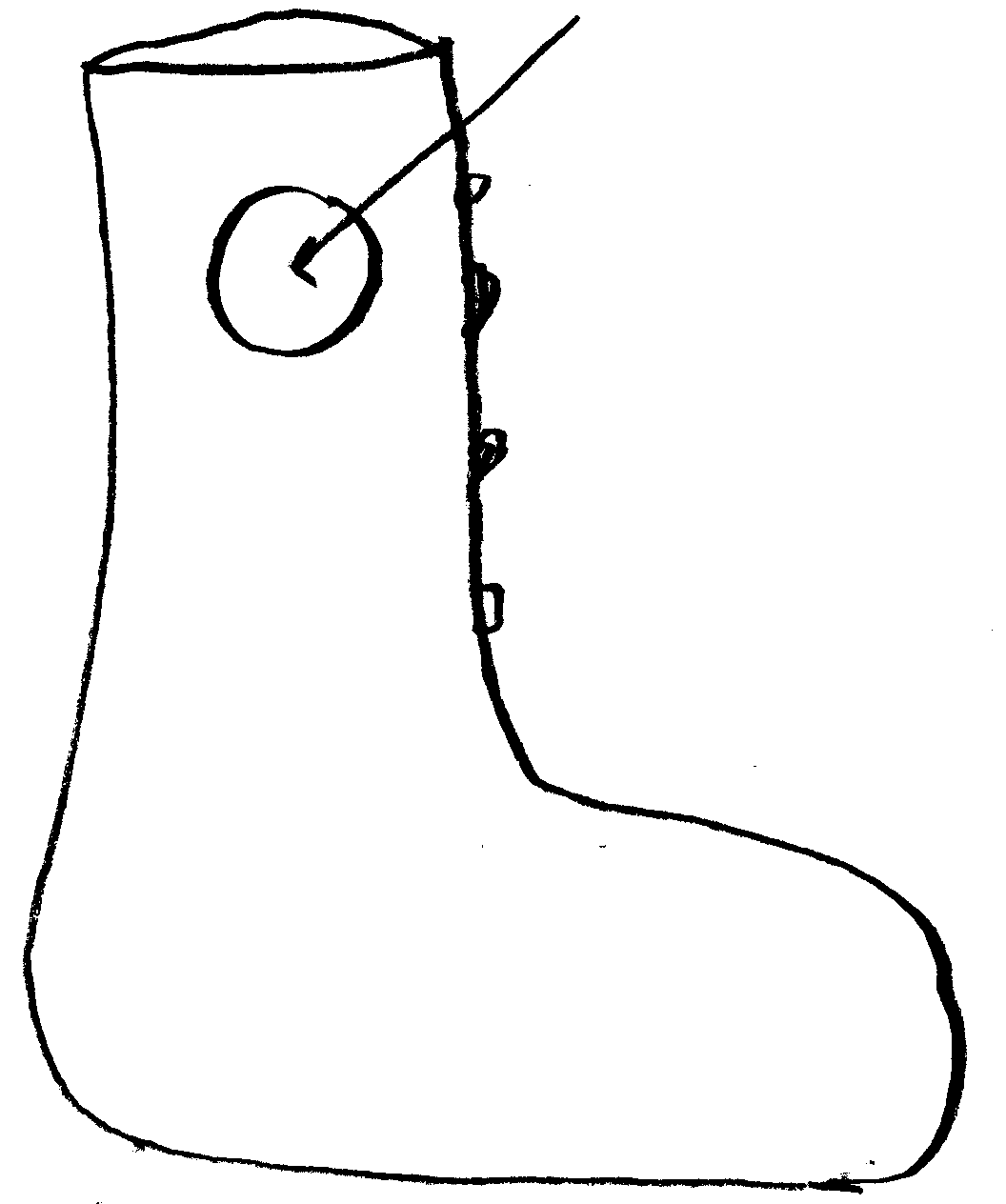 Your first step is to locate the points where there is substantially more than average
pressure on each foot. For example, these might include the inside and outside ankle
bones (pictured), the big and small toe, the arches (sides of the foot),
and/or the top of the midfoot. Make space at these points first so you can judge
the rest of the fit. It is a good idea to mark them with a small piece of athletic tape
while your foot is in the boot.
Your first step is to locate the points where there is substantially more than average
pressure on each foot. For example, these might include the inside and outside ankle
bones (pictured), the big and small toe, the arches (sides of the foot),
and/or the top of the midfoot. Make space at these points first so you can judge
the rest of the fit. It is a good idea to mark them with a small piece of athletic tape
while your foot is in the boot.
Stretching Leather
Stretch each of these points with a ball and ring pliers.
This is a locking pliers that has a ball at one side, and a somewhat larger rink on the other.
The ball goes inside the boot where you want to push the leather out.
The ring goes outside, over the place you marked with tape.
Squeeze the pliers, while tightening the set screw to lock it (Most are not strong enough for
the set screw to be used to tighten the squeeze). After an hour, the leather has stretched
a little - readjust. And again, after an overnight stretch. After a day or more, you will
have a fairly complete stretch.
It helps to heat the leather a little (about 100
degrees F), but not enough to burn the leather or melt the glue - perhaps the low
setting on a hair dryer. And to use a higher temperature - 140-160 degrees - while
applying the ball and ring pliers.
It also helps to first work in an oil like Lexol Boot
Conditioner. But Lexol should not be applied to suede - it will discolor and destroy
the knapp. Water (with a little alcohol to disolve the oil in the leather) stretches
leather better, but water, if left in, tends to crack and stiffen leather, so you will
have to dry it after use, and work oil back in. Many experts prefer to avoid moisture.
(But most boots are formed over the last by a combination of sewing, heat and moisture
in the first place.)
Next
My Home Page
Modifying Skate fit and Balance
The experts
Getting the Right Boots
Pain and Pressure points
Overall Size
Equalize Pressure
Blade & Balance
Longevity