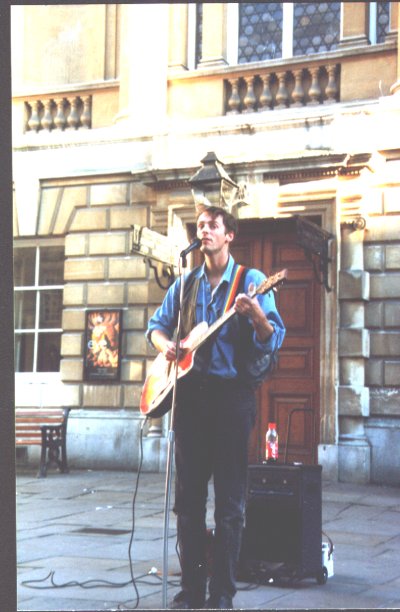
 ABOUT THE CD: "GRODSONG"
ABOUT THE CD: "GRODSONG"
The CD title served two purposes. Firstly this was a CD of songs performed and recorded in Grod's unique and solitary way, secondly it was his swan song.
It was made in the belief that this would be his last CD. He had run out of money, energy and health. Also way behind on the rent, homelessness loomed.
Extra income from busking was infrequent, as Grod became the focus of attention of some of the drunken homeless people and addicts congregating around the Bath Abbey.
Their day was spent drinking, taking drugs, begging off the tourists and hassling the busking acts. Often acting in such an intimidating way that people sitting listening hastily departed, leaving no audience to play to or donate.
Then it turned to hassling the disillusioned busker for what little money he had earned, before the audience scattered because of their presence.
But there better times when these characters weren't around. These were a joy and again people began asking Grod if he'd recorded any of the cover versions he sang with his new found recording techniques and style?
That it would be interesting how he applied his style not only to his songs, but the famous classics he sang acoustically while busking.
So there the challenge lay.

Because of personal circumstances, away from the performing, a constant cloud of worry and depression constantly encircled Grod. It was though this ever-constant mood that seemed to dictate his recording style.
More often then not, Grod would throw himself into recording as soon as he returned home from busking. Stopping only from exhaustion normally around 6am.
Having kept focused on the music he was creating he was blocking out the demons of the night and loneliness.
He could then sleep soundly having made it through the night, and avoided the moodiness of people in the morning. Entering the world only when the sun was at it's highest and the people around him were generally in a better mood.
Using the concept of "Yours & Mine", this CD would be half "cover versions" followed by self-penned songs.

So the challenge began. The most popular song in his set was easily "Where Do You Go To My Lovely" by Peter Sardstat. But with all classics to recreate the original would be pointless, it needed a lot of work to make a distinctly different version.
The lyrics of the song though held a lot of value with Grod. Knowing his former girlfriend, who had abused and ruined him, was happily partying with a new lover. This after instigating the run of her own marriage.

She enjoyed tasting the extremes of life, both immoral and illegal, but by day being paid a respectable salary, for a respectable job. For the council, promoting family values.
The same council trying to ban the busker that so many people enjoyed. The same woman who in vengeance had spread malicious falsities to ruin the reputation of a much loved children's entertainer. Grod's alter ego, "Happy Graham"

She was rich, he was poor. She is a woman, he is a man. So she automatically wins. The truth has no bearing on the issue.
How could she sleep at night? Where did her mind go to when alone in her bed?
Because of the songs popularity, Grod normally started his set with it. It was his calling card, he was here, come and listen! Then swirling around as he sang it.
The swirling no doubt gave the way people heard the song giving it a different feel and dimension. It was with this thought that the song was recorded using a swirling feel to it.
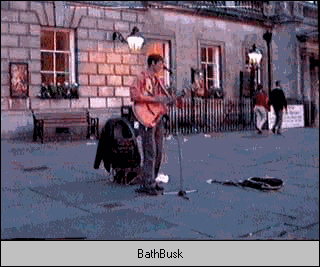
Click here or the pic to watch video of Grod busking "Where Do You Go To My Lovely"
That like "Duskbusk", the backing band playing on the track would be buskers who decided to come and join in, but were of varying capability on their instruments.
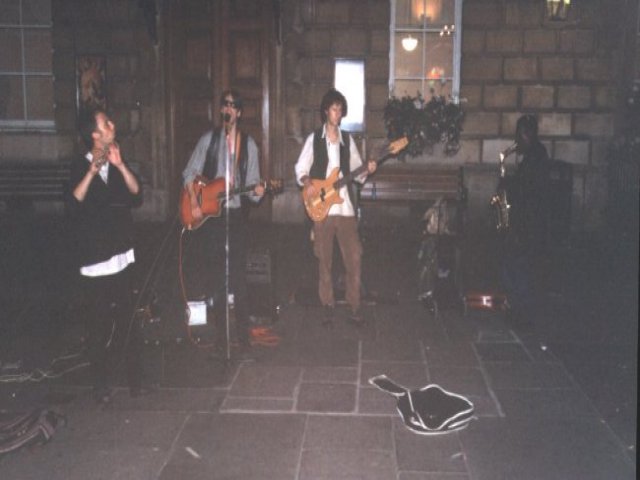
A drummer that occasionally lost his rhythm, violin and strings players who were enthusiastic but their instrument slightly out of tune, fellow guitarists who'd unfortunately snapped one of their strings earlier. But somehow the enthusiasm of this motley crew somehow holding the piece together.
It sounds a weird mix, and it is. The result, some people think it's a work of genius and love it. Others hate it and claim Grod has wrecked one of their favourite songs. Which certainly gives the claim of being distinctive, if nothing else.
Eventually though the song was recorded acoustically for a CD made two years later, "The Kitchen Sessions" and it is this version that actually appears here on this CD-ROM.
Click here to hear "Where Do You Go To My Lovely?"
The alternative opening to Grod's busking set, especially on bright summer days, was the Beatles "Here Come The Sun." But there was also a twist for Grod.
Still a practicing Christian at this point and performing in the shadow of Bath Abbey, it was also "Here Comes The Son."
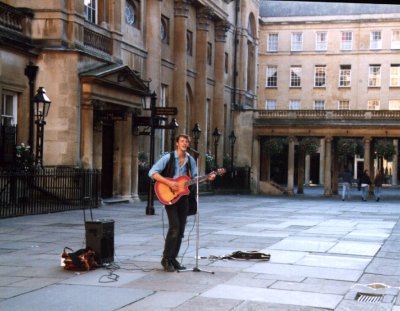
Because to Grod busking was akin to his Christian beliefs. He performs here for free. He only earns from those who enjoyed and gave freely. It wasn't begged, borrowed or stolen. Though that happened all around Grod and to him.
In recording the song, Grod wanted his guitar to sound like the rays of sunshine breaking through the clouds and shining a warm glow to everyone. That no matter who you were and what you were feeling, this is free and just helps to lift everyone's mood.
Click here to hear "Here Comes The Sun"
Part of Grod's recording style, is that the arrangement of the song order forms a smile.
They start happy and bright and one by one bring you to the more serious stuff. But then leaves you with a bright note, to bring the listener out of the depression of that smile.
The slide into that depression though begins with a trip down John Denver's "Country Roads"
A song about not wanting to be here anymore. Just wanting to be back home and all the things that home offers. Safety, security, around the family who love you and support you.
But what if your reality is you are on the verge of losing your home, even though it's a lonely bedsit. That your family has spurned you due to the lies of a family member trying to cover the tracks of what they have done.
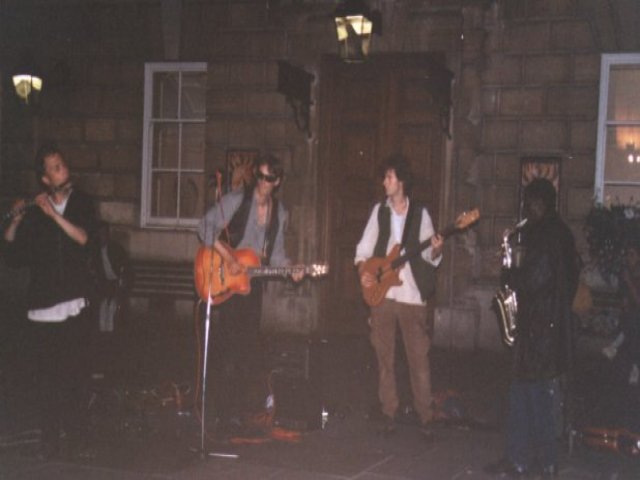
It was with this irony in his life that Grod recorded and mixed this song. But the imagined location of the song was in an old wild west bar with a slightly out of tune stand up piano, the song sung by someone at the bar a little worse for ware from whisky, in melancholy but questioning where home actually is. Certainly a way to get a different slant from the original.
Click here to hear "Country Roads"
Next was "Hotel California" As a young Christian in his teens, Grod had been told that the lyrics of this Eagle's famous song were subliminally about the trappings of hell.
Confirmed supposedly by the lines that "They just can't kill the beast" and "You can checkout anytime you like, but you can never leave."
But of course ends with an entwining duel guitar solo that any aspiring guitarist drools at.
The lyrics of the song though sounded more like Grod had felt in the last relationship he'd escaped from. Sucked into a relationship with much allure being offered, but once trapped in the house and unable to leave, the abuse started.
And while occasionally Grod left to go busking, instead of the anticipation of returning to the safety of home, it was the dread of returning to a place where you walked on eggshells, trying not to set your partner off. Which led simply to a torrent of verbal and physical abuse, all they needed was the slightest excuse.
Grod was secretly trying to find a means of getting away then exposing all from a safe distance. It is a horrible way to have to live your life. Especially when your partner is employed to promote family values, but keeps being caught having affairs.
In his childhood Grod recalled his father making up a tape for a "Halloween Dance." He was going through his record collection to find scary sounding music.
Amongst the tracks he chose was a classical piece by Sans-Saint, "The Dance Macabre." Grod remembered asking why this piece of music was supposed to be scary?
His father described things that the deep xylophone represented someone playing on a skeleton chest, bringing to life the undead in a macabre dance in the graveyard.
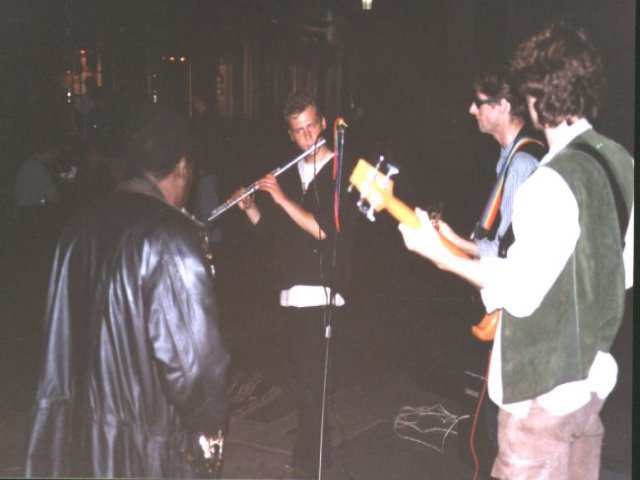
It was the use of this musical metaphor that Grod began recording "Hotel California."
That the song in fact did represent hell and evil, the twisting of truth, but finding no-one wants to hear the actual truth. They prefer the lie and simply want to shut you up. That wherever you run you simply bump into people grinning at you and trying to send you the wrong way. Trying to escape back to the lover you had before.

And the first three letters of the woman who lulled Grod into an abusive relationship were HEL.
So San-Saint met The Eagles, in Grod's retelling of the story, of the "Hotel California."
Click here to hear "Hotel California"
Simon and Garfunkel wrote and recorded many classics. While busking Grod would ask his audience if anybody liked their music? The response was always positive.
Grod then informed them his next song was his version of one of their most famous compositions. After counting himself in he then stood there simply gazing at the audience.
Until one eventually worked it out and shouted "The Sound Of Silence!"
But then Grod would suddenly launch into his sing-a-long version of Mrs. Robinson, played with a tap your feet feel.
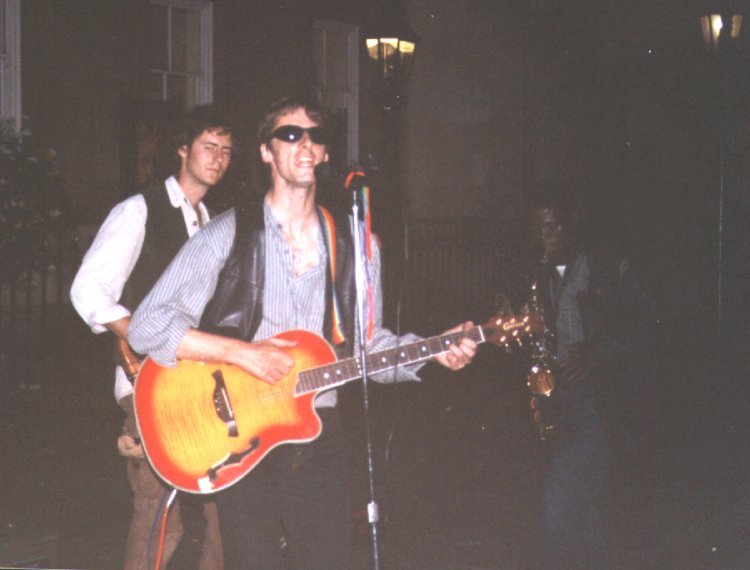
We've all been in pubs where a jukebox has been playing along in the background. Then one song comes on that suddenly takes on the mood of the people and before long, a lot of beery voices are singing along.
It is with this context pretext that Grod recorded his version of Paul & Art's classic from the film "The Graduate."
Which Grod also was, with a Honours Degree in Business Studies and a Diploma in Marketing that he spent years gaining, but few would have known or believed it watching the busker.
Click here to hear "Mrs. Robinson"
The final cover song was a request.
While busking, Grod had some people who regularly came out and watched him whenever he played. One couple had bought all his previous CD's and told him that the morning wouldn't be the same without listening to his tracks over breakfast.
But the song she wanted recorded was his version of Rod Stewarts famous hit "Sailing". That was the song she always waited for and had been disappointed it hadn't been on any of the earlier CD's. That she thought Grod sang better then anybody she'd ever heard attempt it, even Rod Stewart!
Pampering to another's ego is often a good way to get them to do something for you. But it was the genuineness of her request and Grod wanting to oblige that sealed the deal.
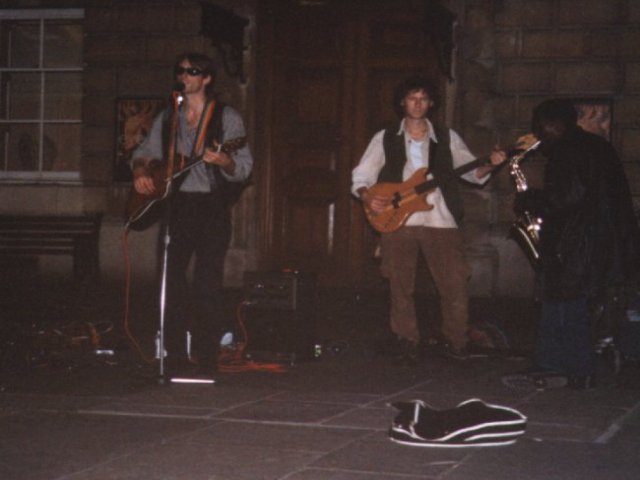
The song though had become part of his busking set more on the observation of the number of seagulls that could be found in Bath City center, though it is miles from the coast.
But also watching them fly around when busking, reminded him of his teenage years living on the Yorkshire coast at Bridlington. A place he returned to frequently to visit his parents. Until things happened that left him wondering if he'd ever return or see his mother again.
Thus his heart adopted the words of the song with his own yearning, to sail back, resolve the problem and then sail off in the sunset. But right now, the reality was the yearning.
In recording and mixing the songs, the vocal style adopted underlines that yearning, recorded at a time of desperation and loneliness. With a high searing keyboard in the background providing waves of hurt and longing.
On completing the recording he ran off a special copy for the woman who requested it. She told him she'd go straight home and listen to it and let him know what she thought.
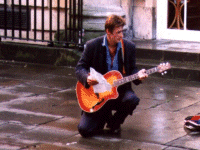
She returned that afternoon. "It's beautiful" she wept "I knew you'd do a good job of it but it's way beyond anything I expected. It should be a number one all over again."
It's nice to know from the start that at least one person not only likes it but also enthused about it. Especially if you believe deep down it'd be the last song you ever recorded.
The other half of the CD was filled with the songs recorded on "Diary Of A Millionaire" as the songs from "future CD's."
Except "Grodsong" was not envisaged as being one of those "future CD's."
"Grodsong" was actually a compilation CD, of songs recorded in a certain style. The "Future CD's" were still to come... if they came at all.
The description of what lay behind the self-penned songs used on the CD are described previously in "About the CD "Diary of Millionaire" from which they came.
(Use this link if you wish to explore though
"About Diary Of A Millionaire")But to complete the tracks on "Grodsong" you can hear them by from the links below.
With the songs recorded, next it was the design of the CD label and cover.
The front cover shows Grod busking on the spot where he originally first started busking, In Kings Court in York, the stage being old gravestones, looking out at York Minster in the distance.
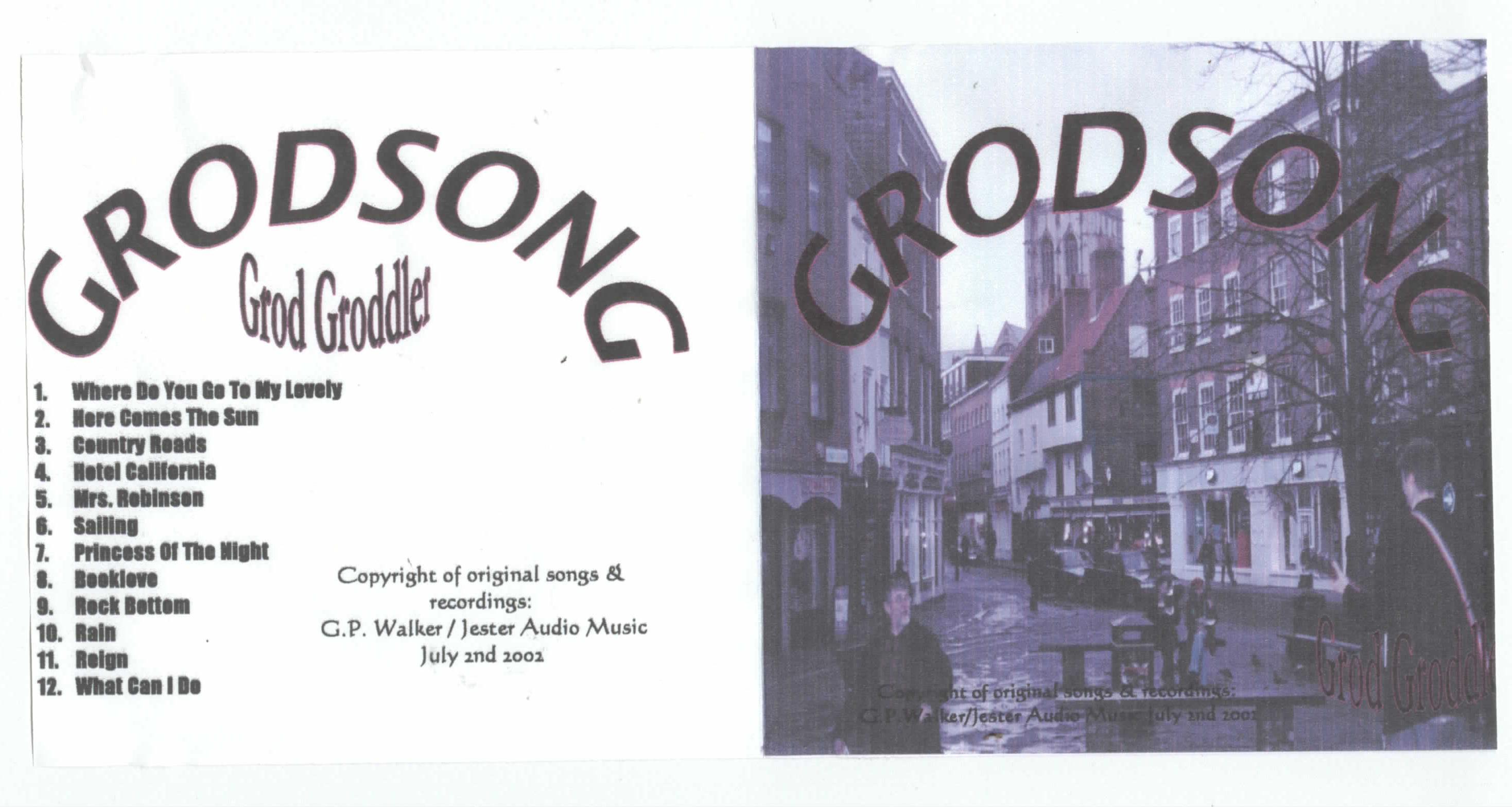
The inside-facing cover photograph shows Grod being broadcast live on SKY News serenading the Queen with the national anthem on her Golden Jubilee visit to Bath.
The CD label shows Grod earlier in the day, as "Happy Graham" entertaining all the children in Queens Square who were waiting to cheer the Queen on her arrival, and were kept in the right spirit singing "If you're happy and you know it clap your hands etc."
The City Manager who'd asked Grod to do this favour for £50, arrived to find the whole square, including the adults on the streets opposite all merrily joining in "If you're happy and you know it...."
"I certainly got my moneys worth!" he quipped. "I expected you would do something but I didn't quite expect this! "
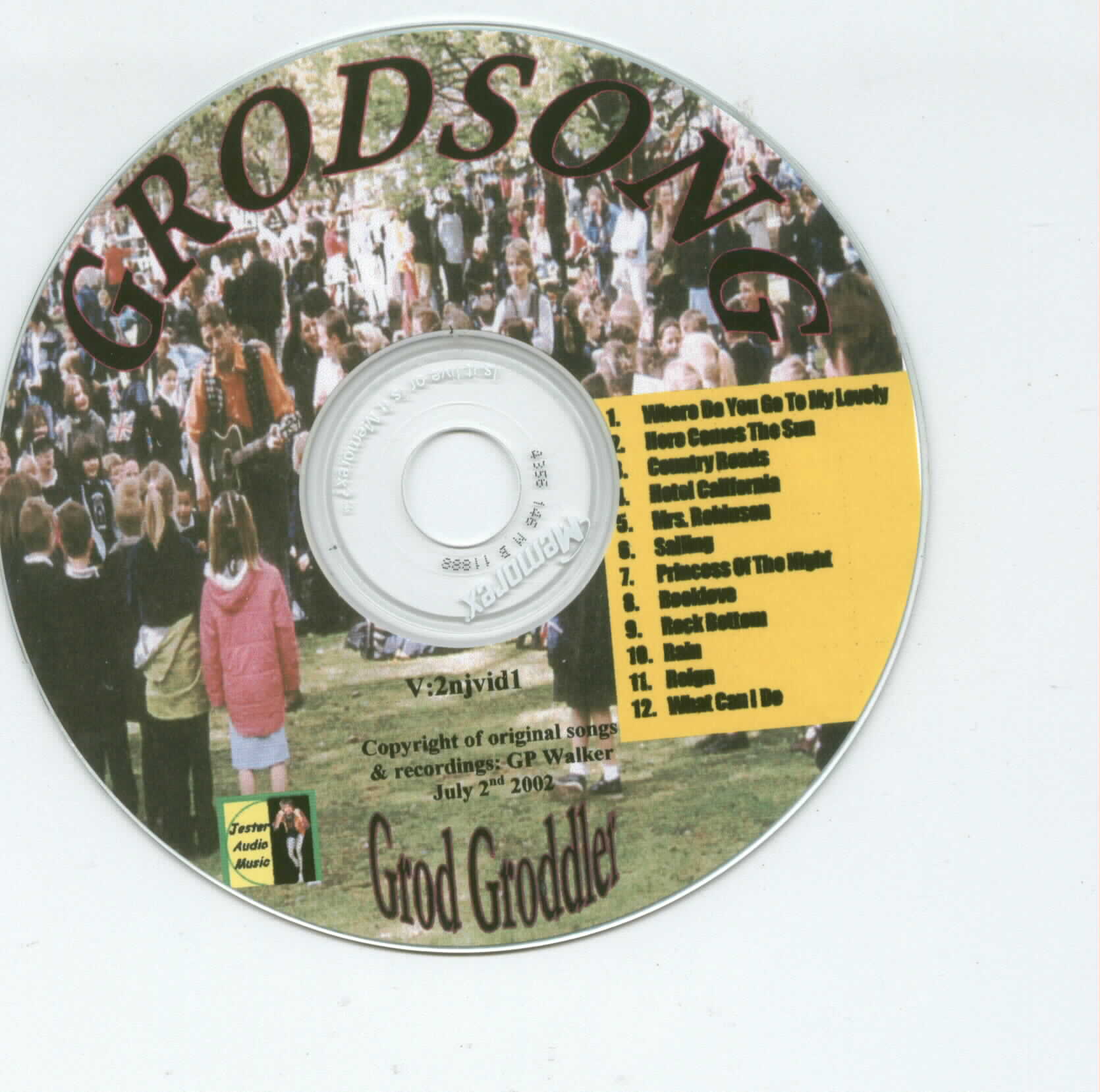
It wasn't bad at all really from one man and his acoustic guitar. Especially one branded a public nuisance by the same Council.
The back of the CD though features the guitar had used for busking, in it's coffin.
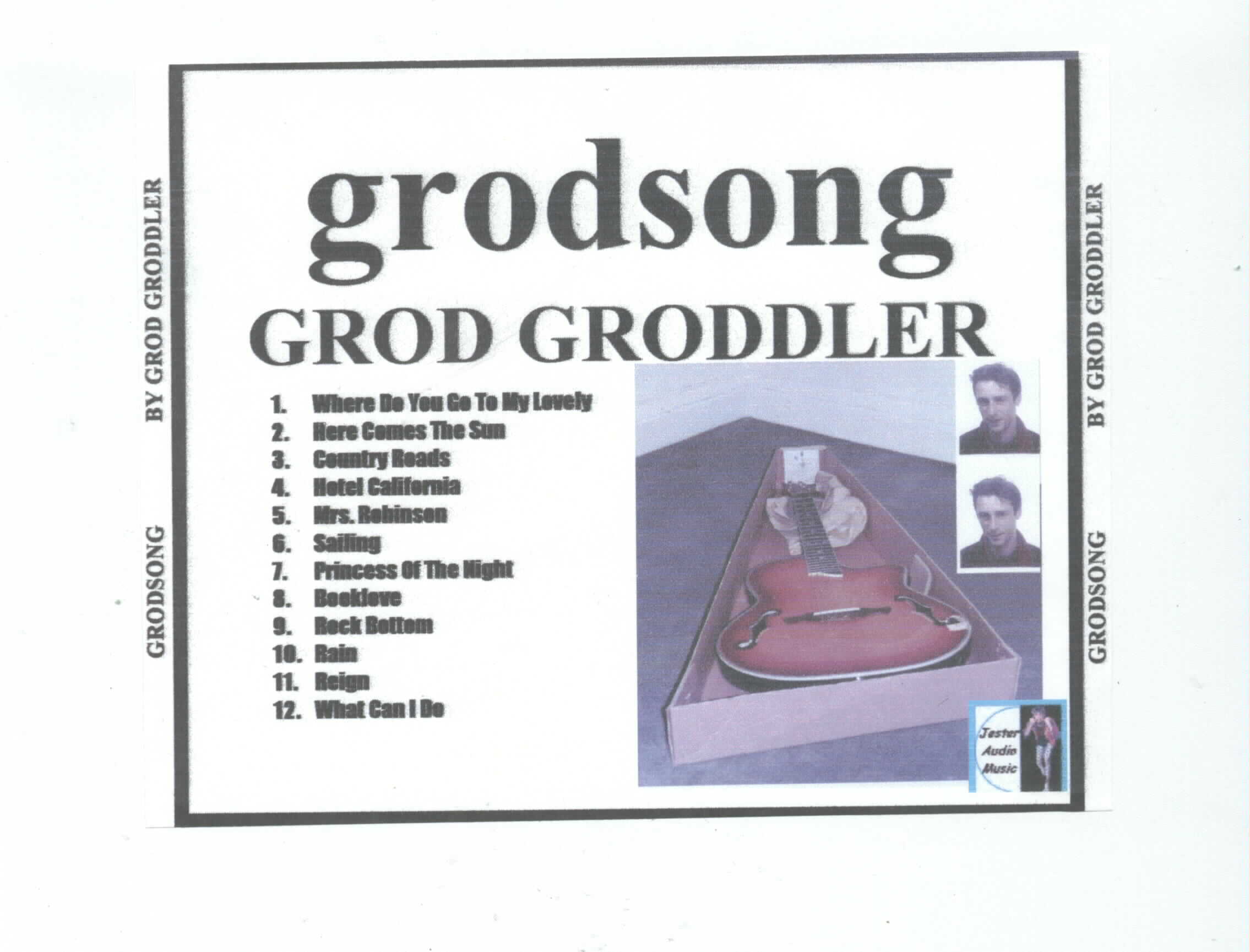
At the time of protesting about the amplifier ban, two years previously, mysteriously someone had broken into Grod's car outside his home one night.
They ignored the money laying about, the radio cassette and other valuables. Nothing was taken. Just Grod's guitar was rather symbolically broken at the neck.
The back also features two passport photographs. It was time to get ready to leave if things like that were happening. And it was happening to Grod, despite all he was doing for other people's happiness and living in poverty to do it.
But his anger and despair were channeled into his music, not at the people who deserved retribution for their actions. Nor those who didn't deserve to hear his despair, they were trying to help and that would be unfair. Instead he put it all into song.
Click here to return to the "Grodsong" CD