| Page 37 |
 |
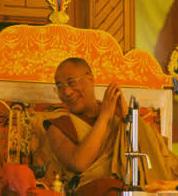 |
| their own government and schools. Although leaders around the world have called for Tibet's freedom, China still re-fuses to give Tibetans control of their homeland. Early one morning a few years ago, Sonam Dolker was shaken awake by her father. He whispered to Sonam, then 8, that she and her 6-year-old sister would have to escape secretly from their home in Tibet to a new life in India. Sonam's parents had planned the trip for weeks. They hadn't told the girls be-cause they were afraid the Chinese police would find out and send the entire family to prison. "My escape was so secret that I couldn't even say goodbye to my best friend," says Sonam. For the next two months, the girls and their guide stumbled over the snow and ice of the jagged Himalaya mountains. Their guide beat them when they slowed down. Final-ly, they arrived safely at Dharamsala, India. By the end of this winter, at least 5,000 Tibetans, including 1,000 children, will have made the illegal crossing. They risk frostbite, arrest and their very lives. They are willing to brave these dan-gers to escape the harsh rule of China, which now governs Tibet. Those who survive the trip will have more freedom in India. But they will face new troubles in their new home. Leaving A Beloved Land - Tibet is a beautiful, snowcapped land in southwestern China. It has a rich history and culture, but China wants Tibetans to follow Chinese traditions. The Chinese forbid Tibetans to fly their flag or properly practice their religion, Tibetan Buddhism. Tibet's religious and po-litical leader, the Dalai Lama, has not returned to his own country since fleeing Tibet nearly 30 years ago. He continues to lead Tibetans from India. The Dalai Lama won the 1989 Nobel Peace Prize for his efforts to free Tibet. But, he says, "there's been no progress. The Chinese position becomes harder and harder." Though China's leaders insist they do not mistreat Tibetans, many Tibetans are convinced they must leave their homeland to help its culture survive. More than 100,000 Tibetans now live in India. Says an official in Dharamsala: "They want a chance to be real Tibetans." Most make the journey in winter, when there are fewer guards at the border. Children must hike through deep snow, often wearing only canvas sneakers on their feet. "Every winter children die in the snow," says nurse Tsering Lhamo, "while their parents back in Tibet think they're safe and happy in Nepal or India." The Wait For True Freedom - The survi-vors of the brutal crossing to India are rewarded with a brief greeting by the Dalai Lama, who blesses every newcomer. The kids find a new home and school at one of the 20 centers called Tibetan Children's Villages, or TCVs. They are fed, clothed and taught the Tibetan language, English and Buddhism. Most adults and teenagers look for work in India. "Young people in Tibet can only waste their lives on the streets," says Dorjee Wangdue, 14, who reached India two months ago. "There are no jobs, nothing to do." But with so many Tibetans flooding over the mountains, there aren't many jobs left in India either. Even the Dalai Lama is urging older immigrants to return to Tibet. While more TCVs are being built in India, many are overcrowded. More than 40 children cram into one small house. Adjusting to the hot cli-mate and spicy food makes many kids ill or homesick. "If only my parents could afford it, they would come and take me away," says Sonam Dolker, now 11. "They must miss me too." Tibetan parents who send their kids away say any-thing is better for them than living in Tibet under Chinese rule. And some Tibetans in India still have hope of a bright future for their homeland. Sonam Tsering, 17, was one of the first kids to be sent away, 10 years ago. Now, he says, he will study to be a lawyer. "I can't go back because I will be arrested," says Tsering. "But one day we will get indepen-dence. Then I will return to develop my country, build a government and a good life." |
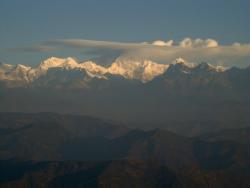
| So Far From Home - Tibetans make a risky journey to find freedom in another country A Look at Tibet - POPULATION - 6 million, including 7.5 million Chinese, live in Tibet. GEOGRAPHY - Tibet is a mountainous land of about 500,000 square miles - roughly the size of Texas, New Mexico and Utah combined. It shares with Nepal the world's highest mountain, the 29,028-foot-high Mount Everest. HISTORY - Tibet was once a separate nation with its own language, government and religion. During the 1700s, China began sending troops to Tibet to protect the Tibetan people and their leader, the Dalai Lama, from foreign invasion. Despite China's presence, Tibet operated as an independent state until 1949. From 1949 to 1950, China invaded and began to rule Tibet. In the National Up-rising of 1959, Tibetans tried to overthrow the Chinese but failed. They were brutally pun- ished. Millions died or went to prison. China also destroyed thousands of Tibet's important religious and historic sites. The 14th Dalai Lama fled to India, where Tibetans soon set up |
 |
 |
 |
|
| Compassion: The Bodhisattva Ideal - The Buddha is often referred to as the Compassionate One because his life was a total manifestation of compassion, and the underlying emphasis of his teaching was on this topic. For this rea-son, the Mahayana and Vajrayana schools emphasize it as the quality that needs to be developed above all, and without which no real spiritual progress is possible. Every aspect of meditation and training within these schools begins and ends by focusing on compassion as the motivation for practice. This attitude is fully developed in the Bodhisattva ideal - the undertaking to tread the path to Enlightenment with all the effort and hardship that entails, in order to help to liberate others. Many serious practitioners take the Bodhisattva vow, which is a vow to work tirelessly throughout this and all future lives to reach Enlightenment for the benefit of others: once having reached the level of Enlightenment, not to pass away from samsara (the manifest universe in which we are trapped within the wheel of cyclic existence), but to re-main among suffering beings and help them until they have all been liberated. This is a mighty undertaking, but it re-flects the total commitment the Buddha and his followers have to the welfare of all sentient beings - not just humans, but all sentient beings. It also expresses the greater Buddhist perspective that we are not separate individuals; we are part of a great one-ness that ultimately transcends all duality. The Bodhisattva works to manifest this truth. Refuge - A person who would like to commit to the Buddhist philosophy can �take refuge� in the principles of Bud-dhahood, the teachings of the Buddha, and the support of others who are striving to live according to the ideals taught by the Buddha. Taking refuge does not mean taking shelter in something external; it is taking refuge in one�s own in-ner wisdom nature. Taking refuge is an expression of freedom, because as refugees we are no longer bound by the need for security. We are suspended in a no-man�s-land in which the only thing to do is to relate with the teachings and with ourselves. Growth and Organization of Buddhism - In 1988, European press surveys found Buddhism to be the fastest-growing religion in Britain and Germany. Its growth in other European countries, the Americas, Australia, New Zealand, and parts of Africa have been marked during the past twenty years. This is attributed largely to the influence of Tibetan lamas who fled to the West following the Chinese occupation of Tibet in 1959. A lama is a spiritual teacher or mentor who cares for beings at the deepest possible level. �La� is an honorific, indicating the highest respect, and �ma� means �mother.� Many Buddhist meditation centers, libraries, retreat centers, universities, communities, and temples have now been established in the countries mentioned. Organization - There is no centralized world Buddhist authority, and different groups throughout the world are au-tonomous. Some groups are large, with branches throughout the world; others are small and localized. |
| spect is accorded monks and nuns. 2. Understanding, through meditation and reflection, of the inherent emptiness of the personality. This is not an easy area of Buddhism to understand. Mahayana (The Greater Vehicle) A separate tradi-tion that developed in the first century CE. The term Greater Vehicle developed to distinguish it from the contemporary Theravadin schools, which were monastic and focused chiefly on self-liberation, and thus became named Hinayana (Lessser Vehicle). The Mahayana schools incorporate the teachings of Theravada, but in addition regard the Bodhisattva ideal as of primary importance. A Bodhisattva is one who does all for the benefit of others. He or she vows not to enter the state of final liberation (Nirvana), but instead returns to the world to help others. Compassion and wisdom are em-phasized. The place of lay practitioners is given importance. On the subject of emptiness, Mahayana includes the Thera-vadin view of emptiness of personality, but goes further and teaches emptiness of object, or �non-self of phenomena.� Mahayana schools are found in Taiwan, Japan, mainland China, Tibet, India, Nepal, Indonesia, and Korea. Within Ma-hayana are many well-known sub-schools, such as Zen. Vajrayana (The Diamond Vehicle) or Tantra Tantric schools de-veloped in North India between the third and seventh centuries CE. They incorporated the other two schools but added a further feature: rapid attainment of Buddhahood through specialized forms of meditation that used visualization and mantra (the chanting of sacred words). The Tantric schools developed and flourished chiefly in Tibet. In Vajrayana, a major shift of perspective is involved. The practitioner trains to recognize the fundamental purity of all phenomena, even though they appear otherwise. |
|
 |
| Schools of Buddhism - As with all major religions, Buddhism has a num-ber of schools and lineages - similar, for example, to the major denominations in Christianity: Roman Catholicism, Anglicanism, Protestantism, Orthodoxy, and so on. There are three main groups: Theravada (The Teaching of the Elders) Theravadin schools constitute the �Southern Transmission,� and are found in Burma, Indonesia, Cambodia, Laos, Sri Lanka, and Thailand. They trace their origin to the period immediately following the passing of the Bud-dha, when eighteen schools of early Buddhism developed. Of these, Theravada is the only modern survivor. Theravadin Buddhism has two main areas of fo-cus: 1. The observance of strict ethical rules and the avoidance of all harm to others. As a result, it markedly emphasizes the monastic life, and great re- |
|
| Distraction - When you begin to mediate, you will discover that the mind does not remain still (under-statement): it constantly moves away from the object of meditation (the breath.) This is the natural tendency of the untrained mind to scatter or be constantly wayward, like a wild horse that wants to roam the grassy plains. This condition is bound to be present and need not distress you. But with practice, and as you learn to understand the nature of distraction, the mind will begin to settle. The essence of distraction is movement - movement away from the present instant. If you think about it, your living is never anything more than this instant. The only moment in the whole of eternity that you can actually experience is this moment - now; this place - here. If you were totally in the here and now, you would be totally alive, because you would be experiencing the totality of yourself, whatever that is. But we are almost never like that; we spread ourselves out psychologically in three main ways: 1. Following the past. 2. Thinking in the present, that is, be-coming caught up with thinking activity. 3. Planning - getting drawn into the future. Karma and Reincarnation - These two concepts are now familiar to most people in the West who have an inter-est in meditation - they contain the laws of how things are, and are not the unique province of Buddhism. Many Eastern religions include an understanding of them, and many books are available on the subject, so it will not be expounded here. However, two points should be made to remove common misconceptions: 1. Karma does not mean punishment. It is the law of cause and effect. If you want to grow roses, you plant rose seeds (cause) and roses grows (effect). If you plant an acorn hoping for roses, you will get an oak tree instead. This may cause you disappointment, but it is not a punishment. It is a simple consequence of what you did. This is what life is all about. We all want to be happy, but do many things that are unskillful and produce negative effects in our minds and in our environment. These are the basis of our suffering and unhappiness. Nobody has done anything to us - we have done it to ourselves. We are heirs to our karma. We are also masters of our destiny, because with a bit of care we can eliminate harmful acts, which produce painful results, and practice positive or kind acts, which produce happiness. This is why the Buddha emphasized the im-portance of ethical and altruistic behavior: it leads to happiness. The most important thing in the entire world is to be kind. 2. Reincarnation largely traces the changes within the mind due to karmic forces. These changes produce states that we experience as �solid.� A depressed person is in a different world from a happy person. A paranoid person is in a hell realm, while a person who intentionally ignores the implications of his or her actions is in an animal realm. Differ-ent realms, different manifestations. When we die, it�s these states of mind that go on and manifest naturally in forms that most appropriately express them. It is therefore a fallacy to assume that future births will necessarily be an im-provment on the present - they depend on what we are doing now, how we are using our energy now. Therefore, we have to work now to improve the mind. (More on meditatin later.) |
| "Sometimes we look down on politics, criticizing it as dirty. However, if you look at it properly, politics in itself is not wrong. It is an instrument to serve human society. With good motivation--sincerity and honesty--politics becomes an instrument in the service of society. But when motivated by selfishness with hatred, anger, or jealousy, it becomes dirty." The Dalai Lama Remember - what is past is gone! Release it and relax fully into the present, which is the only time and place where one can be alive! |
|
 |
| The Prayer for Swift Accomplishment of All Wishes is a treasure composed by Guru Rinpoche and discovered by Jigme Linpa. It was transmitted instantly and without hesitation, for the benefit of all suffering beings, by the Venerable Lama Lodu Rinpoche of Kagyu Droden Kunchab <http://www.kdk.org> in San Francisco, from his memory and out of great necessity, on the occasion of the shocking and frightful attack upon the United States by unknown terrorists, September 11, 2001. It was translated by Rinpoche's devoted disciple, Jinpa Tharchin, on the next day. ***Eh Ma Ho... In the pollen bed on a stalk of a lake-born lotus, Divine being of the spontaneous five wisdom bodies, self-arising great Pema together with your consort and rows of Dakinis massing like clouds, we supplicate you. Bless us with the swift |
 |
| accomplishment of all our wishes. By our recalling your presence, please completely exhaust the fully matured results of negative acts - disease, disasters, obstructions, war, and poverty. We beseech you from our hearts, Lord of Oddiyana. Bless us with the swift accomplishment of all our wishes. Well-practiced in faith, ethics, and generosity, in liberating the mind stream through hearing, in acknowledging shame, considering others, and in wisdom - these seven riches of Enlightened beings and all accumulated necessities having entered the mind stream of all beings, please ensure all the world to be happy and joyful. Bless us with the swift accomplishment of all our wishes. In all life-threatening situations where we are harassed by ghosts, evil-doers, and negative spirits, by fear of fire, flood, vicious animals, and dangers on the road, whatever unwanted suffering and illness appears, we have no refuge or hope other than you. Please look upon us with compassion, Guru, Lord of Od-diyana. Bless us with the swift accomplishment of all our wishes. *** To truly benefit all beings, whether their suffering be manifest or hidden from our awareness, Rinpoche wishes that everyone might repeat this prayer three times in each of the six periods of the day and night, or as much as possible. As he drew this prayer from his memory, Rinpoche requests knowledgeable people send any corrections or additions to the translator <mailto:[email protected]>. MAY ALL BEINGS BENEFIT! |
|
| All that a man achieves and all that he fails to achieve is the direct result of his own thoughts. In a justly ordered universe, where loss of equipoise would mean total destruction, individual responsibility must be absolute. A man's weakness and strength, purity and impurity, are his own, and not another man's; they are brought about by himself, and not by another; and they can only be altered by himself, never by another. His condition is also his own, and not another man's. His suffering and his happiness are evolved from within. As he thinks, so he is; as he continues to think, so he remains. A man should conceive of a legitimate purpose in his heart, and set out to accomplish it. He should make this purpose the centralizing point of his thoughts. It may take the form of a spiritual ideal, or it may be a worldly object, according to nature at the time being; but whichever it is, he should steadily focus his thought forces upon the object which he has set before him. He should make this purpose his supreme duty, and should devote himself to its attainment, not allowing his thoughts to wander away into ephemeral fancies, longings, and imaginings. This is the royal road to self-control and true concentration of thought. Even if he fails again and again to accomplish his purpose (as he necessarily must until weakness is overcome), the strength of character gained will be the measure of his true success, and this will form a new starting point for future power and triumph. Good thoughts and actions can never produce bad results; bad thoughts and actions can never produce good results. This is but saying that nothing can come from corn but corn, nothing from nettles but nettles. Men understand this law in the natural world, and work with it; but few understand it in the mental and moral world (though its operation there is just as simple and undeviating), and they, therefore, do no cooperate with it. Indigence and indulgence are the two extremes of wretchedness. They are both equally unnatural and the result of mental disorder. A man is not rightly conditioned until he is a happy, healthy, and prosperous being; and happiness, health, and prosperity are the result of a harmonious adjustment of the inner with the outer, of the man with his surroundings. |
 |
| In all human affairs there are efforts, and there are results, and the strength of the effort is the measure of the result. Chance is not. "Gifts," powers, material, intellectual, and spiritual possessions are the fruits of effort; they are thoughts completed, objects accomplished, visions realized. If you would perfect your body, guard your mind. If you would renew your body, beautify your mind. Thoughts of malice, envy, disappointment, despondency, rob the body of its health and grace. A sour face does not come by chance; it is made by sour thoughts. Wrinkles that mar are drawn by folly, passion, pride. He who has conquered doubt and fear has conquered failure. His every thought is allied with power, and all difficulties are bravely met and wisely overcome. His purposes are seasonably planted, and they bloom and bring forth fruit which does not fall prematurely |
| to the ground. He who would accomplish little must sacrifice little; he who would achieve much must sacrifice much; he who would attain highly must sacrifice greatly. It is pleasing to human vanity to believe that one suffers because of one's virtue; but not until a man has extirpated every sickly, bitter, and impure thought from his mind, and washed every sinful stain from his soul, can he be in a position to know and declare that his sufferings are the result of his good, and not of his bad qualities; and on the way to, yet long before he has reached, working in his mind and life, the Great Law which is absolutely just, and which cannot, therefore, give good for evil, evil for good. Possessed of such knowledge, he will then know, looking back upon his past ignorance and blindness, that his life is, and always was, justly ordered, and that all his past experiences, good and bad, were the equitable out-working of his evolving, yet unresolved self. |
| The word Buddha is a title, not a name. It means "one who is awake" in the sense of having "woken up to reality." This title was first given to a man named Siddharta Gautama, who lived 2,500 years ago in northern India. Siddartha Gautama was son of the Rajah (ruler) of the Sakya tribe of Kapilavastu, Nepal. When he was about 35 years old Siddartha left the luxuries of his father's court, his beautiful wife, and all earthly ambitions for the life of an ascetic. He saw in the contemplative life the perfect way to self-enlightenment. For six years he struggled by the traditional means of contemplation and asceticism, to penetrate the cause of man's "clinging to life." His efforts were in vain. The more he contemplated his own mind, the more he found only his own effort to contemplate. The evening before his Enlightenment, Siddartha gave up. He relaxed his diet and ate some nourishing food. At once he felt a profound change coming over him. He sat down under a bodhi tree, vowing not to rise until he had obtained "supreme awakening." According to Buddhist tradition, he sat through the night until a glimpse of the morning star suddenly provoked a state of perfect clarity and understanding. He experienced unexcelled, complete, awakening. For the next 40 years he taught the principles of his teaching, gaining many disciples and followers. He died at the age of (about) 80 in Kusinagara, Oudh. |
| The greatest warrior is one who does not need to fight. It's not our loved ones that make our lives. It's the loving them that does. And distance or death cannot take that away. We have it in our hearts forever. Goodwill towards all beings is the highest religion Let yourself be open and life will be easier. A spoon of salt in a glass makes the water undrinkable. A spoon of salt in a lake goes almost unnoticed. YOU must be the change you wish to see in the world. The fool who is aware of his foolishness is wise at least to that extent. But the fool who thinks himself wise is a fool indeed. Better than a thousand uselsss words is one useful word, hearing which one attains peace. We are what we think. All that we are arises with our thoughts. With our thoughts, we make the world. Enlightenment is within all things. Lord Buddha Disclaimer: All articles and images retain the original copyrights of their original owners. |
|
|
| Visit our main Buddhism site. More information, images, and, NO pop-ups! |
 |
| Last Update: 8/31/05 |