| Page 32A |
 |
 |
| Tibetan Healing Meditation Spiritual Medicine for Mind and Body... Whatever problems come to us from beings or inanimate objects, if our mind gets used to perceiving only the suffering or the negative aspects of them, then even from a small negative incident great mental pain will ensue. For it is the nature of indulgence in any concept, whether suffering or happiness, that the experience will be intensified by that indulgence. As negative experience gradually becomes stronger, a time will come when most of what appears before us will become the cause of bringing us unhappiness, and happiness will never have a chance to arise. If we do not realize that the fault lies with our own mind's way of gaining experience, and if we blame all our problems on the external conditions alone, then the ceaseless flame of habitual negative deeds such as hatred and suffering will increase in us. That is called: "All appearances arising in the form of enemies." Traditional Tibetan culture nourished a deep and powerful integration of spiritual and practical understanding. The Tibetan healing tradition respects both of these aspects of |
| human nature and their potential for supporting health and healing. All the activities of Tibetan herbal medicine - ask-ing for help, searching for herbs, preparing medicines, diagnosing illness, prescribing treatments, taking the medicine - all of them are carried out with a devotion to spiritual practices and training shared by the patient and the physician, their families, and the entire community. The near universal devotion to these spiritual practices stemmed from their practical effectiveness in fostering basic sanity, compassion, and understanding - progress on the path toward Enlighten-ment - but over time certain meditation practices were recognized as especially appropriate for emphasis by people stricken with physical or psychological illness. This page focuses on those practices. However, since the readers of this page are mostly going to be natives of Western countries, or countries that have been strongly influenced by Western culture, it is appropriate to point out that for people steeped in Western culture, just about any form of Tibetan Bud-dhist meditation, or indeed any form of Buddhist Meditation at all, could be considered a healing meditation, especially for stress-related illness. That's why sections on the mindfulness/awareness and tonglen practices are included on this page. In traditional Tibetan culture, people lived close to the earth. There were no alarm clocks and no pagers, and to talk to someone you had to actually go to where they were and have a conversation. Nearly everyone had some sort of spiritual practice, and most people were practicing meditation every day. In that context, it made sense to single out cer-tain practices as healing meditations. For us, though, any meditation practice that we actually enjoy doing is likely to have a beneficial effect on our health and longevity. For some of us, finding a meditation practice that is easy for West-ern people to connect to in a genuine and whole hearted way may be the best approach, even if it is not traditionally con-sidered to be an especially healing meditation. Two approaches come to mind as having inspired very many Western stu-dents, both of them given especially to Western people by highly accomplished lamas. Returning our focus to tradition-al Tibetan Buddhist culture, we might also want to look into the various methods that one wouldn't particularly call 'meditation,' but which were considered beneficial for fostering health and well being, and for healing illness. Building stupas, raising prayer flags, setting up large prayer wheels, and going on pilgrimages are good examples of practices that heal bodies and minds as well as spirits. Even Tibetan herbal medicine combines spiritual and physical healing. Physici-ans constantly repeat mantras (prayers) while gathering and preparing ingredients for the medicines, and while working with their patients. Moreover, some types of Tibetan medicines contain substances that are considered sacred. Just a couple of suggestions: First, spiritual shopping can be entertaining, but healing meditations won't really be much use until you settle on a method that seems promising to you, and stick with it for a while. Second, with meditation, as with any skill involving coordination of mind and body, working with someone who has developed some mastery of the meth-od and its application is highly recommended. Among the various Tibetan schools and traditions of meditation, groups emphasize particular practices when working with beginners. Specifically, traditional Tibetan Buddhist centers tend to begin with visualization and mantra practices, while the Shambhala Centers, and non-Tibetan centers following the Zen and Theravadin traditions, emphasize mindfulness/awareness practice with beginning students. Mindfulness/Awareness "Of all the things I've lost, I miss my mind the most." -- found on a cocktail napkin. The most basic way to train oneself to be more aware of what is actually going on in any situation, including ones health, is a certain type of meditation practice, called shi-n� (she nay) in Tibetan (Sanskrit shamatha). This term has been translat-ed into English as "mindfulness practice;" however, a more literal translation would be "abiding in peace of mind." Shi- n� is the most common form of meditation, not only in Tibet but also in other Buddhist countries. It is the basis of Zen, of Theravadin meditation, and of the Tibetan meditation practices involving visualization. It is also the basic practice of the Mindfulness-Based Stress Reduction approach, introduced at the University of Massachusetts Stress Reduction Pro-gram to help patients deal with illness. A traditional analogy is sometimes used to give a student a quick glimpse of this practice and how it works. An image of a candle flame, flickering in the breeze, is compared to our mind, tossed around |
| by conflicting emotions. Shi-n� practice is like putting a glass chimney around the candle, letting it burn steadily and clearly. The practice eventually leads to a relaxed awareness of every aspect of the situation, to what is call-ed "panoramic awareness" (Tibetan lahtong; Sanskrit vipashyana). Unbiased awareness automatically tends to- |
 |
| ward appropriate action. When ones mind and body are synchronized, when what is actually present is experienced on the spot, ones actions mesh with the situation as it truly is. Developing such basic sanity, such authentic presence in the actual situation, is possible for all of us. Shi-n� practice stress helps to reduce stress in two ways. First, as the transla-tion "abiding in peace" implies, it directly affects the self induced stress that stems from our entanglement with our in-ternal soap operas, by letting us have thoughts without identifying with them. Secondly, our actions will tend to be more appropriate, and thus more effective - having fewer negative side effects - so that external causes of stress will be re-duced. Doctors tell us that many of the most debilitating illnesses in our modern lives are stress induced. Stress not only makes us miserable, it can make us ill - prolonged extreme stress is devastating to the immune system. Reducing stress not only helps us feel better, it can actually help in the healing of many physical ailments. |
 |
| way to dissolve our desperate clinging to separateness. Before we can really practice tonglen, however, we need to find a way to connect to our compassion. Sogyal Rinpoche suggests that seeing someone in pain, in person or on the news, could inspire us to meditate on compassion. "Any one of these sights could open the eyes of your heart to the fact of vast suffering in the world. Let it. Don't waste the love and grief it arouses; in the moment you feel compassion welling up in you, don't brush it aside, don't shrug it off and try quickly to return to 'normal,' don't be afraid of your feeling or embarrassed by it, or allow yourself to be distracted from it or let it run aground in apathy. Be vulnerable; use that quick, bright uprush of compassion; focus on it, go deep in your heart and meditate on it, develop it, enhance, and deep-en it. By doing this you will realize how blind you have been to suffering, how the pain that you are experiencing or see-ing now is only a tiny fraction of the pain of the world. "All beings, everywhere, suffer; let your heart go out to them all in spontaneous and immeasurable compassion, and direct that compassion, along with the blessing of all the Buddhas, to the alleviation of suffering everywhere. Compassion is a far greater and nobler thing than pity. Pity has its roots in fear, and a sense of arrogance and condescension, sometimes even a smug feeling of 'I'm glad it's not me.' As Stephen Levine says: 'When your fear touches someone's pain it becomes pity; when your love touches someone's pain, it be-comes compassion.' To train in compassion, then, is to know all beings are the same and suffer in similar ways, to hon-or all those who suffer, and to know you are neither separate from nor superior to anyone." Pema Ch�dr�n, in 'Start Where You Are,' gives instructions for the tonglen practice itself. Here is a brief excerpt about the main practice: "You breathe in the pain of a specific person or animal that you wish to help. You breathe out to that person spacious-ness or kindness or a good meal or a cup of coffee - whatever you feel would lighten their load. You can do this for any-one: the homeless mother that you pass on the street, your suicidal uncle, or yourself and the pain you are feeling at that very moment. The main point is that the suffering should be real, totally un-theoretical. It should be heartfelt, tangible, honest, and vivid. After a while you expand the exchange: You use specific instances of misery and pain as a stepping stone for understanding the universal suffering of people and animals everywhere. What you feel for one per-son, you can extend to all people. You need to work with both the immediate suffering of one person and the universal suffering of all. Working with both situations together makes the practice real and heartfelt; at the same time, it pro-vides vision and a way for you to work with everyone else in the world." Tonglen practice is part of the Seven Points of Mind Training, a widely cherished set of guidelines for bringing adverse situations onto the path of meditation, and de-veloping bodhichitta - the unconditional compassion which waters the seed of Buddhahood. |
| Tonglen (Sending and Taking) "The tonglen practice is a method for connecting with suffering - ours and that which is all around us - everywhere we go. It is a method for over-coming fear of suffering and for dissolving the tightness of our heart. Primarily it is a method for awakening the compassion that is inherent in all of us, no matter how cruel or cold we might seem to be." Efforts toward developing basic sanity, using mindfulness/awareness prac-tice, can help us to improve our own health and other aspects of our personal situation. As we become more aware of what is really going on, we are more effective in working with it. How-ever, when other people are involved, and especially if we are trying to help them, we might need something more. When Buddha discovered sitting practice, he was living alone under a tree, and when he started teaching he had already discovered his true nature. Part of what he learned was that he was not separate from other living beings. Meditators who continue inter-acting with other people, rather than living alone in a cave, may find them highly irritating at times. Ones hard-earned peace of mind scatters like autumn leaves before a stiff breeze and we find ourselves wallowing in neurotic upheavals of all sorts. Tonglen practice - exchanging oneself, in our imagination, for others who are suffering - gives us a way to work with that, a |
| "Use what seems like poison as medicine. Use your personal suffering as the path to compassion for all beings." |
| Visualization "If one meditates on the Medicine Buddha, one will eventually attain Enlightenment, but in the mean-time one will experience an increase in healing powers both for oneself and others and a decrease in physical and mental illness and suffering." Buddhism offers many different types of mental and physical and spiritual exercises to help indi-viduals move toward the goal of awakening. One form of practice, highly respected by Tibetan Buddhists, is connecting with the qualities of an Enlightened being, one who is already awake, as an example and inspiration. Although all the Enlightened beings used in these practices are fully awake and in complete possession of all the superlative qualities of a Buddha, various awakened beings are seen as manifesting especially vividly different superlative qualities of awaken-ed mind. For example, as the passage quoted above suggests, the Medicine Buddha is especially useful in connecting with the healing power of awakened mind. Other Enlightened beings commonly used as the focus of healing practices are Amitayus, the Buddha of Long Life, Chenrezig, the Bodhisattva of Compassion, and Tara, Mother of the Buddhas. In addition to fostering in a general way ones ability to heal oneself and others, these practices can be specifically focus-ed on the healing of a particular problem, again in oneself or in someone else, or in a group of people. For example, a meditation on the Medicine Buddha could be focused on benefiting people with a particular disease, and helping people to avoid contracting that particular illness. The basic forms of all these practices are open to anyone who wishes to use them: "Most Tantrayana or Vajrayana visualization and mantra practices require that an initiation and subsequent au-thorization and instruction be given by a qualified lama before the sadhana, or ritual practice, can begin. However, a few practices, those that were given publicly by Lord Buddha Shakyamuni, do not fall under such restrictions. Very definite-ly, all the practices given in the Sutras have the full blessing of the Buddha and therefore can be practiced if one has the aspiration to do so. Such practices include those of the noble Chenrezig and of the mother of the Buddhas, Green Tara. Naturally, whenever it is possible for you to take the vajrayana initiation of Chenrezig or Green Tara, you are encourag-ed to do so." - Kalu Rinpohe Mantra "Compared to any medical treatment or cure, the Six Syllables [Om Mani Padme |
 |
| Hum] are the strongest remedy against sickness and evil." - Guru RinpocheA Tibetan Buddhist mantra can be thought of as a particular form of prayer: Phrases in the ancient Sanskrit lan-guage are used to connect with the energy of a particular Enlightened being. The most familiar example is Om Mani Padme Hum,the most widely used mantra in Tibet and in many other Buddhist communities. Tibetan Buddhists believe that saying this mantra, out loud or silently to oneself, invokes the powerful benevolent attention of Chenrezig, the Bodhisattva of Com-passion. Mantras are an important part of Tibetan medicine. Tibetan physicians repeat certain mantras over and over as they search for herbal ingredients of the medicines, as they prepare |
| the medicines, and as they work with their patients. There are many special mantras for various purposed, including healing. However, the mantras most often used for healing are those associated with the Enlightened beings mentioned in the Visualization section: The Medicine Buddha, Green Tara, and Chenrezig. The mantras can be used without doing the visualization, although it would be helpful to read about the visualization and have in mind some understanding of who the Enlightened being is that is being supplicated with the mantra. Chenrezig 'om mani pame hum,' Medicine Bud-dhatadyatha om bheshajye beshajye maha beshajye beshajye rajaya samungate svaha,' Green Tara 'om tare tu tare ture soha.' Anyone can begin the practice of repeating these mantras. However, it is said that for these practices to be fully effective, one should obtain refuge, the empowerment and oral instructions for the practice from a qualified lama. The lamas have already been introduced to the energy of these Enlightened beings by their own teachers, and they can pass that introduction along to you - but you can begin practicing the mantra immediately, before you obtain the empower-ment. In fact, beginning the practice may help to clear up any obstacles to finding a lama arranging to receive the transmission. |
 |
| Message from His Holiness the Dalai Lama: The Tibetan people are grateful for the place they hold in the hearts and minds of so many benevolent people throughout the world. Were it not for our community in exile, so gen-erously supported by individuals, organizations, and governments in the world community, our nation would be little more a shattered remnant of a people� our culture, religion, and national identity effectively eliminated. For two de- cades now, the Tibet Fund has worked closely with our Central Tibetan Administration in Dharamsala to understand the priorities of the Tibetan community. With the aid of the Tibet Fund, our people have built schools, housing and com-munity halls in exile. The Tibet Fund's wide range of programs in health and education have provided strong support to the Tibetan community, both in exile and inside Tibet. The Fund has also enabled us to create programs essential to the preservation of our cultural heritage, the very seed of our civilization. Today, our struggle for survival and self-deter-mination continues. Within Tibet, our people suffer under continued oppression. In exile, we are working to modernize our social and political institutions, while preserving the spiritual heart of our culture. To survive, Tibet needs the com-passion of the world community. However, we cannot hope through mere words to convince the world of Tibet's value. We must set an example by our own practice. Our democratic institutions define and preserve our society as one of compassion, non-violence and justice. Our communities model self-help and self-determination. And, as we show these to the communities of the world, we help them, not ourselves. Indeed, I pray that Tibet survives, both for the welfare of our people, and to evolve as a global model of cooperation, progress, liberty and peace. My sincerest thanks to all those who number themselves among the friends of the Tibetan people. TIBET FUND, 241 East 32nd Street, New York, NY 10016 USA - (Please mention this site: "Buddha's Words - Gotaro") Phone: 212-213-5011 - Fax: 212-213-1219 - E-mail: [email protected] |
|
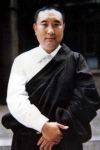
| The Tenth Panchen Lama - A Life of Agony and Sacrifice... THE late Panchen Lama was born on February 3, 1938 in the village of Karang Bidho in Amdo, northeastern Tibet. Almost from the time of his birth, he was caught in the politics of China�s ambitions towards Tibet and Tibet�s stubborn resistance to the Chinese political game. The Pan-chen Lama was only eleven when the commander of the PLA Lanzhou military division sent a telegram in his name to Mao Zedong, requesting the 'liberation of Tibet.' In reply, Mao wrote, �The people of Tibet have great love for the motherland. They are opposed to foreign imperialists and willing to join the new united, egalitarian and powerful nation of the PRC.� In pursuance of its 'divide and rule' policy, the Communist Government of China tried to bring up the Panchen Lama as a rival to His Holiness the Dalai Lama. In 1951 the Panchen Lama was invited to Beijing to coincide with the arrival there of a Tibetan delegation, which was eventually forced to sign the infamous 'Seventeen-Point Agree-ment on Measures for the Peaceful Liberation of Tibet.' While in Beijing, the Panchen Lama was forced to send a tele-gram to the Dalai Lama, stressing the importance of implementing the '"Seventeen-Point Agreement under the lead-ership of the People�s Government of China.� On 28 April 1952, the Panchen Lama arrived in Lhasa en route his mon-astery in Tashilhunpo, Shigatse. During his brief stay in Lhasa, he had two audiences with His Holiness the Dalai Lama. His Holiness� impression of the Panchen Lama during those meetings is recorded in his memoirs, 'My Land and My Peo-ple.' His Holiness states that the Panchen Lama �showed a genuine respect for my position, as the customs of Buddhism requires towards a senior monk. He was correct and pleasant in his manners - a true Tibetan, and I had a firm impres-sion of unforced goodwill. I felt sure that left to himself he would have whole-heartedly supported Tibet against inroads of China.� After the flight of His Holiness the Dalai Lama to India in 1959, the Panchen Lama was appointed the acting chairman of the 'TAR Preparatory Committee.' In 1960 the Chinese appointed him the Vice-chairman of the National People�s Congress, hoping to use him as their puppet spokesman for their policy in Tibet. However, the Panchen Lama remained a steadfast Tibetan nationalist. He was deeply disturbed to find that China had jailed hundreds of thousands of Tibetan government officials, the high lamas and scholars, the community leaders and citizens from many other walks of life. He complained to the Chinese authorities that they were terrorizing the whole populace of Tibet. The Chinese brushed aside his protest by saying that such mistakes were inevitable in all reform movements. In his capacity as the Vice-chairman of the National People�s Congress, the Panchen Lama visited many parts of Tibet. Then, in May 1962, he submitted a 70,000-character petition to Mao Zedong and Zhou Enlai, detailing the atrocities the Chinese army had in-flicted on Tibetans. Amongst other things, the petition pointed out: �After the introduction of reforms, Buddhism has suffered a serious setback and is now on the verge of extinction. Many prisoners died pitiable deaths when the Dictator-ship of the Proletariat was being introduced. This has greatly reduced the population of Tibet over the past few years. With the exception of old people, women and children, most of the able-bodied men and intelligent people in the Tibetan areas of Qinghai, Gansu, Sichuan and Yunnan were incarcerated.� Chairman Mao Zedong reacted with fury to the peti-tion. He termed the petition a �poisoned arrow directed at the Communist Party of China.� The Panchen Lama further enraged the Chinese leadership in 1964 when he declared before a huge crowd at Shugtri Linka, his residence in Lhasa, that he considered His Holiness the Dalai Lama as his �refuge for this and the next life.� Subsequently, at a TAR Pre-paatory Committee meeting, held from September 18 to November 4, 1964, Zhang Guohua and other Chinese officials bitterly accused the Panchen Lama of being anti-Party, anti-socialism and anti-people. He was ousted from the post of the Committee�s chair and subjected to thamzing (struggle session). Later, he was taken to Beijing and placed under house arrest. The start of the Cultural Revolution saw his plight worsen. In August 1966, he was struggled against, tor-tured and humiliated by the Red Guards. Then, in 1968, he was formally imprisoned in Beijing�s Qin Cheng prison and released only in October 1977. In a 20-page wall poster, dated March 3, 1979, China�s foremost dissident Wei Jingsheng |
 |
| said that life in Qin Cheng prison was so unbearable that the Panchen Lama, among many other in-mates, at one time tried to commit suicide. He refused nourishment, declaring that he did not want to go on living. �You can take my body to the Central Committee,� Wei quoted him as having said. The outside world first came to know about the Panchen Lama�s re-emergence in February 26, 1978 when the New China News Agency published a report that he had appeared at the fifth National Committee of the Chinese Political Consultative Conference meeting in plenary session in Beijing. Till then, even the Tibetans in Tibet did not know whether the Panchen Lama was alive or dead. In 1980 the Panchen Lama was reinstated as the Vice-chairman of the National People�s Congress. Immediately after his release from prison, the Panchen Lama asked the Chinese authorities for permission to visit Tibet. On reaching Lhasa, he announced: �Tibet is my home and I have a special regard for this land. Although I |
| have not lived here for the last eighteen years, my heart has always been beating with those of the people of Tibet. I have always missed Tibet and its people, and have been thinking about the welfare of Tibetans.� He was to visit Lhasa seven more times before his death, and he also toured various parts of Kham and Amdo. Speaking to a gathering of Tibetans during the Monlam festival in Lhasa in 1985, the Panchen Lama said: �His Holiness the Dalai Lama and I are spiritual friends. There are no differences between His Holiness the Dalai Lama and me. Some people are trying to cre-ate discord between us. This will not succeed.� At the TAR Standing Committee Meeting of the National People�s Con-gress, held in Beijing in March 1987, the Panchen Lama openly criticized the Chinese Government�s policy in Tibet re-garding education, economic development, population transfer and discriminatory treatment of Tibetans. On January 9, 1989 the Panchen Lama arrived in Shigatse to consecrate the newly-renovated mausoleums of the Fifth to the Ninth Panchen Lamas. On January 24, 1989 the Panchen Lama stated in Shigatse that Chinese rule in Tibet had brought more destruction than benefit to the Tibetan people. On January 28, 1989, four days after delivering this historic con-demnation, the Panchen Lama died at Tashilhunpo Monastery. The mysterious nature of his sudden death has generat-ed a wealth of speculation. Was he killed or did he die a natural death? What has become increasingly clear since his death is that the Tenth Panchen Lama was a patriot and martyr for the cause of Tibet. Constrained from expressing his thoughts and feelings, imprisoned and reviled for over a decade, he was nevertheless one of the harshest and most courageous critics of Mao�s policy in Tibet. |
| July 7, 2004 |
|
| What did Lord Buddha really have to say about God? At times, He did remain silent on this topic. But there is an account given by Him on the genesis of the 'Creator' and this should settle the issue. But before going on with that, we should note that Buddha was not an agnostic (one who does not know). In fact, He was a gnostic or 'one who knows' (in Pali- 'janata') and was also called 'Sabbannu,' the 'All-knower." This means that to whatever subject Lord Buddha attended to, He knew all the contents of that subject. It does NOT mean that He always knew everything about every subject all at once, for this very claim was one He emphatically and specifically denied about himself. Now, to settle this question of 'God' we can investigate. It happens that in the beginning of a new cycle (after one of the periodic cosmic collapses), a being according to his or her kamma (karma) is reborn into a heavenly realm or state where no other beings are to found. (That one's kamma being a condition for the arising of that particular heavenly experience.) That one does not remember her or his past life among other 'gods' in the 'higher' heavenly realms, and comes to believe during the passing of ages that s/he has lived there forever. With the passing of immense time spans, that one wishes for the company of others and then, since according to their kamma some other beings appear in that realm, s/he comes to believe that they were produced by her or his will. From this s/he goes on to glorify herself or himself, her or his supposed 'creation' and this aids that being's vanity since such a being does not remember the past life it was subjected to and so imagines that it is a creature of Brahma. One of these great Brahmas called by the name of Baka, was made to see the emptiness and futility of his claims to eternal existence and creatorhood when Lord Buddha while in meditation paid a visit to that realm. And not only that, the 'Buddhist' attitude to Brahma or God or 'the Creator' is fairly if somewhat seemingly acridly summed up in these translated verses: "He who has eyes can see the sickening sight; Why does not Brahma set his creatures right? If his wide power no limit can restrain, Why is his hand so rarely spread to bless? Why are all his creatures condemned to pain? Why does he not to all give happiness? Why do fraud, lies, and ignorance prevail?" |
|
| Generosity, kind words, doing a good turn for others, and treating all people alike: these bonds of sympathy are to the world what the lynch-pin is to the chariot wheel. With all his attachments cut, with the heart's pining subdued, calm and serene and happy is he, for he has attained peace of mind. He who does not strike nor makes others strike, who robs not nor makes others rob, sharing love with all that live, finds enmity with none. Hate brings great misfortune, hate churns up and harms the mind; this fearful danger deep within most people do not understand. One should first establish oneself in what is proper and only then try to instruct others. Doing this, the wise one will not be criticized. Having killed anger you sleep in ease. Having killed anger you do not grieve. The noble ones praise the slaying of anger -- with its honeyed crest and poison root -- for having killed it you do not grieve. |
 |
| If you hold yourself dear then don't fetter yourself with evil, for happiness isn't easily gained by one who commits a wrong-doing. Winning gives birth to hostility. Losing, one lies down in pain. The calmed lie down with ease, having set winning and losing aside. Let no one deceive another or despise anyone anywhere, or through anger or irritation wish for another to suffer. Wonderful it is to train the mind so swiftly moving, seizing whatever it wants. Good is it to have a well-trained mind, for a well-trained mind brings happiness. Life is swept along, next-to-nothing its span. For one swept to old age no shelters exist. Perceiving this danger in death, one should drop the world's bait and look for peace. The Lord Buddha Dsiclaimer: All images and/or articles retain the original copyrights of their original owners. |
 |
 |
 |
 |
| Visit our main Buddhism site. More information, images, and, NO pop-ups! |