 |
 |
| Page 30 |
| nomic networks that make everyone rely, to some extent, on everyone else. "Today, everything is interrelated, so vio-lent action not only hurts others, it hurts yourself. Today, the appropriate method is compromise. Where a 100 percent victory for one is a 100 percent defeat for the other is no longer possible. Therefore, you have to compromise, to take into account the well-being of the other party, too. Maybe take 50-50. Maybe even take 40 percent." That drew a laugh from the 1,000 or so in attendance at the DoubleTree Hotel, courtesy of the World Affairs Council of Pittsburgh, as the Dalai Lama seemed to suggest he'd settle for 40 percent in negotiations with China to gain autonomony, if not indepen-dence, for Tibet. China invaded Tibet in 1950 to put down a rebellion and preserve a strategic buffer against India. It be-gan to systematically destroy Tibetan culture, easing up in the late 1970s after the death of Mao Tse-tung in 1976. Over the years, millions of Chinese have been imported to Tibet to run the economy and political system, often with brutal suppression. "Tibetan people are in love with their culture, but our new guests came without a proper invitation. They don't see the value of Tibetan culture. They only see the backwardness. So they want to eliminate it all," he said. "Ti-betans, on the other hand, appreciate that China has brought modern roads, schools and enterprises to Tibet. Most are willing to let go of their claim of independence, and share China's goal of preserving stability. But to China, stability means control. It fears that granting Tibet too much autonomy would encourage similar demands in the Muslim north-west and pressure for independence in Taiwan. China wants stability and unity but imposition is the wrong way. The totalitarians this century have failed. Chinese, especially the local officials, take a short view. Stability to them is day-to-day seeing no protests or unrest. They use arrest, torture, bullying. But we do not see ourselves as separate. We are willing already to join them - and not just out of desperation. To join a bigger nation can help us by bringing resources. It is in our own interest. China accuses me of wanting to return to feudalism, of wanting to go home from exile in India as a traditional Tibetan god-king. But the institution of the Dalai Lama is up to the Tibetan people. I have said I will forgo political power and devote myself to Buddhist teaching." China's president, Jiang Zemin, in June offered to open the first direct talks about the status of Tibet if the Dalai Lama would acknowledge Chinese sovereignty over Tibet and Taiwan. There was talk of a potential breakthrough as the Dalai Lama arrived in the United States last week, but China has not responded to Tibetan overtures - perhaps because of dissension in the government, according to Bun-chung Tsering, director of the International Campaign for Tibet. Too bad for China, not just for Tibet, the Dalai Lama said. Tibet might be able to help China deal with certain problems, such as rampant corruption. External, legal controls have done little good, and Buddhism teaches self-discipline. "Concepts like karma (in which bad deeds in this life affect future lives) ... this can check corruption. In some places where Marxism has failed, maybe Buddhism can help. For hu-manity in general, Tibetan Buddhist culture can make a little contribution," he said. (November 13, 1998 By Greg Victor) |
| A peaceful plea for his homeland The Dalai Lama pleads for Tibetan Buddhism's acceptance as part of the human family with a unique perspective for an emerging global society. At a lunchtime address before an eclec-tic downtown crowd of politicians, business leaders and followers of Buddha, His Holiness the 14th Dalai Lama yesterday appealed for help in preserving Tibetan tradition - against Chi-nese repression and modern thinking that places science above spirituality. He said it is a perspective that sees people as naturally gentle, not aggressive, for instance. And he argued that that is a view confirmed by modern science, of all things, which has shown that babies grow better brains and friendlier attitudes if they are touched frequently, and that monkeys separated from their mothers turn aggressive and mean. It is a perspective that sees religion as naturally diverse, he said. Again, he reached for an example in science - biodiversity, in which the unique gene pools of even the smallest islands or rain forests hold promise of pro-ducing new medicines or materials. It is a perspective that has always seen all people as one family, he said, even as the modern world catches up by creating communication and eco- |
 |
| January 10, 2004 |
 |
 |
| "May the precious thought of Enlightenment which has not arisen in us, arise. Wherever it has arisen may it not be destroyed, but increase more and more!" |
 |
|
| ancient capital, and occupied virtually the whole of Kansu, much of Szechuan and northern Yunnan, as well as Upper Burma and Nepal. But following their gradual conversion to Buddhism, with its gentle message of submission, the once dreaded martial reputation of the Tibetans began to decline. Finally, around the tenth century, the last of their empire collapsed. The Tibetans withdrew behind their mountain ramparts and their centuries of isolation began. The Buddhism which reached Tibet more than a thousand years after its founder's death was of the late and debased northern Indian school. This debasement was due to an infusion of Tantrism, an animistic creed which embraced magic, witchcraft and spells. In Tibet the new religion immediately found itself in violent conflict with the old Bon faith and its devotees. The latter practised an even more primitive kind of aniinism, indulging in human sacrifice, cannibalism, devil worship and sexual orgies. Although banned altogether at one time, Buddhism gradually prevailed. But the Bon faith nonetheless continued to be practised, never being completely ousted. In fact, Tibetan Buddhism was to borrow freely from the Bon pantheon as well as from other religions, including Nestorian Christianity, which by then had reached Central Asia. In its final form, the Buddhism of Tibet - or Lamaism as it is sometimes called - would scarcely have been recognised by its saintly founder. One Catholic missionary who visited Tibet in the seventeenth century even claimed that it was simply a degenerate form of Christianity. Lamaism is so named after its priestly upholders, the lamas, or 'superior ones'. In ef-fect it came to mean rule by a religious hierarchy headed by the Dalai Lama. The first Tibetan Buddhist monastery is said to have been built around the year 775, the final total of such institutions eventually reaching some 2,700. One early traveller described the country as 'a huge monastery inhabited by a nation of monks.' For every Tibetan family was expected to provide one child for the church. It was a custom which their Chinese neighbours - and at times over-lords - were to encourage, for more monks meant fewer soldiers. As a result, every town and village had its own monas-tery, often perched strategically on a hill-top or mountainside, from where a disciplinary eye was kept on the local popu-lace. The first Dalai Lama dates back to the fifteenth century, although the actual title was introduced, retrospectively, a century later. He was the leader of a sect called the Yellow Hats (so called because of their yellow garb) of Tibetan Buddhism which, with powerful Mongol support, gradually supplanted the rival Red Hat sect as the dominant power in Tibet. Until then the country had been ruled by a dynasty of kings supported by the Red Hats. Nominally the kings con-tinued to rule, but gradually temporal as well as religious power passed to the Dalai Lamas. By the middle of the seven-teenth century this transfer of power was complete, and Tibet was firmly controlled by the formidable fifth Dalai Lama from the Potala, the now world-famous palace which he built specially for himself and his successors or, more correctly, his reincarnations. The Great Fifth, as he is still known, also created an institution which was the office of Panchen - or Tashi - Lama which he bestowed as a gesture of veneration upon his aged and revered teacher, the Abbot of Tashilhun-po monastery, near Shigatse, Tibet's second largest town. Both the Dalai and Panchen Lamas, Tibetans believe, are re-incarnations of different aspects of the Buddha himself, the Panchen being concerned exclusively with spiritual matters while the Dalai is additionally entrusted with the nation's sovereignty. So long as the Panchen Lamas confined them-selves to spiritual affairs, leaving all temporal matters to the Dalai Lama, no problems arose, but this did not always prove to be the case. Whenever a Dalai Lama died, a search began for his reincarnation. The chosen male child had to possess certain mystic qualities which distinguished him from ordinary mortals. One was the ability to identify the pos-sessions of his predecessor, or rather his previous self. Another requirement was that he should have large ears, up-ward-slanting eyes and eyebrows and that one of his hands should bear a mark like a conch-shell. The successful candi-date, usually aged two or three, was then removed from his family to Lhasa to begin a long period of spiritual training for his future role. The Panchen Lamas were chosen in a similar way. Invariably the reincarnated leaders were 'discov-eed' in the households of lowly families rather than of noble ones. This, it has been said, was deliberate, to ensure that no single and powerful lay family could seize the title and make it hereditary. Until he reached the age of eighteen, the young Dalai Lama's temporal responsibilities were carried out by a Regent. Some of these were clearly reluctant to re-linquish their powers, for a suspiciously large number of young Dalai Lamas died before attaining the age of eighteen. During one period of a hundred and twenty years, five successive Dalai Lamas ruled for a total of only seven years. Nor were all the Dalai Lamas models of saintliness. The sixth, who was enthroned in 1697, showed little interest in his spiri-tual and secular responsibilities, preferring to indulge in sexual adventures, drunkenness and writing erotic poetry. He was nonetheless popular with his people who resisted an attempt to have him deposed. Religious belief and everyday life were inextricably entwined in this unique theocracy. Until the Chinese invasion, every Tibetan family worshipped daily at the household shrine. Whether rich or poor (and the rich were only modestly so by comparison with other countries), whether dwelling in palace, hovel or nomadic tent, each household set aside a corner in which were placed devotional ob-jects. In addition to the numerous monasteries and nunneries scattered across the country, there were many thousands of chortens or stupas, erected as monuments to saints or as repositories for offerings and sacred relics. It is necesssary to use the past tense as almost all of these were destroyed by the Red Guards during the Cultural Revolution, if not be-fore. Everywhere too there were strings of prayer flags, either hung from poles or draped over the rooftops. Each flutter of one of these flags, the Tibetans believe, sends the prayer written on it heavenwards. Another ingenious idea, unique to Tibet, is the prayer-wheel, or 'mani-chuskor.' This consists of a metal cylinder - ranging in height from a mere two inches to a colossal eight or nine feet - and containing a long scroll of paper bearing countless repetitions of the mysti-cal, all-powerful Tibetan prayer: 'Om! Mani Padme Hum!' Translated literally, this means'Hail! Jewel in the Lotus!', although its actual meaning is obscure. Every time the cylinder is rotated, Tibetans believe, a stream of prayer ascends skywards. The most common type of prayer-wheel is the small, individually-owned and hand-rotated kind. Attached |
| Courtesy Chamb Meehan |
| Buddhism first reached Tibet in the middle of the seventh century, and was destined to bring about a remarkable change in the Tibetan people. Until their conversion to Buddhism, they had always been a warlike race with imperialist ambitions who represented a perpetual threat to their neighbours, particularly the Chinese. For a while they had even ruled Chang'an, China's |
| of bone (often human), coral or wood, these always consist of one hundred and eight beads, a sacred number. A bead is slipped each time a prayer is repeated, until a complete circuit has been made of the rosary. Also attached to the rosary are two or more secondary strings, each consisting of ten much smaller beads. These are used to register each complet-ed circuit of the rosary. Thus, very large numbers of prayers can be recorded. Learned tomes have been written on the religion of the Tibetans to which those wishing to pursue the subject further can turn. But there are certain beliefs and practices of interest to us because they illustrate Tibetan attitudes to life and death and the immense power of their faith. (If they seem repugnant to us, it should be pointed out that some western customs strike Tibetans as equally bi-zarre.) One of the most horrifying of these was self-immurement. The length of time a hermit might spend in solitary confinement walled up in a pitch-dark cave could vary from a few months' retreat to a lifetime, in which case the ordeal ended only at death. Recourse to this slow form of suicide, it was believed, would enable the devotee to avoid endless cy-cles of rebirth, and so achieve Nirvana, or self extinction, in one lifetime. Many of those who attempted this feat under-standably went mad. Their only human contact was the gloved hand which once a day, and in total silence, passed food through a tiny aperture in the wall. It needs no imagination to visualise the conditions inside a cave cell thus occupied for thirty or forty years. When the anchorite knew that death - and hopefully Nirvana - was close, he would drag him-self into a comer and compose himself, Buddha-like, in cross-legged posture to await the end. When those outside no-ticed that he had failed to accept food for several days, death would be assumed. The wall was then knocked down and the devotee's body reverently removed and ceremoniously burned instead of being cut up and fed to the vultures. An-other harsh ritual was that of making a pilgrimage by the slow and painful means of repeated prostrations of the body. Pilgrims sometimes covered hundreds of miles in this way, each time placing their feet on the spot where their fore-heads had previously touched the ground. Usually Lhasa, with its holy places, was the pilgrim's goal, but it could be any sacred site. Two young lamas were observed engaged in such a pilgrimage around Mount Kailas, regarded by Tibetans as the centre of the universe. It had taken them nine days to reach this spot from their village, and they calculated that it would take a further twelve or so days to complete the circuit of the mountain. After that, one of the two - just twenty years old, planned to wall himself up for the rest of his life. Other pilgrims sometimes carried heavy rocks with them to demonstrate their devotion. Tibet abounds in tales of supernaturally-endowed saints, wizards with great destructive powers, and mystics who could fly to the tops of Himalayan peaks, raise the dead and perform other miracles. Many of these stories were no doubt invented by the priestly hierarchy to impress their authority on simple villagers, whose aims and faith they depended upon. But many modern-minded Tibetans still half believe in these miracles. Tibetan ref-ugees tell of the 'lung-pa,' or wind men, who after years of extreme asceticism and preparation can free themselves from the normal weight of their bodies and thereafter defy gravity, flying hundreds of miles in a day. One well-known European traveller actually claimed to have observed one of these. Magic plays a key role, too, in traditional medicine. Tibetan doctors claim to be able to tell from a patient's pulse when another member of his or her family, however far away, is ill, and then to be able to diagnose and cure the malady. There are four hundred and forty different forms of illness, it is claimed, each of which can be cured by a special charm or spell, although herbal medicines are also used. * |
| to a wooden handle, the cylinders of these are usually made from copper or silver and often finely decorated. A small metal weight on a short chain attached to the cylinder enables the user to whirl it at speed. Some of the largest prayer-wheels, to be found in monasteries or tem-ples, are said to contain as many as a million printed repetitions of the mystical formula. Be-cause of their weight, these giant wheels are usually rotated by means of a hand-turned crank, or by wind or water power, thus enabling hundreds of millions of invocations to be released heavenwards with the minimum of effort. Another aid to prayer is the Tibetan rosary. Usually |
 |
| Courtesy Chamb Meehan |
| opposing forces. It is in this context that the practice of patience or tolerance becomes very important, because only through patience is one able to overcome the obstacles to compassion. "Exile has helped me. When, at some point in our lives, we meet a real tragedy - which could happen to any one of us - we can react in two ways. Obviously, we can lose hope, let ourselves slip into discouragement, into alcohol, drugs, and unending sadness. Or else we can wake ourselves up, discover in ourselves an energy that was hidden there, and act with more clarity, more force. "Sometimes we look down on politics, criticizing it as dirty. However, if you look at it properly, politics in itself is not wrong. It is an instrument to serve human society. With good motivation - sincerity and honesty - politics becomes an instrument in the service of society. But when motivated by selfishness with hatred, anger, or jealousy, it becomes dirty. "Try to be at peace with yourself, and help others share that peace. If you contribute to other people's happiness, you will find the true goal, the true meaning of life. The Dalai Lama |
|
 |
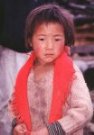
| TIBETAN KIDS TELL TALES OF WOE.. Forty years on, the agony of the more than 130,000-strong Tibetan exiled community is still piling on as over 2,500 new refugees flee to India every year "to escape the ever-tightening grip of the Chinese.' Of these, about 400 are young students seeking education opportunities in India, says Ms. Tenzin Cheoky Dralnang of the Tibetan Women's Association. "Last year, we had 2,319 refugees joining us. Among these were 397 mi-nors who walked for days to reach here. Some came directly and others came via Nepal.'' And every young refugee has heart-rending tales of woe to tell. On the way, they were shot at by the Chinese. Many succumb to frostbite. Others die of exhaustion. "Cases of molestation and rape are very many each year,'' says Dralnang. Says 10-year-old Dolma, who reached Dharamshala in August, "My poor parents in Amdo paid a (Tibetan) traveller to get me across the border into India so that I could get a good education. We went through a terrible ordeal on the way. We spent days without food or |
| "Generally speaking, all the major religions of the world emphasize the importance of the practice of love, compassion, and tolerance. This is particularly the case in all the traditions of Buddhism, including the Theravada, Mahayana, and Tantrayana (the esoteric tradition of Buddhism). They all state that compassion and love are the foundation of all the spiritual paths. "In order to enhance one's development of compassion and cultivate the potential for compassion and love inherent within oneself, what is crucial is to counteract their |
|
| Dharamshala. Luckily, all of us survived the elements and no cases of frostbite. I am determined to go back after fin-ishing my studies. It is a battle for our cultural survival.'' Tin's elder brother had English education in south India. He went back to serve as a tourist guide in Lhasa. "His success persuaded my parents to take the risk of sending me to In-dia. The path is littered with risk.'' Still, more and more Tibetans are courting the risk for a better life. (Times News Network, Dharamsala) ( * Excerpt from - Trespassers on the Roof of the World) We may re-print some articles on our sites/pages because of their informative value. Disclaimer: All images and/or articles retain the original copyrights of their original owners. |
| water. The Chinese are denying us formal education. I was taught Chinese, English and Math. We walked for days to Nepal where I was taken to the Tibetan reception center, which then arranged my trip to Delhi.'' Narrating the stories of Chinese terror in Tibetan territory, another student named Shui, 13, said, "The Chinese told my parents not to keep any pictures of the Dalai Lama. There is always a scare when the Chinese come to search your house. We are being decimated culturally and educational-ly.'' She says she would go back to Tibet once her education is over. "I want to teach my brothers and sisters to fight for our cultural survival.'' Most of the students, who are lodged at the Tibetan Chil-dren's Village (TCV ) schools (in India), say they stay in touch with their parents through messengers who shuttle across the border on the sly. Richin, a 10-year-old girl, says, "Back home (Tibet), the Chi-nese tell us not to do mantras. They teach us to call His Holiness the Dalai Lama a splittist.'' Thirteen-year-old Tin, who came to India with a group of 12 young students, says, "It took us 20 days to reach |
 |
 |
 |
| Click at right to visit our main Buddhism site. More information and images and, NO pop-ups! |