 |
 |
 |
| Page 14A |
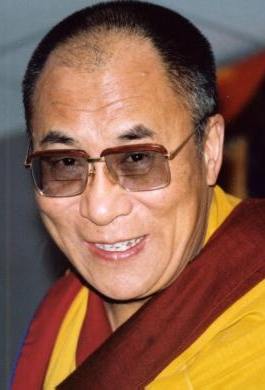 |
| exiled in 1959. As he talked he swayed and rocked, alternately knitting his brows in concentration and bursting into ir-resistible laughter. While his spoken Tibetan points were being rendered into English by longtime translator Thubten Jinpa, the Dalai Lama often appeared to be deep in meditation, only to emerge to spot someone in the crowd and share a chuckle with them. He was surrounded by a couple of hundred Bay Area monks, and he faced roughly 8,000 folks who'd paid to hear him teach about the Buddhist doctrine of the realization of emptiness and the importance of generating Bo-dhichitta, a sense of compassionate altruism toward all living creatures. I have noticed that, like all accomplished lead-ers and influential beings, the Dalai Lama in his general remarks tends to hammer home the same few themes again and again. Boiled down, they are (and here I'm paraphrasing loosely) that all beings have a right to seek happiness and overcome suffering; that world peace will evolve from each person's sense of personal peace; and responsibility; and that one doesn't have to have religious faith to lead a compassionate life. On Thursday morning, he began by speaking - in English - about the importance, for those who do subscribe to a religious faith, not to switch faiths without serious study and consideration. And in an apparent bid to set a tone of broad inclusiveness, he noted that the world has room - indeed, a specific need - for many different faiths to suit the many different temperaments of the 6 billion people cur-rently calling Earth home. From there he figuratively doffed his humanitarian's cap and donned his scholar's one, and plowed into lectures that at some moments were gasp-inspiring for their brilliance and at others were, well, baffling. But no one seemed to mind. The crowd, mostly white and Asian, mostly middle-class and fully mellow, ate it all up. They respectfully rose in silence when the Dalai Lama came onto or left the stage, laughed heartily at his frequent jokes and murmured approval at his endearing peculiarities. Between the two-hour, twice-daily lecture sessions, folks roamed the Shoreline grounds - which housed booths staffed by Tibetan-related groups and a bookstore selling Buddhist texts and tchotchkes - or lolled on the grass in the sun. And what sun! (Said the befogged city boy.) A Tibetan acquaintance of mine told me months ago he believes that the Dalai Lama's psychic presence is such that, when he comes to town, the atmosphere and weather rearrange. I skeptically logged the information with a wait-and-see attitude. I waited and I saw: The weather was gorgeous. But then, thinking my skepticism would trump mysticism, I told another friend about the weather theory, and noted that while the Dalai Lama was in Portland a couple of weeks ago, it rained cats and dogs. "But wait," my friend said. "Haven't they been having a drought?" Whoa. Anyway, the fine weather held through the Dalai Lama's public address Saturday evening at Shoreline, during which he spoke about the importance of - sound fa-miliar, by now? - developing compassion as a way of finding happiness and improving the world. It was a talk attended by 19,000 people, a chunk of whom pedaled to the amphitheater, judging from the numerous bikes locked out front. Which makes a certain kind of sense. After all, this was the Dalai Lama: humanitarian, scholar, mystic, monk, leader of Tibet - and all-around bike kind of guy. (Dave Ford) |
| "I don't get out to walk very much, so I have to ride on my exercise bike every day!" (May 24, 2001) You'd just have to figure that the Dalai Lama is a bike kind of guy. Indeed, a recent Rolling Stone inter-view with Tibet's spiritual and temporal leader included a photo of him astride a stationary bike, grinning happily. The Dalai Lama seems to grin happily a lot, and when he grins, he chuckles, and inevitably his chuckles turn to giggles, which makes him seem adorable and lovely and the kind of person you want to be around from sunup to sundown and beyond. "I want to take him home with me," said a woman from Mount Shasta, who was sitting alongside me at the Shoreline Amphitheatre last Thursday. We were watching a session on the second of three days of lectures the Bud- dhist monk was giving on a Buddhist text called "The Heart Sutra." I knew what she meant, and I knew she didn't mean it in any other way than that it's hard not to want to bring this man close to your heart and soul - in the same way you might with, say, a cat. In certain ways, in fact, the Dalai Lama is very much like a cat, albeit one that has been reincarnated more than a dozen times as the Bodhisattva of Compassion and continues to run a country via government-in-exile. I believe my cats, Dash and Comma, could do that if they tried, but they seem to be too busy doing more impor-tant things, such as sleeping. At the Shoreline, the Dalai Lama lectured while seated in the lotus position atop a beautifully carved and colorfully decorated throne. Behind him hung an enormous painted backdrop of the Potola Palace, the place in Tibet's capital city of Lhasa from which he was |
 |
| MALE Tibetan BABY names... (this is not a complete list and is for reference only) Amchila, Amdo, Chenrezig, Chetsang, Chikyab, Chimi, Dadul, Dakola, Dar-Puntso, Dawa, Deki, Dolkar, Dorje-Pagmo, Drigung, Dronyer-Chemo, Drugchen, Dzasa, Geshe, Gyalo, Gyalpo, Gyaltag, Gyaltsen, Jetrung, Jigme, Jo, Jughuma, Kapsho, Kela-Punkang, Khenpo, Kuku-la, Kunga, Kunsangtse, Lhamo-Dhondrub, Lotse, Migmar, Milarepa, Mingma, Namgang, Namgyal, Namhla, Nanlha, Ngapo, Ngari, Ngawang, Norbu, Norgay, Nueden, Nyima, Palden-Gyatso, Panthog, Pasang, Pema-Dolkar, Pema-Gyalpo, Pemba, Puntsog-Wangyal, Ralpa, Rampa, Rimshi, Rinchen, Salden, Samdrub, Samten, Sawang-Chenpo, Sengi, Sholk-hang, Tagme, Tagtsher, Takla, Tashi, Tempa, Tenzin-Gyatso, Tenzin, Tenzing, Thondup, Thubten, Thupten, Tsetrung, Tsering, Tshering, Tsipon-Shakabpa, Tsong-Kapa, Wangchuk, Wangdu, Zachoeje. |
| Dolkar, Pema-Gyalpo, Pemba, Puntsog-Wangyal, Ralpa, Rampa, Rasamee, Rimshi, Rinchen, Salden, Samdrub, Samten, Sawang-Chenpo, Sengi, Sholkhang, Tagme, Tagtsher, Takla, Tashi, Tempa, Tenzin-Gyatso, Tenzing, Thondup, Thubten, Thupten, Tsering, Tsetrung, Tshering,, Tsipon-Shakabpa, Tsong-Kapa, Wangchuk, Wangdu, Yangchen, Yangchenla, Yangkyi, Zachoeje. |
| FEMALE Tibetan BABY names... Adhe, Amchila, Amdo, Chenrezig, Chetsang, Chik-yab, Choden, Chodron, Dadul, Dakola, Dar-Puntso, Deki, Dolkar, Dorje-Pagmo, Drigung, Drol-ma, Dronyer-Chemo, Drugchen, Druki, Dzasa, Fiona, Geshe, Gyalo, Gyalpo, Gyaltag, Gyaltsen, Jetrung, Jigme, Jo, Kapsho, Kela-Punkang, Khenpo, Kukula, Kunga, Kunsangtse, Lhamo-Dhon-drub, Lhamo, Lotse, Mani, Migmar, Milarepa, Mingma, Namgang, Namgyal, Namhla, Nanlha, Ngapo, Ngari, Ngawang, Norbu, Norgay, Nueden, Nyima, Palden-Gyatso, Panthog, Pasang, Pema- |
| How to become a Buddhist... "He who has gone for refuge in the Buddha, his Teaching and his Order, pene-trates with transcendental wisdom the Four Noble Truths - suffering,the cause of suffering, the cessation of suffering, and the Noble Eightfold Path leading to the cessation of suffering. This indeed is the safe refuge, this is the refuge su-preme. Having gone to such a refuge, one is released from all suffering." Dhammapada Many people, after encountering the Dharma or the Buddhist Teachings ask: How do I become a Buddhist? Once, there was a man called Upali. He was the follower of another religion and he went to the Buddha in order to argue with him and try to convert him. But after talking to the Buddha, he was so impressed that he decided to become a follower of the Buddha. The sutras record the Buddha's reply and Upali's reaction as follows: "Make a proper investigation first. Proper investigation is good for a well-known person like yourself." Now I am even more pleased and satisfied when the Lord says to me: 'Make a proper investigation first.' For if members of another religion had secured me as a disciple they would have paraded a banner all around the town saying: 'Upali has joined our religion.' But the Lord said to me:'Make a proper investigation first. Proper investigation is good for a well-known person like yourself.'" In Buddhism, under-standing is the most important thing and takes time. So do not impulsively rush into it. Take your time, ask questions, consider carefully, then make your decision. The Buddha was concerned that people should follow his teachings as a re-sult of understanding and conviction. I have done this and am convinced of its truth and that it is the path for me. What do I do to become a Buddhist? A person becomes a Buddhist by taking the Three Refuges, that is - the Buddha, The Dharma or his Teachings, and The Sangha or the community of Enlightened beings. The Buddha said: "To take refuge in the Buddha, Dharma and Sangha and to see with real understanding the Four Noble Truths, ~ Suffering, the Cause of Suffering, the Transcending of Suffering and the Noble Eightfold Path that leads to the transcending of suffering, This indeed is a safe refuge, it is the refuge supreme. It is the refuge whereby one is freed from all suffering." To take ref-uge, it is best done with the guidance of a monk. However, if such a person is not available, one may take refuge before an image of the Buddha. Place this image, which may be a statue,a picture or even a computer graphic such that when you kneel before it, it is at the level of your head or higher. Kneel before the image and put your palms together at your chest. Compose yourself, calm your mind and bow three times to the image such that your palms and forehead touches the floor. Then recite the following formula in Pali, (which is the ancient language of the scriptural texts): Namo tassa, bhagavato, arahato samma sambuddhasa / Namo tassa, bhagavato, arahato samma sambuddhasa / Namo tassa, bhagava-to, arahato, samma sambuddhasa / Buddham saranam gacchami, / Dhammam saranam gacchami, / Sangham saranam gacchami. / Dutiyampi Buddham saranam gacchami, / Dutiyampi Dhammam saranam gacchami, / Dutiyampi Sangham saranam gacchami, / Tatiyampi Buddham saranam gacchami, / Tatiyampi Dhammam saranam gacchami, / Tatiyampi Sangham saranam gacchami. This means: Homage to Him, the Exalted One, the Worthy One, The Supremely Enlight-ened One / Homage to Him, the Exalted One, the Worthy One, The Supremely Enlightened One / Homage to Him, the Exalted One, the Worthy One, The Supremely Enlightened One / I go to the Buddha as my refuge. / I go to the Dharma as my refuge. / I go to the Sangha as my refuge. / For the second time, I go to the Buddha as my refuge. / 5For the sec-ond time, I go to the Dhamma as my refuge. / For the second time, I go to the Sangha as my refuge. / For the third time, I go to the Buddha as my refuge. / For the third time, I go to the Dhamma as my refuge. / For the third time, I go to the Sangha as my refuge. CONGRATULATIONS! You are now (officially) a Buddhist. But wait, the ceremony is not complete. The Buddha recommends that all his disciples keep the minimum of the Five Precepts. These are not rigid commandments that one is compelled to live by. They really are more like training rules that are taken voluntarily. They establish your virtue and protect you from harm in this life as well as in future lives. It is the foundation for your spiritual journey. Yes, I would like to take the precepts and live my life accordingly, knowing that it is conducive for my happiness and welfare in this life as well as in future lives. How do I take these Five Precepts? Again, the Five Precepts are taken by reciting in Pali while in the kneeling position. Panatipata veramani sikkhapadam samadiyami. / Adinnada-na veramani sikkhapadam samadiyami. / Kamesu micchacara veramani sikkhapadam samadiyami. / Musavada verama-ni sikkhapadam samadiyami. / Sura meraya majja pamadatthana veramani sikkhapadam samadiyami. / This means: I undertake the precept of abstaining from destroying living creatures. / I undertake the precept of abstaining from tak-ing anything not freely given. / I undertake the precept of abstaining from sexual misconduct. / I undertake the precept of abstaining from false speech. / I undertake the precept of abstaining from taking intoxicants which lead to careless-ness. That's it, now you are a practising Buddhist. The Three Refuges and Five Precepts can be repeated anytime you wish, either at regular intervals or when you feel the need to do so. Welcome to the Path. This is only the beginning and it is suggested that you join a Buddhist community to support it and be supported by it, and to continue to learn the Bud-dha's Teachings. (The foregoing is printed for your information only.) |
|
|
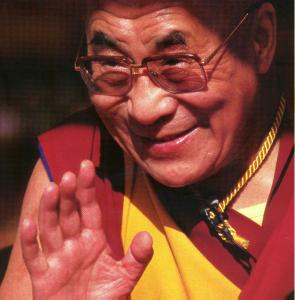 |
| Who is the Buddha? There are many ways to describe who the Buddha is, according to different ways of understanding . These various interpretations have their sources in the Buddha�s teachings. One way is to see the historical Buddha who lived 2,500 years ago as a human being who cleansed his mind of all defilements and developed all his potential. Any being who does likewise is also considered a Buddha, for there are many Buddhas, not just one. Another way is to understand a particular Buddha or Buddhist deity as the omniscient minds manifest-ing in a certain physical aspect in order to communicate with us. Yet another way is to see the Buddha - or any of the Enlightened Buddhist deities - as the appearance of the future Buddha that we will become once we properly and completely have engaged in the path to cleanse our mind of defilements and develop all our potentials. What is the essence of the Buddha�s teachings? Simply speaking, this is to avoid harming others and to help them as much as possible. An-oter way of expressing this is, Abandon negative action; create perfect virtue; subdue your own mind. This is the teaching of the Buddha. By abandoning negative actions (killing, etc.) and destructive motivations |
| (anger, attachment, close-mindedness, etc.), we stop harming ourselves and others. By creating perfect virtue, we devel-op beneficial attitudes, like impartial love and compassion, and do actions motivated by these thoughts. By subduing our mind, we cut away all false projections, thus making ourselves calm and peaceful by understanding reality. The essence of Buddha�s teachings is also contained in the three principles of the path: definite emergence, the dedicated heart and wisdom realizing emptiness. Initially, we seek definitely to emerge from the confusion of our problems and their causes. Then, we see that other people also have problems, and with love and compassion, we dedicate our heart to becoming a Buddha so that we are capable of helping others extensively. In order to do this, we develop the wisdom understanding the real nature of ourselves and other phenomena. Why are there many Buddhist traditions? The Buddha gave a wide variety of teachings because sentient beings (any be-ing with mind who is not a Buddha, including those in other realms of existence) have different dispositions, inclinations and interests. The Buddha never expected us all to fit into the same mould. Thus, he gave many teachings and described various ways of practising so each of us could find something that suits our level of mind and our personality. With skill and compassion in guiding others, the Buddha turned the wheel of Dharma three times, each time setting forth a slight-ly different philosophical system in order to suit the various dispositions of sentient beings. The essence of all the teach-ings is the same: the wish definitely to emerge from the cycle of constantly recurring problems (samsara), compassion for others and the wisdom realizing selflessness. Not everyone likes the same kind of food. When a huge buffet is spread before us, we choose the dishes that we like. There is no obligation to like everything. Although we may have a taste for sweets, that does not mean that the salty dishes are not good and should be thrown away! Similarly, we may prefer a certain approach to the teachings: Theravada, Pure Land, Zen, Vajrayana, and so on. We are free to choose the approach that suits us best and with which we feel the most comfortable. Yet we still maintain an open mind and respect for other traditions. As our mind develops, we may come to understand elements in other traditions that we failed to comprehend previously. In short, whatever is useful and helps us live a better life, we practise, and whatever we do not yet understand, we leave aside without rejecting it. While we may find one particular tradition best suited for our per-sonality, do not identify with it in a concrete way: "I am a Mahayanist, you are a Theravadin," or "I am a Buddhist, you are a Christian." It is important to remember that we are all human beings seeking happiness and wanting to realize the truth, and we each must find a method suitable for our disposition. However, keeping an open mind to different ap-proaches does not mean to mix everything together at random, making our practice like chop-suey. Do not mix medita-tion techniques from different traditions together in one meditation session. In one session, it is better to do one tech-nique. If we take a little of this technique and a little from that, and without understanding either one very well mix them together, we may end up confused. However, a teaching emphasized in one tradition may enrich our understanding and practice of another. Also, it is advisable to do the same meditations daily. If we do breathing meditation one day, chanting the Buddha's name the next, and analytical meditation the third, we will not make progress in any of them for there is no continuity in the practice. What are the Three Jewels? The Three Jewels are the Buddha, Dharma and Sangha. Buddha is one who has purified all the defilements of the mind the afflictive emotions, the imprints of the actions motivated by them, and the stains of these afflictive emotions and who has developed all good qualities, such as impartial love and compassion, wisdom know-ing all existence, and skilful means of guiding others. The Dharma embodies the preventive measures which keep us from problems and suffering. This includes the teachings of the Buddha, as well as the realizations of those teachings the cessations of problems and their causes, and the realizations or paths which lead to those cessations. The Sangha are those beings who have direct non-conceptual perception of emptiness or ultimate truth. On a relative level, Sangha also refers to the ordained people who put the Buddha�s teachings into practice. The Dharma is our real refuge, the medicine we take which cures our problems and their causes. The Buddha is like the doctor, who correctly diagnoses the cause of our problems and prescribes the appropriate medicine. By assisting us in the practice, the Sangha is similar to the nurse who helps us take the medicine. Taking refuge means that we rely whole-heartedly on the Three Jewels to inspire and guide us towards a constructive and beneficial direction to take in our life. Taking refuge does not mean passively hiding under the protection of Buddha, Dharma and Sangha. Rather, it is an active process of taking the direction they show and improving the quality of our life. What are the various Buddhist traditions? Generally, there are two divisions: Theravada and Mahayana. The Theravada lineage (Tradition of the Elders), which relies on sutras recorded in the Pali language, spread from India to Sri Lanka, Thailand, Burma, etc. It emphasizes meditation on the breath to develop concentration and meditation on mindfulness of the body, feelings, mind and phenomena in order to develop wisdom. The Mahayana (Great Vehicle) tradition, based on the scriptures recorded in Sanskrit, spread to China, Tibet, Japan, Korea, Vietnam, etc. Although in the Theravadin practice love and compassion are essential and important factors, in the Mahayana they are emphasized to an even greater extent. Within Mahayana, there are several branches: Pure Land emphasizes chanting the name of Amitabha Buddha in order to be reborn in His Pure Land; Zen emphasizes meditation to eliminate the noisy, conceptual mind; Vajrayana (Diamond Vehicle) employs meditation on a deity in order to transform our contaminated body and mind into the body and mind of a Buddha. What is Vajrayana? Vajrayana, which is also called Tantrayana, is a subdivision of the Mahayana. It is based upon both the Theravadin and general Mahayana practices. Before entering into the Vajrayana, we must be well-trained in the thought definitely to emerge from the cycle of constantly recurring problems (renunciation), the heart dedicated to at-taining Enlightenment for the benefit of all sentient beings (bodhicitta), and the wisdom realizing the emptiness of in-herent existence. Then, we take an initiation from a qualified tantric master and protect the tantric vows and commit-ments that are received at the time of initiation. On the basis of this, we can receive instructions and engage in the Vaj-rayana meditation practice. One technique used in the Vajrayana is visualizing ourselves as the deity and our environ-ment as the mandala or the environment of the deity. By visualizing in such a way, we transform our ordinary poor self-image into that of the deity and thus try to cultivate such noble qualities in our own mindstream. Vajrayana also con-tains techniques for transforming death, the intermediate state and rebirth into the body and mind of a Buddha. There are also special meditative techniques to develop calm abiding (samatha) as well as to make manifest an extremely sub-tle mind which, when realizing emptiness, becomes very powerful in quickly cleansing the defilements. It is for this rea-son that Vajrayana can bring Enlightenment in this very lifetime to a qualified and well-trained disciple, who practises under the guidance of a fully-qualified tantric master. Buddhist Tantra is not the same as Hindu Tantra. Nor is it some kind of practice of magic. Some people have written books about Vajrayana with incorrect information and interpreta-tions. Therefore, if we wish to learn about this, it is important either to read books by a knowledgeable author or seek instruction from a qualified master. What does the imagery in tantric art mean? Vajrayana deals a lot with transformation, and therefore, symbolism is widely used. There are representations of some deities, which are manifestations of the Buddha, that are expressing desire or wrath. The sexual imagery is not to be taken literally, according to worldly appearances. In Vajrayana, deities in sexual union represent the union of method and wisdom, the two aspects of the path that need to be developed in or-der to attain Enlightenment. Wrathful deities are not monsters threatening us. Their wrath is directed toward ignorance and selfishness, which are our real enemies. This imagery, when properly understood, shows how desire and anger can be transformed and thereby subdued. It has deep meaning, far beyond ordinary lust and anger. We should not misinter-pret it. What is the purpose of reciting mantras? Mantras are prescribed syllables to protect the mind. What we want to protect our mind from are - attachment, anger, ignorance, and so on. When combined with the four opponent powers, mantra recitation is very powerful in purifying negative karmic imprints on our mindstream. While we recite mantras, we should also be thinking and visualizing in a beneficial way so that we are building up constructive habits in the mind. In the Vajrayana practice, mantras are recited in Sanskrit, rather than being translated into other languages. The reason for this is that there is a special beneficial energy or vibration that is induced by the sound of the syllables. While doing recitation, we can concentrate on the sound of the mantra, on its meaning, or on the accompanying visualizations that the master has taught. Disclaimer: All images and/or articles retain the orignal copyrights of their original owners. |
 |
 |
 |
| April 18, 2004 |
 |
| Visit our main Buddhism site. More information, images, and, NO pop-ups! |