 |
| Page 13A |
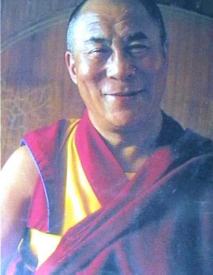 |
| extremes of assumption and denial. The result obtained is the two benefits, free from the extremes of existence and peace. May I meet the Dharma, which is free from error. The ground of refinement is mind itself - indivisible luminosity and emptiness: the refining - the great vajra composure of Mahamudra: What is to be refined - the incidental stains of confusion: The result of refining - the unstained Dharmakaya: may I realize it. Confidence in outlook is cutting assumptions about the ground. The key to meditation is maintaining that without distraction. The supreme activity is to exercise the sense of meditation in everything. May I have confidence in outlook, meditation and activity. All Dharmas are projections of the mind, as for mind, there is no mind; mind's nature is empty. Empty and immediate, mind appears as everything. Investigating it well, may I settle the basic points. Appearances, which never existed in themselves, have been confused as objects; awareness itself, because of ignorance, has been confused as a self; through the power of dualistic fixation I wander in the realm of existence. May ignorance and confusion be completely resolved. It doesn't exist; even Buddhas do not see it. It doesn't NOT exist; it is the origin of Samsara and Nirvana. No contradiction; conjunction, the middle way. May I realize the pure being of mind, free from extremes. If one says, "It is this," nothing has been posited. If one says, "It is not this," nothing has been denied. Unconditioned pure being transcends intellect. May I gain conviction in the ultimate position. Not realizing it, one circles in the ocean of Samsara. Realizing it, Buddha isn't anywhere else. "It is everything," "It isn't anything"; none of this. May pure being, the basis of everything, be realized. Since appearance is mind and emptiness is mind, Since realization is mind and delusion is mind, since arising is mind and cessation is mind, may all assumptions about mind be eliminated. Unpolluted by meditation with intellectual efforts, undisturbed by the winds of everyday affairs, not manipulating, knowing how to let what is true be itself, may I become skilled in this practice of mind and maintain it. The waves of subtle and coarse thoughts calm down in their own ground. Motionless, the river of mind abides naturally. Free from the contaminations of dullness and torpor, may I establish the still ocean of shamatha. When one looks again and again at the mind which cannot be looked at, and sees vividly for what it is, the meaning of not seeing, doubts about the meaning of "is" and "is not" are resolved. Without confusion, may my own face know itself. Looking at objects, there is no object; one sees mind. Looking at mind, there is no mind; it is empty of nature. Looking at both of these, dualistic clinging subsides on its own. May I realize sheer clarity, the way mind is. Free from mental constructions, it is called Mahamudra. Free from extremes, it is called Madhyamika. Everything complete here, it is also called Maha Ati. May I attain the confidence that, it understanding one, all are realized. The great bliss of nonattachment is continuous. Sheer clarity without fixations is free of obscurations. Passing beyond intellect, non-thought is naturally present. May these experiences continually arise without effort. Attachment to good and fixation on experience subside on their own. Confusion and evil concepts are cleared away in the realm of ultimate nature. In the ordinary mind, there is no rejection or acceptance to separation or attainment. May I realize the truth of pure being, complete simplicity. While the nature of beings has always been full Enlightenment, not realizing this, they wander in endless Samsara. For the boundless suffering of sentient beings may overwhelming compassion be born in my being. While such compassion is active and immediate, in the moment of compassion, its essential emptiness if nakedly clear. This conjunction is the undeviating supreme path; inseparable from it, may I meditate day and night. From the power of meditation come eyes and actual knowledge. Sentient beings are ripened and domains of Enlightenment refined. Aspirations for the realization of all aspects of Buddhahood are fulfilled. May I complete these three - fulfillment, ripening, and refinement - and become a Buddha. By the compassion of the Buddhas and Bodhisattvas of the ten directions and the power of whatever pure virtue there may be, May my wishes and those of all beings be fulfilled. (Mahamudra (Tib. cha ja chen po) Literally, "great seal" meaning that all phenomena are sealed by the primordially perfect true nature. This form of meditation is traced back to Saraha (10th century) and was passed down in the Kagyu school through Marpa. This meditative transmission emphasizes perceiving mind directly rather than through rational analysis.) |
| Aspirations for Mahamudra Namo guru. Gurus and yidams, deities of the mandala, Buddhas of the three times and ten directions and your children, consider me with kindness. Grant your blessing that all my wishes be realized. Sprung from the snow-mountain of the pure actions and intentions - mind and those of all sentient beings without limit - may the river of virtue undefiled by the three spheres flow into the ocean of the four bodies of Buddha. As long as I have not realized this, through all my life times, birth after birth, may not even the words for defilement and suffering be heard, and may I enjoy the prosperity of oceans of happiness and virtue. Having obtained this excellent, free, and well-favored life, along with faith, energy, and intelligence, having attended a worthy master and received the pith of the sacred instructions, may I practice the sacred Dharma properly in all my lives without interruption. The study of scriptures frees one from the veil of ignorance. The contemplation of oral instructions overcomes the darkness of doubt. Light born of meditation illuminates the way things are. May the radiance of the three wisdoms increase. The significance of the ground is the two truths, free from the extremes of eternalism and nihilism. The excellent path, the two accumulations, free from the |
 |
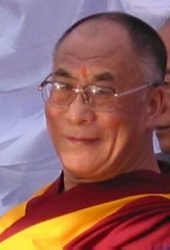 |
| "In Buddhism we have relative truth and absolute truth. From the viewpoint of absolute truth, what we feel and experience in our ordinary daily life is all delusion. Of all the various delusions, the sense of discrimination between oneself and others is the worst form, as it creates nothing but unpleasantness for both sides. If we can realize and meditate on ultimate truth, it will cleanse our impurities of mind and thus eradicate the sense of discrimination. This will help to create true love for one another. The search for ultimate truth is, therefore, vitally important. "Nowadays the world is becoming increasingly materialistic, and mankind is reaching toward the very zenith of external progress, driven by an insatiable desire for power and vast possessions. Yet by this vain striving for perfection in a world where everything is relative, they wander even further away from inward peace and happiness of the mind. This we can all bear witness to, living as we do plagued by unremitting anxiety. It becomes more and more imperative that the life of the spirit be avowed as the only firm basis upon which to establish happiness and peace. I truly believe that individuals can make a difference in society. Since periods of change such as the present one come so rarely in human history, it is up to each of us to make the best use of our time to help create a happier world." The Dalai Lama |
|
| Tibetan Buddhism - Tibetan Buddhism stems from the influence of two major sources, Buddhism and yoga. Ini-tially brought to Tibet by Padmasambhava in the 8th Century, Tibetan Buddhism incorporates both Hindu yogic and Tantra practices as well as the classical teachings of The Buddha. It concentrates on the removal of suffering from all beings, with the understanding that no one person can alleviate individual suffering until all other beings have been liberated from it as well. The path of traditional Buddhism is based on morality, concentration, wisdom, and denuncia-tion of the personal ego. The second path, the Tantric path, is the cornerstone of Tibetan Buddhism, blending the Bud-dhist sutra (sacred text) teachings with those of the Hindu yoga and Tantra. The Tantric path seeks to transform basic human passions of desire and aversion into spiritual growth and development. Thus, instead of denying primal sexual and sensual urges as in traditional Buddhism, the practice of Tantra accepts these urges as sacred life force energy, which is purified and transformed into wholesome and healthy forces connecting the individual with higher spiritual awareness. In order to be successful with Tantric work, one must have skill in both self-control and acceptance of self and others. Tibetan Tantra, also known as Vajrayana, draws on the core teachings of both Mahayana and Hinayana, two schools of Buddhism. Mahayana Buddhism emphasizes the help that the gods and theBbodhisattvas can give to people to help them escape samsara, the continual cycle of death and rebirth. Mahayana doctrines teach selflessness, the Bodhisattva stages, perfections and prayers to achieve perfect alignment for the sake of all sentient beings. Hina-yana, sometimes called �the little way," emphasizes personal emancipation rather than being concerned with the bur-dens of others. While those who practice Hinayana initially do not do so with the intent of obtaining Buddhahood, even-tually this path too may lead to Mahayana and Enlightenment. Mahayana is made up of two vehicles, the Paramitayana and the Mantrayana. Paramitayana is a �Cause vehicle� in which there is no meditation on oneself in regard to the four complete purities of abode, body, property and activities, representative of a Buddha�s palace, body, wealth and deeds. Mantrayana is the �Effect vehicle,� in which there is meditation on oneself as being a physical representation of the four complete purities. In Mantrayana, therefore, one meditates on oneself as being a divine mansion, a divine en-tourage, divine ritual implements, and the divine deeds of purifying the cosmos and its inhabitants in the same manner as a Buddha. There are four types of Mantrayana: inferior, middling, superior, and most excellent. These four classes of Tantra are designed to meet the needs of four types of disciples. The four classes are similar to �four doors:� Ritual Tantra, Conduct Tantra, Yoga Tantra, and Unexcelled Yoga Tantra. The Kalachakra belongs to the Unexcelled Yoga Tantra class. Kalachakra: Wheel of Time - For more than 2,500 years, the Kalachakra teachings have been preserved in India and Tibet. Kalachakra Tantra comprises the innermost essence of the 84,000 categories of the teachings of The Buddha. Its major purpose is to assist us in purifying our body, speech and mind. There is a special connection between Kala-chakra and the land of Shambhala in regard to a future golden age of Dharma. It carries a profound message for the all the people on Earth at this time in history. The three levels of the Kalachakra Tantra are known as external, internal and alternative, each of which is a wheel of time. The external or outer Wheel of Time concerns laws of time and space of our three dimensional, physical world and deals with astronomy, astrology and mathematics. It is also called �The procession of the external solar and lunar days.� The internal Wheel of Time is concerned with the human body, includ-ing its energy system. The alternative Wheel of Time includes the doctrine, path and initiations of Shri Kalachakra, its circular Mandala abode, and its results. The disciple who takes the Kalachakra initiations should have knowledge of the three principle aspects of the Mahayana path: renunciation of samsara (continuing cycle of death and rebirth), bo-dhichitta, and an understanding of emptiness. �Bodhichitta is the desire for true, perfect Enlightenment for the sake of others.� The Kalachakra Mandala - The Tibetan word for Mandala is �kilkhor,� meaning �center of the circle.� Manda-las may incorporate colored sand, jewels, flowers, colored stones, or dyed rice. As each grain of sand in the Mandala is charged with the blessings of the ritual purpose and process, the entire Mandala carries an incredible spiritual energy. Each Mandala is a sacred mansion of its own. Both the deity residing at the center of the Mandala and the Mandala in its entirety are perceived as sacred expressions of the Enlightened mind of The Buddha. Each person engaging in the initiation ceremony is nourished through the process of visualizing and contemplating the Mandala. There are 722 deities in the Kalachakra Mandala, symbolizing various manifestations of consciousness and reality. The Dalai Lama has explained that the Kalachakra deities represented in the Mandala create a favorable atmosphere that reduces ten-sion and violence in the world. The Kalachakra deity resides in the center of the Mandala in his palace consisting of four Mandalas, one within the other: the Mandalas of body, speech, and mind, and in the very center, wisdom and great bliss. The palace is divided into four quadrants, each with walls, gates and a center and a specific color. The colors rep-resent the elements and mental types. Black in the east is associated with the element of air and wind. The south is red, representing the element of fire. The west is yellow and associated with the element of earth. The north is white, representing the element of water. The square palace containing the 722 deities is located on the concentric circle rep-resenting Earth. The other circles representing water, fire, wind, space and consciousness extend beyond the wall of the palace. The Kalachakra sand Mandala is dedicated to both individual and world peace and physical balance. The Dalai Lama explains: �It is a way of planting a seed, and the seed will have karmic effect. One doesn�t need to be present at the Kalachakra ceremony in order to receive its benefits.� |
|
 |
| Tibetan Customs and Festivals - Customs: Presenting Hada hada is a common practice among the Tibetan people to express their best wishes on many occasions, such as wedding ceremonies, festivals, visiting the elders and their betters, and entertaining guests. The white hada, made of grege silk, embodies purity and good fortune. Proposing a Toast and Tea: When you come to a Tibetan family, the host will propose a toast, usually barley wine. You should sip three times and then drink up. To entertain guests with tea is a daily etiquette. The guest must not drink until the host pre-sents the tea to you. Greetings: Don't forget to add "la"after saying hello to the Tibetan people to show respect. Make way for others. Try not to make any sounds while eating and drinking. Keeping away from Burials Sky burial is a common form in Tibet. There are many prohibitions. Strangers are not allowed to attend the ceremony. Visitors should respect this custom and keep away from such occasions. Tibetan Buddhism: Also known as the Lamaism. Tibetan Buddhism was introduced to Tibet from the mainland and India in the seventh century. Tibetan Buddhism consists of four major sects, the Ge-lug-pa (Yellow) Sect, the Nying-ma-pa (Red) Sect, |
| the Sa-kya-pa(Variegated) Sect, and the Ka-gyu-pa (White) Sect. Festivals: In general, Tibetan festivals have a strong ethnic and religious flavor. The first day of the first month of the Tibetan calendar is known as the King's New Year. This is the most important festival of the year. Early on New year's day morning, Tibetan men and women, dressed in their holiday best, go out to exchange New Year greetings and good wishes. They also go to the monastery, or sing and dance on the street, but may not visit relatives and friends. The 15th day of the first month is the Butter Lantern Fes-tival. During the day, people go to the monastery, while at night, a butter lantern fair is held on Lhasa's Barkor Street, which is lined with racks displaying various butter sculptures, depicting deities, human figures, birds and animals, and plants and flowers. Puppet shows are also performed to add a festive atmosphere. In rural areas, people participate in antiphonal singing contests, which sometimes go on for days at a time. This is the most celebrated festival in Lhasa. The fourth month of the Tibetan calendar is Buddhist Month, the 15th day of which is the anniversary of Sakyamuni's birth and Nirvana. During this month the Tibetan people pray for bumper harvests. The 15th day of the fifth month of the Tibetan calendar is the Lingka Festival, or the World Happiness Day, when people dress in their best and go picnicking in parks. The Shoton Festival lasts from the first to the 30th day of the seventh month. It is concurrent with the sum-mer prayer meetings of the three most famous monasteries in Lhasa. Since a large amount of yogurt needs to be sup-plied to lamas attending the prayer meetings, and Tibetan operas are performed on these occasions, the festival is named Shoton-sho meaning yogurt, and ton meaning meeting. At this time, professional and amateur performing troupes gather at Norbu Lingka to stage Tibetan operas. Around the 10th day of the month, the troupes go out to per-form in cities, towns, monasteries and suburbs. Nowadays, trade fairs are also held during the Shoton Festival. The eighth month of the Tibetan calendar is the Harvest Thanksgiving Festival, when Tibetan people sing and dance, stage songfests, hold horse races and bull fights, put on archery contests, stone carrying and wrestling matches and other folk sports activities to celebrate harvest. The 15th day of the 10th month is the Goddess Festival, when religious rites are held. Women are especially active at this festival, since they consider it as their own celebration. The 25th day of the of the month is the Butter Lamp Festival, which commemorates the Enlightenment of Tsongkhapa, when people place burning butter lamps on the roofs of monasteries and their homes. The 29th day of the 12th month is the Ghost-Dispel-ling Festival, when monasteries sponsor ceremonial dances to dispel evil spirits and pray for a bountiful harvest in the coming year. Ceremony at the Potala Palace is always the grandest. (Since the Chinese occupation, many of these festi-vals have been either curtailed or eliminated altogether.) Additional Notes: Hada Scarf - It has become a Tibetan tradition to present a Hada to show respect and good wishes in social com-munication, and during meetings among friends and relatives. The Hada is a long scarf that is made of white silk and flax. There are many different kinds of Hada according to the different qualities and lengths, such as the "LangZuo," "A Xi," "Suo Xi." The longer and wider the Hada is, the more respect the Hada shows. The Hada presented depends on the giver's economic situation. When ordinary Tibetan people go to worship the Living Buddha, they present a Hada. However, such Hada cannot be handed to the Living Buddha directly but can only be put on the table in front of the wor-shipper. Toasts - When you visit a Tibetan family, the host will propose a toast, usually with barley wine. Highland barley wine is a non-distilled millet wine with an alcohol percentage of 15% to 20%. It has become a tradition to first take three sips, and then drink up when a guest is toasted. Drinking tea is part of daily etiquette. When guests enter the house, the hostess or host's children will bring butter oil tea. However, the guests do not serve themselves, rather the host presents the tea to his guests. Greetings - In Tibet, people usually greet each other by putting a "la" after the person's name to show respect. They never overtake others while walking and always make way for each other when they meet on the street. Furthermore, Tibetan people have good table manners, such as not taking a full mouth-ful of food, not making sounds while drinking and eating, etc. Keeping Away From Funerals - In Tibet, a sky burial is a common form of funeral. There are many taboos surrounding a sky burial. Strangers are not allowed to attend the cere-mony. Tourists should respect the customs and traditions of the Tibetans and stay away from such occasions. Food - The food in Tibet differs according to the area. The staple food is zanba in agricultural areas, beef and mutton in pastoral areas. Some typical staple foods, beverages and dishes are as follows: Zanda - Grinding fried highland barley and peas into a powder makes Zanda. Mix the zanba powder with tea and butter oil using your fingers, and form it into nuggets. Then that is ready to eat. Butter Oil Tea - Heat the brick tea into water tea. Pour the tea into a wooden tea bucket that is one meter high, ten or more centimeters in diameter, put in some butter oil and salt, then pound up and down with the pestle of the tea bucket. Mix the tea, salt and butter oil together and that is butter oil tea, which is fragrant, good tasting and full of nutrition. It is a popular beverage in Tibetan daily life, and is also good to serve guests. The quality of the butter tea depends on the quality of the butter oil. Barley win - It is made of highland barley, and is very popular in Tibet; it is also used to serve to guests. Air-dried meat - Whole pieces of meat or meat nuggets are hung in the cold air and dried; it can be eaten raw. Masan - Stir together good zanba, cheese flour and brown sugar, add some melted butter oil, and make it into a paste. Put the paste into moulds to make it into nuggets; it can be adorned with butter oil decora-tions. Potato Coffee Meal - Heat fresh butter oil, and add a few shallots. Fry mutton cubes until half-cooked, add some fennel vulgare, coffee, salt and put the peeled and cooked potato pieces into the pan. Cook together. Serve the potato coffee meat on top of rice. Rou Baozi - Chop beef, suet and shallots, and add condiments. Wrap this filling in unfer-mented flour. Good Baozi is often served with gravy. Meeda - Meeda means gruel. After the monks of three temples at Lhasa get the academic title of Lharemba Geshi, they will donate thick gruel to all the monks at the temples as a cele-bration. The recipe is: Cook the rice into a thin gruel, add some salt, butter oil, diced meat, red dates, dried-apricots, and dried-grapes. Cover the container tightly with a lid and simmer for several hours. Stir and mix before the meeda is served. Filled Intestines of Lamb - Half-cook the intestines; fill them with a mixture of minced meat, blood from a lamb, fennel, salt, pepper and wild shallots. Cook the filled intestines, cool them, cut the intestines into small pieces, and fry them before serving. Blood Intestines - Fill small intestines with a mixture of diced meat, suet, condiments and blood. Lightly scald the filled small intestines in boiled water, take them out before the blood solidifies. Eat them and suck with two ends held. They are very delicious! Cold lamb head with sauce Epilate - Clean and cook the lamb's head, then pick the mutton out of the head. Add coffee powder, fennel, and hot pepper powder, mix and stir the mutton with the lamb brains. (For informational use only and should not be considered recommendations for these meals.) Disclaimer: All images and/or articles retain the original copyrights of their original owners. |
 |
 |
 |
| May 5, 2003 |
| Visit our main Buddhism site. More information and images and, NO pop-ups! |
 |