

October, 2003
Page 3
U.S. Citizens -Rights & Responsibilities
The Digestive System



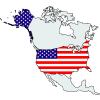
To be treated equally
To worship in any religion
To vote for our leaders
To freedom of speech
To follow the laws
To respect other people and their property
To vote in elections
To conserve our natural resources
To help others
To learn and do your best

Mouth - The teeth chew and break down the food and the saliva makes it mushy and helps break it down.
Esophagus - This is a muscular tube that pushes food from your mouth to your stomach. Food takes about 10 seconds to go down the esophagus. Liquids only take about 1 second.
Stomach - The stomach uses acid to dissolve the food. The stomach walls also squeeze the food into smaller pieces.
Small Intestines - The food is broken down into very tiny pieces and the nutrients are absorbed by the villi to take the food to the bloodstream.
Large Intestines - Extra water is absorbed in the large intestines and the waste is formed into small masses and pushed out of the body through the rectum.