The Andrew B. 'Banjo' Paterson Poetry Library |
 |
|
|
|
|
| Hall of Poetry |
| ' Banjo ' Page 2 |
| ' Banjo ' Page 3 |
| ' Banjo ' Page 4 |
| ' Banjo ' Page 5 |
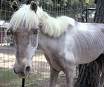
| The Story of Mongrel Grey Andrew Barton �Banjo� Paterson [ Historical Note: Mongrel Grey-a beat-up, old horse. ] THIS is the story the stockman told, On the cattle camp, when the stars were bright; The moon rose up like a globe of gold And flooded the plain with her mellow light. We watched the cattle till dawn of day And he told me the story of Mongrel Grey. He was a knock-about station hack, Spurred and walloped, and banged and beat; Ridden all day with a sore on his back, Left all night with nothing to eat. That was a matter of every-day Common occurrence to Mongrel Grey. We might have sold him, but someone heard He was bred out back on a flooded run, Where he learnt to swim like a waterbird,� Midnight or midday were all as one. In the flooded ground he could find his way, Nothing could puzzle old Mongrel Grey. �Tis a trick, no doubt, that some horses learn; When the floods are out they will splash along In girth-deep water, and twist and turn From hidden channel and billabong. Never mistaking the road to go, For a man may guess�but the horses know. I was camping out with my youngest son� Bit of a nipper just learnt to speak� In an empty hut on the lower run, Shooting and fishing in Conroy�s Creek. The youngster toddled about all day, And with our horses was Mongrel Grey. All of a sudden the flood came down Fresh from the hills with the mountain rain, Roaring and eddying, rank and brown, Over the flats and across the plain. Rising and rising�at fall of night Nothing but water appeared in sight! �Tis a nasty place when the floods are out, Even in daylight; for all around Channels and billabongs twist about, Stretching for miles in the flooded ground. And to move was a hopeless thing to try In the dark with the water just racing by. I had to try it. I heard a roar, And the wind swept down with the blinding rain; And the water rose till it reached the floor Of our highest room, and �twas very plain The way the water was sweeping down We must shift for the highlands at once, or drown. Off to the stable I splashed, and found The horses shaking with cold and fright; I led them down to the lower ground, But never a yard would they swim that night! They reared and snorted and turned away, And none would face it but Mongrel Grey. I bound the child on the horse�s back, And we started off with a prayer to heaven, Through the rain and the wind and the pitchy black, For I knew that the instinct God has given To guide His creatures by night and day Would lead the footsteps of Mongrel Grey. He struck deep water at once and swam� I swam beside him and held his mane� Till we touched the bank of the broken dam In shallow water�then off again, Swimming in darkness across the flood, Rank with the smell of the drifting mud. He turned and twisted across and back, Choosing the places to wade or swim, Picking the safest and shortest track,� The pitchy darkness was clear to him. Did he strike the crossing by sight or smell? The Lord that held him alone could tell! He dodged the timber whene�er he could, But the timber brought us to grief at last; I was partly stunned by a log of wood, That struck my head as it drifted past; And I lost my grip of the brave old grey, And in half a second he swept away. I reached a tree, where I had to stay, And did a perish for two days hard; And lived on water�but Mongrel Grey, He walked right into the homestead yard At dawn next morning, and grazed around, With the child on top of him safe and sound. We keep him now for the wife to ride, Nothing too good for him now, of course; Never a whip on his fat old hide, For she owes the child to that old grey horse. And not Old Tyson himself could pay The purchase money of Mongrel Grey. |
Lost Andrew Barton �Banjo� Paterson "HE ought to be home," said the old man, "without there�s something amiss. He only went to the Two-mile�he ought to be back by this. He would ride the Reckless filly, he would have his wilful way; And, here, he�s not back at sundown�and what will his mother say? "He was always his mother�s idol, since ever his father died; And there isn�t a horse on the station that he isn�t game to ride. But that Reckless mare is vicious, and if once she gets away He hasn�t got strength to hold her�and what will his mother say?" The old man walked to the sliprail, and peered up the darkening track, And looked and longed for the rider that would never more come back; And the mother came and clutched him, with sudden, spasmodic fright: "What has become of my Willie?�why isn�t he home to-night?" Away in the gloomy ranges, at the foot of an ironbark, The bonnie, winsome laddie was lying stiff and stark; For the Reckless mare had smashed him against a leaning limb, And his comely face was battered, and his merry eyes were dim. And the thoroughbred chestnut filly, the saddle beneath her flanks, Was away like fire through the ranges to join the wild mob�s ranks; And a broken-hearted woman and an old man worn and grey Were searching all night in the ranges till the sunrise brought the day. And the mother kept feebly calling, with a hope that would not die, "Willie! where are you, Willie?" But how can the dead reply; And hope died out with the daylight, and the darkness brought despair, God pity the stricken mother, and answer the widow�s prayer! Though far and wide they sought him, they found not where he fell; For the ranges held him precious, and guarded their treasure well. The wattle blooms above him, and the blue bells blow close by, And the brown bees buzz the secret, and the wild birds sing reply. But the mother pined and faded, and cried, and took no rest, And rode each day to the ranges on her hopeless, weary quest. Seeking her loved one ever, she faded and pined away, But with strength of her great affection she still sought every day. "I know that sooner or later I shall find my boy," she said. But she came not home one evening, and they found her lying dead, And stamped on the poor pale features, as the spirit homeward pass�d, Was an angel smile of gladness�she had found the boy at last. |
|
 |