

The town of 21,000, like most in Kentucky, has long said no to sales of alcoholic beverages.
But that changed in Elizabethtown and several other cities recently because of the biggest transformation in the state's local-option laws since the end of Prohibition in the 1930s.
In the hectic final days of the 2000 General Assembly session, legislative leaders spurred to passage a law allowing localities to authorize alcohol sales only in large restaurants - those that have 100 seats and get 70 percent of their income from food sales.
Another recent law lets voters decide whether golf courses could sell alcohol.
Until the restaurant law passed, voting "wet" also meant liquor stores and bars.
The prospect of bars made a lot of people vote no, said Trent VanMeter of Elizabethtown, a parole officer who doesn't drink but said he supports the change.
Mr. VanMeter, who defines a bar as "a large group of people in a small space with a lot of alcohol," and others said the stigma of such establishments and liquor stores helped keep Elizabethtown and other places "dry" before the law was passed.
But anti-alcohol forces can no longer win votes with "the fear of the roadhouse, like the old saloons," said Dan Meyer, executive director, general counsel and chief lobbyist for the Wine and Spirits Wholesalers of Kentucky.
So far, eight localities in Kentucky have made their restaurants wet: Elizabethtown, Radcliff, Shelby County, Danville, Georgetown, Central City, Murray and Kuttawa, on Lake Barkley. The law also has been invoked in Morehead, which was previously wet, so the effect there was to allow liquor by the drink.
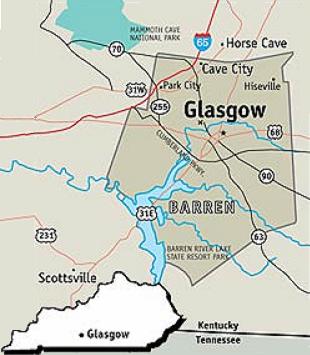
The effort has failed in 10 places - Berea, Burnside, Cadiz, Glasgow, Hazel, Jamestown, Junction City, Crittenden County, Harrodsburg and the rest of Mercer County - but even opponents say they expect more places to make their restaurants wet.
"It's just going to have a domino effect, and more people will say, 'Let's have it in our town,'" said Howard Beauman, executive director of the Kentucky League on Alcohol and Gambling Problems, formerly the Kentucky Temperance League. "It does make it palatable to a lot of people who may be on the borderline."
Mr. Meyer said the restaurant-only option is attractive to towns that don't want taverns but want national-chain steakhouses and other restaurants that will come only if they can serve beer, wine and liquor.
As more places allow their restaurants to go wet, Mr. Meyer said, he and other alcohol interests will find easier going in the legislature because more and more lawmakers will represent constituents who have voted wet.
Mr. Beauman said he's seen no evidence of that - or of economic benefits that Mr. Meyer and other supporters of the law say it brings to towns.
Supporters point to development of several new restaurants in the college town of Murray, a new restaurant in Kuttawa and
the conversion of a closed Shoney's in Radcliff into a "sports grill."
But Mr. Beauman said: "There's never an economic impact study done. I'd really like to know what it is."
Debby Spencer, vice president of West Kentucky Corp., a nonprofit economic development firm funded mainly by state tax dollars, promotes using the law to boost tourism and industrial development, by attracting executives who want alcohol and the amenities it can bring.
"We work with 45 counties on economic development, and it's proven to us that it's an economic development issue," Ms. Spencer said. "It's always been a handicap here."
The notion of dry territory is alien to many people who come to Kentucky from other states, said Kay McCollum, executive director of Kentucky's Western Waterland, which promotes tourism around Lake Barkley and Kentucky Lake.
"When we say 'dry,' they don't even know what it means," Ms. McCollum said. "They say, 'You mean you can't even get a bottle of wine?' and get in the car and go to Paducah."
The same thing happened for decades at motels in Elizabethtown, at the busy junctions of Interstate 65, the Blue Grass Parkway and Western Kentucky Parkway, said Ms. Spencer and restaurateurs in the city.
Elizabethtown held local-option elections in 1995 and 1998. Opponents of alcohol won the former by 735 votes but the latter by 222, so many feared the city would go wet in the next election, said Tim Thomas, who led the dry forces in 1998.
Mr. Thomas and others who voted no say they haven't heard of any problems in the four months since alcohol was sold legally in Elizabethtown for the first time in almost 60 years.
"It's gone quieter than I expected," said Mr. Thomas, a former state trooper.