Serendipity

A chinese lion statue ...under construction

You can find resources and links about the postings in the resources section.

If you have any suggestion or complain, please contact me.

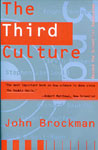
The Third Culture

Posted by gv on October 8, 2007
Third Culture Book

The third culture is a place on the web (http://www.edge.org) and a book, both by John Brockman. The book is a source of inspiring thoughts by the most influential exponents of the so called third culture which conciliates the scientific and humanistic view of the universe. An impressive gallery of famous thinkers say their thoughts about life and world. I have collected the excerpts of the book, available on edge, in a single enjoyable book.

Download:

Number Theory and Physics

Posted by gv on October 8, 2007

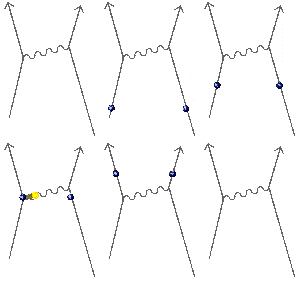
In the last years, a new interest in merging scientific knowledge from different disciplines, has come up. For examples a very interesting thing are the emerging connections between Quantum Mechanics and Consciousness, and biology in general. More strange are the connections between two such fields as Number Theory and Physics. Loosely speaking, number theory (NT) can be viewed as a big game where the starting rule is: given two symbols 0 and 1 and some algebraic operations (+,*,...), we can build, for example, all the natural numbers n. The scope of the game is to find regular structures, connections, theorems,... arising in this game. Prime Numbers are the most fascinating of such structures, and some of the facts about such numbers are still a mystery (one for all, Riemann Hypothesis). However what have this numbers, and other facts about NT, have in common with Physics? Well, if you are interested in such questions, the best place on the web to begin with is Matthew Watkin's web site, a very funny place.

Emmy Noether Theorem

Posted by gv on October 1, 2007
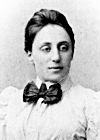
Emmy Noether

I have made an italian translation of the famous paper by Emmy Noether on group transformations and conservation laws. Any student in physics knows how much important is for the modern physics the concept of symmetry of a physical systems. Here you can get a free copy of the english or italian version of this memorable article.

Download:

Emile Artin - Galois Theory

Posted by gv on October 1, 2007
book cover

Everybody knows that a polynomial with degree more than fourth is not solvable by radicals (Abel's theorem). However it's difficult to find an easy place where this is explained without much more complication in background algebra needed. Once I found on the web a copy of prof. Emile Artin lectures on Galois Theory which covered the essential background on group and fields theory necessary for the understanding of what Abel and Galois stated. But the file was very bad typeset (scanned). So I decided, given the difficulty to obtain a printed copy, to typeset in LaTeX those lectures. I hope I have not infringed or hurt some copyright law, but my effort is now at your disposal.

Download:

P.A.M. Dirac, Quantum Theory of Electrons

Posted by gv on October 1, 2007
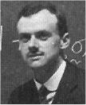
P. A. M. Dirac

Dirac has been one of the master of Quantum Theory. The equation which bears his name is the starting point for every theory of quantum matter. In 1928, after the basis of Quantum Mechanics were well established, he wrote a fascinating paper on the theory of electrons described by a relatively simple spinorial equation. It explained much of the strange spectroscopic behavior of the matter then known. It was a profound success in the physics of every time. Here you can find the original scanned paper, and my personal italian translation.

Download:

Richard P. Feynman

Random foliage

Richard Feynman is perhaps the most famous physicist to non scientist people. He was not only a great physicists (Nobel Prize) but also a wonderful person, a great teacher and a source of inspiration for young scientists. I could not resist the temptation to mention him here. In the resource section you fill find some useful links over the web and download some stuff.

Links

Favorite Books

books

Coming soon...

Latex

If you are interested in technical writing you should learn to use the wonderful Donald Knuth's typesetting system TeX. There are excellent version for windows of TeX and LaTeX (a TeX based system). Find more at Latex Community. All needed software can be downloaded from the CTAN Archive. I use MikTex a free Latex system for windows. You can use any text editor to type tex, but there are many Integrated Environment, perhaps the most useful is TeXnic Center which is absolutely free.

Contact

You can send me comments or news to this email
Private Test Link: Elmore Leonard
Hosted by www.Geocities.ws

1