











|
|
|
|
|
|
|
|
|
|
|
|
|
|
|
|
||||||||||||
|
|
|
|
|
|
|
|
|
|
|
|
|
|
|
|
|
|
|
|
|
|
||||||
| current practices:: Strategies for AIDS | |
The current global response to AIDS is very progressive, although it does need some improvements. The United States, Africa, the WHO and many other NGO's (Non-Government Organizations) are all very involved, working together to improve conditions for all those affected by global infectious disease. These different governments, groups, and organizations are all using a general and similar approach to tackle five main areas that need reform in order to suppress the disease and its negative effects. These five areas of emphasis are funding, education, oversight, immediate medical action, and research. Of these five, funding and oversight are the most important because these two areas affect all the others. If these two areas can be significantly improved, the positive results will trickle down into the other three areas, improving the entire system of control over AIDS. |
|
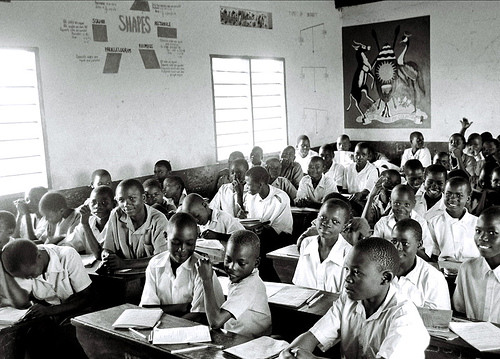
Education is being handled in the United States primarily through education in schools. However, rather than strictly focusing on AIDS, the classes in schools are based on sex education, incorporating AIDS education as it relates to sex. The classes target prevention of all STDs, including AIDS, and the promotion of practicing safe sex. In Africa, clubs are being formed among the youth to provide information about and support for abstinence, but also focusing more on AIDS. |
|
An organization in Africa called Africare is set up to focus on AIDS education in the rural areas of the continent. Similar to the U.S., schools in China focused more on sex education than on AIDS. However, there would also be some posters and school campaigns to encourage the public to fight AIDS. To help funding AIDS relief, on March 9, 2005 the U.S. took part in of a UNAIDS meeting March 9, 2005 entitled "Making the Money Work." This meeting focused on measurable targets and indicators for further application of the "Three Ones" principles, a financial framework for AIDS-specific funding decisions for 2005-2007, and fostering greater coordination among multilateral institutions and international donors. Also in the U.S. the AIDS Research Alliance of America (ARA) funds pre-clinical research and/or designing human clinical trials for those compounds that demonstrate safety and efficacy in pre-clinical testing. In Africa, a group called Africa Action is working with allies in the AIDS advocacy community to dramatically increase U.S. funding to fight HIV/AIDS in Africa. The WHO also received 100 million dollars from Canada for AIDS and HIV relief funding (WHO 3 by 5 Initiative). As for China, the government has spent over millions to improve the environment and infrastructures in the areas where the problem of AIDS is serious. |
|
In general, AIDS research has been very progressive. In the U.S. the private, non-profit AIDS Research Information Center (ARIC) of Baltimore posts research information online, and the American Foundation for AIDS Research has developed "an impressive arsenal of antiretroviral drugs that can significantly prolong the lives of people infected with HIV." (Troyer). |
|
The ARA works with leading scientists in academia and government labs who have identified compounds that potently inhibit HIV in test tubes and works to move these discoveries down into clinical trials. Moreover, The United States and China have agreed to increase the level of cooperation on preventing and controlling the disease, improving surveillance capabilities and increasing related scientific research due to the immense threat posed by AIDS. For immediate medical relief, in the U.S., JHPIEGO, an affiliate of Johns Hopkins University in Maryland, organized training for nurses and other medical personal. In Africa, Africa Action's "Campaign to End HIV/AIDS" in Africa asserts health as a fundamental human right. Within the WHO, Antiretroviral Therapy (ART) has been started to help treat and educate people and also established an organization in 2003 to help speed up the action of treatment. A Chinese Center for Disease Prevention and Control was also established in China so as to respond to the epidemic of AIDS. For oversight within the U.S., the Medical Executive Committee meets to review the progress of ARA research programs and to review new research concepts. The MEC also provides important guidance and input to the medical and scientific staff at ARA. U.S. activists are working to change the government policies to help end the HIV/AIDS crisis in Africa as well. In 2003, the U.S. played a leadership role in the coalition that pressured the Bush Administration to launch its AIDS initiative. |
|
In Africa in 2001, Africa Action's Campaign to End HIV/AIDS in Africa was begun, targeting the structural corruption that affects the HIV/AIDS pandemic in Africa. The current WHO goal is to reduce the deaths as result of AIDS by 2% every year until 2015 (Troyer). The WHO also calls for all sectors of government, private industry, civil society and communities to work together to strengthen all efforts. In China, t he Ministry of Health has also pledged to stop using all non-donated blood which is one of the main ways in spreading AIDS in hospitals by 2008. |
|
next page:: Strategies for Avian Influenza |
|
|
|
|
|
|
|
|
|
|
 |
|
|||||||
 |
 |
 |
 |
 |
 |
 |
 |
|
 |
 |
 |
 |
|
||||