











|
|
|
|
|
|
|
|
|
|
|
|
|
|
|
|
||||||||||||
|
|
|
|
|
|
|
|
|
|
|
|
|
|
|
|
|
|
|
|
|
|
||||||
| current practices:: Strategies for Avian Influenza | |
| Avian Influenza is the most threatening infectious disease at present. The mortality rate among those infected with avian influenza is 90%. The avian influenza is not only a concern for global heath but it has its impacts on global security and economy. So far bird flu has remained as a regional epidemic but, the modern transportation around the globe can easily turn it in to a global pandemic. Although bird flu is not commonly transmitted from human to human, it may become more contagious due to the continuously changing nature of the virus. No country can fight avian influenza alone. Countries need to work together in order to prepare for the worse of the condition. A number of countries and international as well as regional organizations have already started to co-operate with each other. The issue of avian influenza is being dealt very efficiently; still it needs improvements in the sectors of funding, research, education, oversight and immediate medical actions. |
|
The growing concern for the readiness to fight avian influenza requires being equipped with needed resources. And money is needed to carry out the movement. Efforts are already underway as organizations like the Department of Health and Human Service (DHHS) and USAID (United States Agency for International Development) are programming emergency funds. The government of United States has funded $250.8 million alone to detect and containment outbreaks before it spread around the world (Dobbriansky). WHO, USAID, World Bank are the partial recipients of this money. |
|
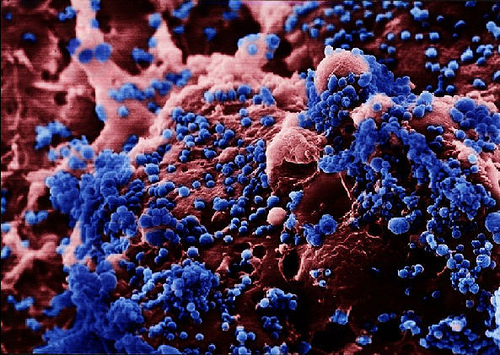
Over the past years DHHS has provided $5.5 million to assist the infected countries in South Asia (U.S. State Department, 2005). Many volunteer and charitable originations are also donating money to the fund to create a defense against avian influenza. But, the action requires constant economic support. The unaffected and conservative nations need to step up and lend their hand of support too. Commercial corporations also need to contribute to this fund to strengthen the financial base. The collaboration among commercial section and main authorities who are dealing with global issues can resolve the issues too. As an initial co-operative step UN and nations can consider advocating the reduction of a certain percentage of tax for international export and importing. To fight the spread of Avian Influenza, scientists need to know as much information as possible about the H5N1 virus. The H5N1 virus is a "type-A," which refers to the subtypes of surface antigens present on the virus : hemagglutinin type 5 and neuraminidase type 1 . The continuous changes in the characteristics of the virus are the main reason why we still don't have a vaccine against it. In order to formulate a vaccination program for AI (avian influenza) hardcore research work needs to be done, and perhaps the research to determine the characteristics of the virus needs to be continued for a long term. Again to sustain such kind of research we need more expertise in this field. The collaboration of nations and various scientific organizations has an important role to play here- the sharing of new data and information is an indubitable way to speed up research programs. Friendly relation among nations is required. The increasing transparency and quality surveillance of countries are going to affect the whole system vividly. Efficient and experienced scientists and proper implication of modern technologies can assure rapid success of the research. |
|
The CDC is currently leading most of the research. A number of research projects are being executed by WHO, USAID and other intercontinental organizations. Still this sector needs improvement in assigning more experienced scientist-researchers and groups to collaborative research initiatives. Education is the basic action that can help to control the spread of the disease. Proper knowledge on AI will create public awareness.
|
|
| If the general people are educated with basic knowledge on the virus, they will be able to help themselves from getting infected with the H5N1 virus. The transmission of the disease only occurs from poultry to human, and this is a primary reason behind the infections of root level people. Some countries like U.S.A, Russia, Singapore, Thailand, and China are providing the schools with health education programs, basically at a high school level. Some leaflets and posters are also distributed and posted up to educate the public on what AI is and that they should be health-conscious and hygienic. Other developing countries in Asia have a low literacy rate. This disables a huge part of the population from receiving the proper and needed information to avoid avian influenza. Therefore, more access to the information for the people is needed. Few countries are using different media to spread the message to the people. Education of disease needs more effective programs to build a strong awareness among all. |
|
Through history, Influenza pandemics have destroyed millions of lives, caused the economic fall of countries, and damage to resources. The spread of AI will create a barrier in global communication, which will severely damage the world economy. The earlier spread of the disease has cost job opportunities, impacted foreign exchange and caused the destruction of local communities. WHO is constantly providing needed resources to achieve better oversight. |
|
| The ADB (Asian Development Bank), and other economical and public concerned organizations have put up a number of strategies to deal with the flu. Countries like Singapore, where the national economy depends greatly on tourism, are taking future steps and precautions from now. Other countries are preparing themselves with specialized programs to stand hard against a possible outbreak of AI as an epidemic. Still a more effective and real-life oversight for the worse possible condition needs to be developed. And this includes development of specific policies and strong prevention programs. |
|
Above all, the spread of avian influenza can be suspended with immediate medical actions. The identification process of avian influenza is comparatively lengthy. The H5N1 virus damages the respiration system rapidly. Therefore it is obvious that medical treatment for the disease needs to be on standby all the time. Laboratories that identify the virus are mostly based in major cities, which causes the rural people (who are infected with H5N1 most frequently) to have late communication with the needed authorities. |
|
Although a weak vaccination against AI has been developed, it is highly expensive. In order to provide immediate medical care, easy access to vaccination is needed. This can be achieved only though the collaboration among all laboratories and research centers who hold the most capacity to deal with the virus. To conclude, all the current strategies to infectious diseases require global cooperation as infectious diseases are a global problem in many aspects: health, security and economy. Therefore, all countries, including different governments, groups and organizations must work together to prevent the spread of disease, and their work should be organized under the five main areas: funding, education, oversight, immediate medical action, and research. |
|
In order to achieve that, countries which are more developed and well-off should help the developing countries to improve and reform their health system according to the above five areas in response to the infectious disease. As citizens, we should always be aware of the global issues, so as to guard ourselves from being infected. With help and cooperation from every individual in the world, the problem of infectious diseases can then be alleviated. |
|
|
|
|
|
|
|
|
|
|
 |
|
|||||||
 |
 |
 |
 |
 |
 |
 |
 |
|
 |
 |
 |
 |
|
||||