











|
|
|
|
|
|
|
|
|
|
|
|
|
|
|
|
||||||||||||
|
|
|
|
|
|
|
|
|
|
|
|
|
|
|
|
|
|
|
|
|
|
||||||
| solutions:: Action Plan of GIDOC Part(1) | |
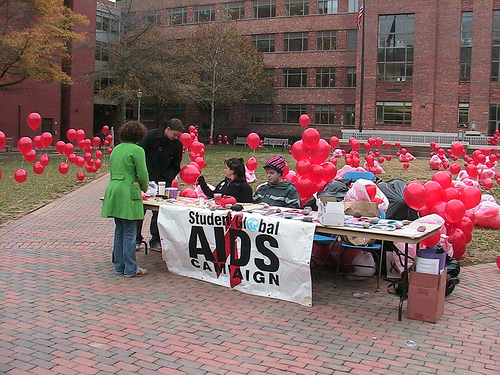
Education:: Dissemination of Health Messages in Developed Countries Introduction Governments of developed countries would not simply promote healthcare messages to the general public only when there is a possible outbreak of a certain infectious disease. The most effective way to educate people about the importance of personal and public hygiene is to include these ideas in the fundamental education system in every country. |
|
Every child is expected to attend health education classes in school, because people are usually more receptive to these ideas and can start a healthy and hygienic lifestyle at an early age. Governments could also promote these messages through the mass media to the general public.
|
http://static.flickr.com/20/69177970_747db05483.jpg?v=0 |
http://www.sxc.hu/pic/m/t/tk/tkobosz/262482_2345.jpg |
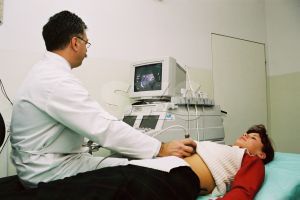
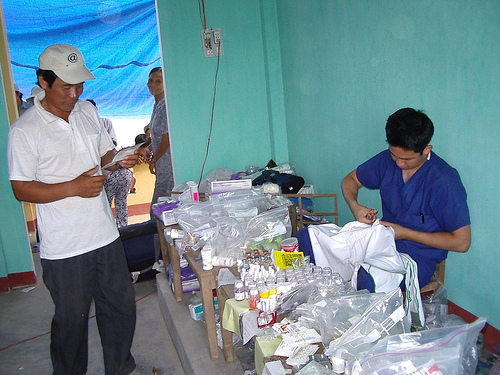
Mobile Medical Station Under the instructions given by GIDOC, local governments would set up mobile medical stations under the assistance of healthcare workers and volunteers in schools and communities to provide free body checkups and other healthcare services for their citizens. Talks on personal hygiene would also be held to promote important messages to them. |
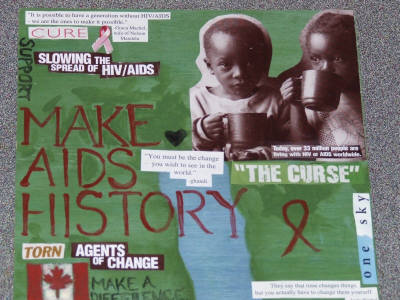
Other Promotion Methods Music is a good way to raise people's alertness on the prevention of infectious disease. Consider Hong Kong as an example; "Arts in the Plaza", the biggest community arts even in the Hong Kong Youth Arts Festival, used "Living with HIV" as the theme for this year's events. To enhance the understanding of the AIDS pandemic, the health education campaign organized by this organization informed the public about the facts of AIDS, how it spreads, how it can be prevented and how to care for those infected by HIV viruses. The Department of Health in Hong Kong has also composed a creative song promoting safe sex and asking people to use condoms when having sexual intercourse. Similarly, GIDOC could also compose simple melodies with lyrics in different languages to promote the message of infectious diseases prevention to the world. |
|
| Lastly, slogans in different languages could be made to promote the importance of personal hygiene efficiently. Slogans created would be short, to point, rhythmic and inspiring. It could be memorized easily when people around the world hear it. |
|
Education:: Voluntary Work in Developing Countries GIDOC would create opportunities for professional voluntary doctors to be sent to medical stations to teach local doctors ways to handle infectious disease outbreaks. These doctors could be recruited from all over the world, as GIDOC is a cross boundary committee without racial discrimination. Other volunteers could hold talks in developing countries for people to raise their awareness on infectious diseases and teach them how to prevent them; nevertheless, volunteers would alert them on hygiene problems. GIDOC would monitor the progress of this and carry it out on a long-term basis. |
|
Education:: Local Training and Financial Assistance for Medical Workers in Developing Countries To improve medical training of healthcare personnel in developing countries, the most essential point is to educate young people to lead their nation in improving healthcare situations. |
|
Therefore GIDOC would also provide financial assistance or even full scholarship to potential healthcare workers or medical students in developing countries so that they could go to developed countries and learn more about healthcare work and health education thus would be able to implement them in their own country after they've returned. These students could take over the work of the voluntary doctors from all over the work and after some years, these developing countries could handle the situation on their own without developed countries help.
|
http://static.flickr.com/32/60722204_d296a56c91.jpg?v=0 |
Funding |
|
Funding for the administration of GIDOC and for the implementation of selected programs would be generated through an increase in the annual dues of United Nations' member nations. These increases would be proportional to the dues already paid by the member nations. The greatest need for funding would be to support research and long-term planning programs. In a new model, GIDOC would rely upon support from international corporations for funding. |
http://www.sxc.hu/pic/m/w/w4/w4ke-up/161018_9589.jpg |
| These corporations have not only the greatest funding capacity, but also the most incentive to do so. Apparel and electronic corporations are very involved internationally because of the resources that are needed and the inexpensive labor found in different countries. International corporations would be encouraged to give generously to the cause, and it is expected that they would do so for the following reasons: • It is in their best interest to do so. These corporations rely heavily on outsourcing; their workforces are truly multinational. When these workforces are facing debilitating disease, corporations have the potential to lose their investments in training and human capital. Other commercial assets such as facilities, equipment, and raw materials are also put at risk by the rampant spread of infectious disease. As well as trying to maintain production during health crises, corporations would be further burdened by the need to try to compete against other corporations that are becoming involved with GIDOC. • Infectious disease threatens the development of new consumer markets, and therefore dampens the opportunity for corporate growth and profit. • Contributing generously to such a high profile cause has tremendous public relations benefits. Tariff relief and the potential for market development. It is proposed that the UN strongly advocate partial relief of international tariffs to corporations that contribute at a certain level. These reductions represent a tremendous opportunity for the growth of new markets and the development of existing ones, and will more than compensate for the loss of revenues to charitable giving. |
|
next page:: Action Plan of GIDOC Part(2) |
|
|
|
|
|
|
|
|
|
|
 |
|
|||||||
 |
 |
 |
 |
 |
 |
 |
 |
|
 |
 |
 |
 |
|
||||