Tiarabella's Yesterdays
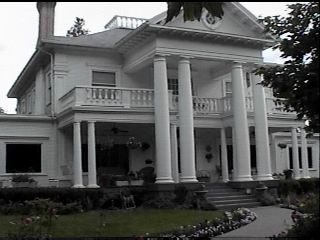
Tiarabella
Senator Daniel Morgan hired architect Harold Whitehouse to design this home for his family. It was designed and built with the latest technology. Many homes did not have electricity or indoor plumbing in that era, not to mention an inside water closet. Not only was it constructed with these latest modern conveniences, it was designed for the comfort of a well-to-do "family of status" of the times. It even had a central vaccum system! It cost $59,000 to build this home, which was a large sum of money in the early 1900's.
Mr. Whitehouse was later to design St. John's Cathedral located further down South Hill on Grand Blvd. The Cathedral is another focal point of South Hill and can be seen from many points throughout the City.
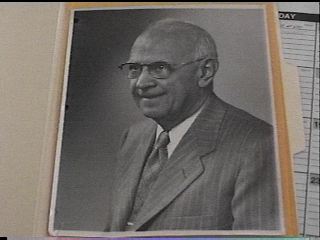
Architect, Harold Whitehouse (18__-19__)
Photograph provided by his son, Bruce Whitehouse
Originally built in 1908 (the title states 1901), she was constructed as a single-family dwelling. During the depression she was a soup kitchen - when her fate seemed as dim as the plight of the people she served. It was used as a rental. Later, it was converted into a duplex. At one point she was going to be a bed and breakfast, but a financing partner backed out. Through the various owners, it was repossessed by financing banks at least four times. She'd been left vacant, vandalized, abused and neglected. The community worried about her fate.
Driving up Spokane's South Hill's Grand Blvd., passing Manito Park, you will see the historical water trough that was erected in 1907. You can just imagine the horse teams pulling heavy wagons loaded with building suppies for the original construction of this large home.
The building site chosen was ideal, situated directly across from Manito Park, having the trolly car end its route right in front of the house. It picked up passengers who lived on South Hill, transporting them to and from downtown businesses and shopping. The tracks are still imbedded in the street in front of the house as a testament to these days of old.
Manito Park hailed prestigue with its beautiful gardens, gazebos, and zoo and was the community meeting place during the Edwardian age. (Visit our link to Manito Park.)
This 1 3/4 story home, with 2,453 sq. feet on her main level (including the additions) was built on a little under a 1/2 acre lot. (Visit our link to our Grounds section.)
The foundation was dug out of indigneous granite rock. Tons of rock, using pick axes and shovels, was manually removed for the construction of the basement and foundation. The foundation was created from the excavated rock. The remaining rock and dirt had to be hauled away by horses and wagons.
Tiarabella's framework was constructed of white pine from the eastern Washington State area. The main level flooring is red oak and the second level is of maple. The beautiful interior woodwork is Honduras Mahogany.
As you walk through Tiarabella, you will notice that the flooring is all two-inch tongue and groove throughout. The walls and ceilings were lathed and plastered.
There were wood-burning fireplaces located in the livingroom, the master bedroom and the gentlmen's smoking room. An additional chimney (no longer in use) serviced a wood-burning stove in the kitchen. These fireplaces and chimneys are constructed of red brick. There is a large covered hole in the basement foundation where wood was once delivered for heating and cooking. Coal was never used for fuel in this home.
The stairways were altered through the years. Originally there was a stairway from the second level to the kitchen. The kitchen maid was not permitted access to the rest of the house in those days, and this was her access to the kitchen. When the house became a duplex, this stairway was altered to an exterior exit which climbed to the main interior's stairway landing. The stairway was then blocked to the main level.
The two wings were not part of the original construction. The area where the west addition now stands (built in the 1940's) was actually a turn around for a horse and carriage. The east enclosure was originally a sitting porch.
The structure in the back of the property (now used as a two-car garage) is the carriage house that was used to store the family carriage and stable their horse.
George's Renovations
The first time George saw this home, he drove past it with his real estate agent and she didn't want to show it to him as it was too much of a fixer. He insisted and was able to see it that afternoon ... the rest is history!
