| shadow |
| Terrorist Group Notes |
| Bin Laden's Tape "Three months after the blessed strikes against world atheism and its leader, America, and around two months after the fierce crusade against Islam, we must review the impact of these events. The latest events have proved important truths. It has become clear that the West in general and America in particular have an unspeakable hatred for Islam. Those who lived under continuous US raids for the past months are aware of it. How many villages have been destroyed and how many millions have been pushed out in the freezing cold? These men, women and children who have been damned and now live under tents in Pakistan, have committed no sin. They are innocent. But on a mere suspicion, the United States has launched this fierce campaign. We have witnessed the true crimes of those who call themselves humanists and claim to be defenders of freedom. Only seven grammes of explosives are needed to kill someone, but the United States has used bombs weighing seven million grammes proving their hatred of the Taleban and Muslims. When the youths - may God receive them as martyrs - blew up (the US embassy) in Nairobi, less than two tonnes were used. The United States then said it was a terrorist act and a mass destruction weapon, while they unscrupulously used two seven-tonne bombs, of seven million grammes each. After they (the Americans), for no reason, bombed entire villages to scare the inhabitants, the defence secretary said it was the United States' right to exterminate the peoples since they are Muslim and since they are not American. It is a blatant crime. A few days ago, they bombed al-Qaeda positions in Khost (eastern Afghanistan) and dropped - in what they said was a mistake - a radio-guided bomb on a mosque where ulemas were praying. They targeted the mosque, killing 150 Muslim worshippers. It is the hatred of crusaders. Terrorism against America deserves to be praised because it was a response to injustice, aimed at forcing America to stop its support for Israel, which kills our people. We say that the end of the United States is imminent, whether Bin Laden or his followers are alive or dead, for the awakening of the Muslim umma (nation) has occurred. It is important to hit the economy (of the United States), which is the base of its military power...If the economy is hit they will become reoccupied. -end- |
| 11 October 2002 North America Risk Pointers - USA The defeat of communism left a vacuum in US foreign policy owing to the lack of a visible enemy. Since the 11 September 2001 devastation of the World Trade Center in New York and the partial destruction of the Pentagon by terrorists believed to be associated with the Al-Qaeda network that vacuum has been filled by the `war on terrorism'. President George Bush pledged to destroy global terrorist organisations, beginning with Al-Qaeda and the Taliban regime in Afghanistan. The 11 September attacks brought to an end the sense of security that Americans had enjoyed since the end of the Cold War in 1991. The Bush doctrine of defeating terrorism that has a ``global reach'' has become the defining tenet of administration policy. In addition to the mobilisation of US forces in Afghanistan to defeat the remnants of Al-Qaeda and the Taliban, US advisors have been sent to Yemen, Georgia and the Philippines to train local security forces to counter the threat from rebel groups with possible links to Al-Qaeda in those countries. Furthermore, although no clear link has been established between Al-Qaeda and Iraq, the Bush administration has put Iraq and US allies on notice that ``inaction is not an option'' in the face of allegations that Iraq continues to develop Weapons of Mass Destruction (WMD) that threaten the US. In January 2002, Bush referred to Iraq as comprising an ``axis of evil'' together with Iran and North Korea, claiming that these countries are developing WMD programmes that represented a threat to world stability. Bush's bellicose language caused international concern, even among close allies. Since that speech the administration has been working to build an international alliance supportive of action against Iraq. In a speech at the West Point military academy in June 2002, President Bush unveiled a new strategic doctrine for the US, making it potentially the most important pronouncement on military strategy of the post-Cold War era. He signalled an end to the Cold War doctrine of deterrence because it meant ``nothing against shadowy terrorist networks with no nations or citizens to defend''. Instead he outlined a doctrine based on pre-emptive action to ensure that there can be no repeat of the Al-Qaeda build up in Afghanistan. The new doctrine would also provide a basis for any future strike on Iraq. President Bush continues to enjoy unprecedented levels of public approval (nearly 80 per cent) largely because partisan politics have been put on hold since the 11 September 2001 terrorist attacks. The opposition DemocraticParty lacks an obvious leader and is prone to accusations of siding with the enemy for raising the mildest criticism of Bush's prosecution of the `war on terrorism'. The president's popularity had the effect of inoculating Bush and his party from the fallout from the scandal surrounding the January 2002 collapse of Enron, a major US energy firm with close ties to the administration, which could have caused irreparable political damage in normal circumstances. The 11 September attacks have heralded the greatest change in the defence and military command structure since the Second World War. The creation of an Office of Homeland Security has been reinforced by the introduction of Northern Command, which has the responsibility for the security of North America and troops on homeland security missions. The Office of Homeland Security, which President Bush plans to turn into a full-blown government department, is designed to co-ordinate the defence against terrorism in the continental US, a responsibility shared between 25 or so separate departments and agencies. To support the new demands on the military Bush has asked Congress for an increase in spending of over 10 per cent for the 2003 military budget and plans further increases in coming years. |
Terrorist Groups There are now 10 religious and secular terrorist groups that are capable of using suicide terrorism as a tactic against their governments and/or foreign governments. They are: Islam Resistance Movement (Hamas) and the Palestinian Islamic Jihad of the Israeli occupied territories Hizbullah of Lebanon Egyptian Islamic Jihad (EIJ) and Gamaya Islamiya (Islamic Group - IG) of Egypt Armed Islamic Group (GIA) of Algeria Barbar Khalsa International (BKI) of India Liberation Tigers of Tamil Eelam (LTTE) of Sri Lanka Kurdistan Worker's Party (PKK) of Turkey Osama bin Laden network (Al Quaida) of Afghanistan Pakistan brought about the Taliban, which followed a political line in accordance with the extremist groups of Pakistan and the Pakistani military intelligence agency, ISI. In fact, the ISI created the Taliban. They have created the safe haven for Osama bin Laden. There is a triangle of Pakistan's military intelligence, Taliban and Osama bin Laden. Vendrell said the long-term goal was a government freely chosen by the Afghans. But an interim administration was needed that would reflect Afghanistan's diverse ethnic mix -- unlike the Taliban, whose followers are overwhelmingly Pushtun tribesmen. Giving shelter to one who asks is a centuries-old tradition, part of an unwritten code called Pashtunwali -- the way of the Pashtuns -- that Afghanistan's mainly ethnic Pashtun people are required to uphold even at the cost of their lives. Until last year, Afghanistan was the world's largest producer of heroin, which is made from opium. ...rebel-controlled north, but it's traditionally been less than a tenth of total Afghan output,'' said Chawla. Smuggling the drug to western markets was seen as a major source of funding for the Taliban The UNDCP estimates that last year Myanmar made 1,087 tons of illicit opium, roughly a third of Afghanistan's production, but valued at prices of $232 a kilogram against $28 a kilogram for Afghan opium. Islam bans the use of liquor and all intoxicants. Bush's reference to mounting a ``crusade'' against terrorism summoned up in the Arab world both the past -- the Christian struggle from 11th to 13th centuries to recapture Jerusalem from the Muslims -- and the present -- the depiction by some in the Arab world of Israel as a ``crusader state.'' *American Airlines Flight 11, from Boston, Massachusetts, to Los Angeles, California, crashed (first) into the north tower of the World Trade Center with 92 people on board. *United Airlines Flight 175, from Boston, Massachusetts, to Los Angeles, California, crashed (second) into the south tower of the World Trade Center with 65 people on board. *American Airlines Flight 77, from Washington to Los Angeles, crashed into the Pentagon with 64 people aboard. *United Airlines Flight 93, from Newark, New Jersey, to San Francisco, California, crashed in rural southwest Pennsylvania, with 45 people on board. The two sides (Israel and Palestine) know that the tidal wave of righteous anger building in the US has the power to destroy whoever is unwise enough to stand in its path. The English translation (of the 9/24/01 fax text) is as follows: "To our Muslim brothers in Pakistan, peace be upon you. "The news of the death of our brother Muslims in Karachi while expressing their opposition to the crusade of American forces and their allies on Muslim lands Pakistan and Afghanistan has reached us with great sorrow. We ask God to accept them as martyrs and to join them with the prophets, the caliphs and the martyrs and those of goodwill and to provide for their families. Those who are left behind children are my children and I will, God willing, take care of them. It's not a surprise that the Muslim nation in Pakistan will die defending Islam. It is considered on the front line of defending Islam. As Afghanistan was on the front line of defending itself and Pakistan during the Russian invasion more than 20 years ago. We hope that these brothers will be the first martyrs in the battle of Islam in this era against the new Jewish and Christian crusader campaign that is led by the Chief Crusader Bush under the banner of the cross. We tell our Muslim brothers in Pakistan to use all their means to resist the invasion of the American crusader forces in Pakistan and Afghanistan. I convey to you good news my beloved brothers that we are steadfast in the way of jihad following in the footsteps of the prophet -- peace be upon him -- with the believing heroes, the people of Afghanistan and under the leadership of our prince the warrior Mullah Mohammed Omar. We ask God to make us defeat the infidels and the oppressors and to crush the new Jewish-Christian crusader campaign on the land of Pakistan and Afghanistan. If God allows you to win, there will be no defeat; if he chooses that you will be defeated nothing will allow you to win. Therefore, depend on God." "Your brother in Islam, (signed) Osama bin Muhammed bin-Laden" The Deobandi school of Islam is where the Taliban draw their strict interpretation of the Koran intelligence sources name three locations in the forbidding mountains of Little Pamir, Afghanistan, as the present hideouts of the ex-Saudi terror master, Osama Bin Laden: a set of chambers buried in the mountains south of the Sari Qul Valley; a site on the Tadjik frontier north of Buzai Gumabad, and a fort carved out of the mountains northeast of Wakhyir, the wayside station on the old caravan route to China. None of these locations are visible to aerial or satellite surveillance. Together with reserves, Osama bin Laden can field some 17,000 Islamic militants to pursue what he conceives as his mission: to defeat the United States and its dominant influence as a world superpower. His annual operational budget is estimated as $125 million, which comes out of revenues from family-owned companies. His relatives are close to Saudi Crown Prince Abdullah. So as to save them and the Saudi ruler embarrassment, he has invested his stock in front companies registered in Addis Ababa, the Ethiopian capital. Most of his investments are in satellite networks and cell phone companies. As one of Bin Laden�s chief lieutenants, Ali Mohamed�s testimony enabled the US government to use the trial for building a comprehensive indictment against the entire Bin Laden terrorist machine. He was sentenced to life imprisonment for his role in the conspiracy, but was let off the death sentence. An expert in the art of �invading the Western society� targeted for terrorism, he was a skilled double agent. Mohamed became a naturalized US citizen and penetrated the US army�s Special Forces facility at the Fort Bragg, and given the rank of US sergeant. *The Chinese Connection* Chinese sources reveal that, immediately after the terrorist strikes in the United States on September 11, the Chinese intelligence service, MSS, handed in to the defense ministry in Beijing their estimation that the United States would go to war to overthrow the Taliban regime, for the sake of which it would sign a pact with Russia. The Chinese leadership viewed this eventuality as the most significant shift in the global balance since the 1962 Chinese-Russian feud, with dangerous implications for China�s world standing and its interests in Central and Southwest Asia. The removal of substantial US military strength from the Pacific Rim (USS Kitty Hawk) opened the way for Chinese intervention in Afghanistan and its effort to slow down the US-Russian advance. Long Chinese convoys were carrying armed Chinese Muslim servicemen through northwest China into Afghanistan. They were sent in to fight alongside the ruling Taliban and Osama Bin Laden�s Al Qaeda. Their number is estimated roughly between 5000 and 15,000. Our sources report another three convoys are behind the first 3000, who crossed the frontier Friday, October 5. They are entering Afghanistan along the ancient Krakoram Road to the Afghan-Pakistani border, through the Kulik Pass of Little Pamir. AYMAN AL-ZAWAHRI The Cairo-born militant is a 50-year-old former surgeon who traded the comforts of Egypt for the hardships of Afghanistan. Last month Interpol said Zawahri, chief of Egypt's al-Jihad group, had emerged as a key figure in al Qaeda. He is reputed to use disguises and plastic surgery to hide his identity. a Comfort Basket Booklet, cassette tape, stress ball, hot chocolate mix, comfort packet, journal, tissues, bath salts, playing cards, yo yo, pen and a male grief book. |
| Mega Terror to Israel There was a retaliatory operation Israel refrained from launching after two particularly bloody terrorist attacks � an assault on a main Galilee highway in March, followed soon after by the suicide massacre at Netanya�s Park Hotel. The IDF operation was scheduled for the first half of April and would have targeted Syrian units in Lebanon and locations inside Syria but for the intercession of US Secretary of State Colin Powell who was in the region at the time. He shuttled frantically between Jerusalem and Damascus and persuaded both to step back. In recent weeks, the Syrians have stepped forward again to mount a new threat. Not only are they waving Hizballah�s arms supplies from Iran through Syrian military airfields, but they are providing the Shiite terrorists with chemical warheads and giving them other advanced items manufactured in Syria�s weapons industry. While nobody is saying this out loud, the date on every mind in the Middle East this week is June 6, the day when the Six-Day erupted 35 years ago, ending in Israel�s victory and capture of the West Bank, historic Jerusalem, the Gaza Strip and the Golan Heights. DEBKAfile�s political and military sources report that on two occasions in recent weeks, the United States cautioned president Assad that a mass-casualty terror attack launched against Israel and linked in any way to Syria or Lebanon would bring forth a crushing Israeli blow in the heart of Syria. The caution was first conveyed last month, when a senior Syrian delegation visited The Baker Public Affairs Institute at RiceUniversity in Houston,Texas. It was repeated by assistant secretary of state William Burns in Damascus on Monday, June 3. The mega terror threat to Israel, the IDF�s potentially massive retaliation in Lebanon and Syria, as well as the coming US offensive against Baghdad, will dominate the discussions in the White House between the US president and his Egyptian visitor, president Hosni Mubarak, over the weekend and with Ariel Sharon next Monday. Hizballah was planning an imminent series of mass attacks against Israel - both across the border from Lebanon and inside Israel. Zeevi noted that the Hizballah had arrayed thousands of different types of missiles along the frontier, pointing them at Israel�s cities and strategic facilities. |
| What to do? Killing Osama bin Laden will only create a martyr. Holding him prisoner will only inspire his comrades to take hostages to demand his release. Therefore, we should do neither. Let the Special Forces, Seals, etc., covertly capture him, his key side kicks, fly them to an undisclosed hospital and have surgeons quickly perform a complete sex change operation. Then return these ladies to Afghanistan to live as women under the Taliban. --anonymous |
| Common IP Blocks China Korea India Bangladesh Israel Kuwait Italy Greece Germany Spain Netherlands Eastern Europe |
| IDF Wait Friday, May. 10, 2002 It's not hard to find reasons why Israel is hesitant to repeat its recent West Bank military offensive in the Gaza Strip. Although Israeli forces continued to mass at the edge of the territory Friday following a cabinet decision to authorize a retaliation for Tuesday's Hamas suicide bombing in Rishon Letzion, politicians and generals debated the wisdom and purpose of such an operation � and the U.S. was reportedly quietly urging restraint on the Israelis, while pressing the Palestinians to crack down on terrorist groups. The U.S. and a number of Israel's top military commanders are aware of the danger that an offensive in Gaza could plunge the region back into the depths of crisis, quickly erasing whatever gains have been made over the past three weeks. For the same reason, Israel's foreign minister, Shimon Peres, stressed that unlike "Operation Defensive Shield" in the West Bank, any actions in Gaza would be short-lived and focused on identifiable strongholds of Hamas and Islamic Jihad. Still, that's easier said than done. The Islamist terror cells operate in the shadows and base themselves in the Strip's crowded urban areas and refugee camps � Gaza City is one of the world's most densely populated cities. Even though Israeli military strategists believe Israel reestablished its deterrent capacity during "Defensive Shield" by breaking the previous taboo on sending troops into Palestinian cities and refugee camps, doing the same in Gaza raises the specter of civilian casualties � and also Israeli losses � far in excess of those seen in Jenin. Hamas does maintain a visible infrastructure in Gaza, but that consists almost entirely of the mosques, schools, day-care centers, medical facilities and food-distribution centers of its welfare wing on whom tens of thousands of impoverished Gazans depend. Targeting those could carry a heavy political cost for Israel. Also, the 139-square mile strip abutting Egypt is a hotbed of Palestinian militancy and support for Hamas and other radical groups is higher there than in the West Bank. Reports from the area suggest local militants are preparing to fight hard against any Israeli incursions into Gaza's population centers, and some Israeli commentators fear that an upsurge of violence so close to Egypt will increase domestic pressure in that country to retreat from its own peace treaty with Israel. Another concern among the Israelis and Americans is the effect of such an operation on efforts to reform the Palestinian Authority and consolidate its security structures. Gaza security chief Mohammed Dahlan has assumed a greater role in efforts to restore Palestinian security structures both on his home turf and in the West Bank. The U.S. would like to see Dahlan mount a full-blown crackdown on all Palestinian terrorist groups and unofficial militias, in cooperation with Israeli security and intelligence services. But a new Israeli offensive may preclude that, forcing Dahlan to allow his men to resist and, in the course of such action, driving them closer to the very groups the U.S. would like to see them arrest. The challenge of the Rishon Letzion bombing has left Ariel Sharon in a political bind. He's certainly managed to come out on top in his recent dealings with the Bush administration; despite the recent U.S. interventions to resolve the standoffs in Ramallah and Bethlehem, the Bush administration's talk of reviving political negotiations appears to be back on hold. The see-sawing battle over Mideast policy in the administration seems to be tilting again towards the hawks, with President Bush, during this week's White House visit, appearing to endorse Sharon's position that peace talks will have to wait until security had been restored and the PA thoroughly reformed. That allows Sharon to defer the uncomfortable question of just how much of Israel's occupation of the West Bank and Gaza he's ultimately willing to relinquish. But while Washington may be prepared to give Sharon breathing space on the political questions, his own party is proving less cooperative. The governing committee of Likud is scheduled to vote Sunday to adopt a policy resolution rejecting a Palestinian state alongside Israel. But if committing to a policy that essentially rules out any prospect of peace with the Palestinians leaves Sharon in a difficult position, that may partly be the intention � former Prime Minister Benjamin Netanyahu is running hard from the right to eclipse Sharon in the battle for the party's nomination for next year's general election, and he currently has the support of the majority of the party. Committing Sharon to precluding a Palestinian state could even bring down his unity government and force an election. The need to head off the challenge from within Likud raises pressure on Sharon to mount a hard-hitting military operation in Gaza in response the Rishon Letzion bombing. But that pressure may be counterbalanced by concern that a new upsurge of fighting in Gaza could set off a chain reaction that once again tips the balance in the Bush administration towards a more forceful push for peace. Whatever course Israel chooses, the Gaza dilemma highlights the extent to which Washington's recent piecemeal efforts to stabilize the situation have not filled the security and political vacuum left in the wake of Israel's "Operation Defensive Shield." And Hamas has made clear that it plans a whole season of suicide bombs to wreck any resumption of the peace process. |
| Debka Extract - 061102 Arafat Lends New Government Pro-Iraqi Tilt DEBKAfile Exclusive Intelligence Sources 9 June: Yasser Arafat unveiled his new government with loud fanfare Sunday, June 9, in advance of Israeli prime minister Ariel Sharon�s talks with US president George W. Bush in the White House Monday. No one expected much more than cosmetic reforms as a sop to international pressure. However, according to DEBKAfile�s intelligence sources, the new reforms are far from cosmetic. They are meant as a resounding slap in the eye for Bush and a two-handed punch for Sharon. Last week, two visitors Arafat received in Ramallah urged him to overhaul his bloated, corrupt and terrorist-ridden government first Egyptian intelligence chief Genera Omar Suleiman, followed by the CIA director George Tenet. They warned him that if he did not mend his ways, he would be even more isolated internationally than he is already. Fine, said the Palestinian leader, and proposed unearthing an old Palestinian legislative council act that he never signed into law limiting the number of Palestinian ministers to 19. Suleiman and Tenet eyed the proposal suspiciously; Egyptian president Hosni Mubarek enthusiastically. He went off to Camp David with Arafat�s plan to show Bush that the Palestinian leader deserves another chance. The US president was not convinced fortunately, as it turned out. It took Arafat less than a week to show his hand. Instead of 19 ministers, he appointed 21 simply to show the world who gives the orders not Tenet, Suleiman or the reform faction in the Palestinian leadership but Yasser Arafat. Next, he stressed the new cabinet had been appointed by presidential decree not as a prerogative of the legislative council. This distanced the Palestinian regime still further from the democratic norms demanded by the international community, further centralizing his sole control But his most important action was the least conspicuous: the appointment of retired General Abdel-Razzaq al-Yahya as key interior minister and head of the newly-streamlined security force. The 73-year old retired army man is general depicted as a nonentity with no chance of exercising authority over such powerful security and intelligence figures as Tawfiq Tirawi and Muhamad Dahlan. However, DEBKAfile�s intelligence and military sources tell a different story. Al-Yahya who lives permanently in Amman is very close to the heads of Iraqi military intelligence in Baghdad and hobnobs frequently with Iraqi agents based in the Jordanian capital. In view of his pro-Baghdad inclinations, DEBKAfile �s intelligence sources in Tel Aviv and Amman see no obstacle to the new interior minister working in close harness with Tawfiq Tirawi, Arafat�s most trusted West Bank security chief and commander of the Fatah�s al Aqsa Martyrs� Brigades - particularly when Tirawi maintains a strong working relationship with Iraqi military intelligence agents operating in the West Bank. Al-Yahya�s appointment will therefore strengthen the pro-Baghdad faction in the Palestinian leadership, which consisted until now of only one minister, Azzam al Ahmad, who stays on as minister for public works. Al-Ahmad is in fact Arafat�s liaison man with Saddam Hussein and one of the few Palestinians whom the Iraqi ruler trusts implicitly. Our sources also report that in the last few days, a new arrival has joined Arafat�s innermost circle, Samir Rochah, head of the Arabian Struggle Front, a stooge of Iraqi military intelligence. Nothing in the Palestinian leader�s milieu is ever fortuitous. Rocha�s turning up is another signpost to the Palestinian Authority�s pro-Baghdad tilt under Arafat�s lead. His reforms are therefore of deep significance for the Palestinian posture towards Israel and the internal balance of the Middle East, just as a pro-Iraqi departure by any government in the region would be. ________________________________________ Bush and Tenet Meet Kurdish Leaders in Preparation for Iraq Assault DEBKAfile Exclusive Analysis 8 June: DEBKAfile�s sources in Washington and Jerusalem agree that the talks President George W. Bush is conducting with President Hosni Mubarak over the weekend at Camp David and his White House meeting next Monday, June 10, with Israeli prime minister Ariel Sharon, are no more than time fillers for Washington to gather itself for the main US offensive against Iraq. The promise of a presidential policy statement following those meetings is more of the same. Bush has nothing new to add to his Middle East vision of a Palestinian state alongside Israel and his regular finger-shaking at Arafat for not doing more to stem Palestinian terror. As things stand now, even this remote vision sounds farfetched. The presidential conception of a free, democratic state whose back is turned on terrorism and corruption and is ruled by leaders other than Arafat is more like a mirage than a vision. It therefore came as no surprise when DEBKAfile�s military and Middle East sources discovered that much of last week�s US diplomatic bustle and hustle around the Israel-Palestinian conflict was camouflage for a secret channel of activity that added another brick to America�s preparations for striking Iraq. CIA Director George Tenet, while on official business in Cairo, Jerusalem and Ramallah to reorganize Palestinian security forces for fighting terror, was secretly engaged on another mission: the setting up and training of a Kurdish military force to fight Saddam Hussein alongside the United States. According to one report, this assignment took him on an undercover visit to the northern Jordanian town of Anah, close to the Jordanian-Iraqi-Syrian frontier junction, where he met three groups: the commanders of the advance US Special Forces units and CIA combat contingents, who have been in Iraq under cover since mid-March, Kurdish leaders and officers of the Israeli force stationed in Jordan. According to another source, Tenet actually crossed the Euphrates into northern Iraq, where he inspected the Abu Arazi Oasis, one of the training installations for Kurdish recruits. The Kurdish leaders he met, Jalal Talabani, leader of the Patriotic Union of Kurdistan (PUK) and Masoud Barazani, head of the Kurdistan Democratic Party (KDP), are old foes who have come together to join the American military operation for unseating Saddam Hussein. Their price, according to DEBKAfile�s intelligence sources, was a personal guarantee from the US president that America would use all its military might to protect the Kurdish tribes of North Iraq against Iraqi military punishment before, during and after the US campaign, so that the tragic events of 1996 are never repeated. Eight years ago, when CIA forces first tried to assemble a Kurdish army against Saddam, Kurdish renegades betrayed the operation to Iraqi military intelligence, passing enough information for Iraqi forces to wipe out the CIA training camps and bases in northern Iraq. President Bill Clinton ordered US intelligence officers to exit Iraq forthwith, leaving the Kurds to their fate. Iraqi tank columns massacred some three to four thousand Kurdish fighters, while several hundred escaped into Turkey, who handed them over to the Americans. Until recently, the Kurdish refugees in the US were denied any status; some were even indicted on charges of collaboration with Iraq. Last week, on the recommendation of the CIA director, President Bush and other top US officials, including defense secretary Donald Rumsfeld, received the two Kurdish chieftains. None of the American moves have been lost on Saddam Hussein. DEBKAfile�s military sources report he has responded by relocating around six elite divisions of his Republican guard in the north and west, unwillingly tipping his hand on the Iraqi defense plan against a potential US-Kurdish-Turkish offensive coming from the north. Dividing those divisions into two armies, the Iraqi command moved one out of Kirkuk and stationed it along the Lesser Zab River that washes down from the mountains dividing Iraq from Iran into the Tigris. The second army is disposed in western Iraq along the Tharthar Wadi, 90 km northwest of Baghdad. This deployment indicates that Saddam expects the deep Kurdish push towards Baghdad to be part of a wholesale thrust of American, Jordanian or Israeli tank forces, accompanied by a US air and missile bombardment. Iraq�s military movements this week were the cue for the Jordanian army to go into a state of battle preparedness and spread out along the Iraqi frontier. Jordanian King Abdullah paid an unscheduled trip to the Saudi Red Sea town of Jeddah on Wednesday, June 5. Although the visit was officially related to diplomatic efforts to ease Israeli-Palestinian tensions, the Jordanian monarch is reported by DEBKAfile�s Middle East sources as petitioning the Saudi crown prince for support against Iraq. All these maneuvers are still in progress. DEBKAfile�s military sources predict their accompaniment by escalating Palestinian terrorist assaults against Israel. Yasser Arafat will do all he can to back up Saddam�s military moves and impede American efforts to unseat him. He knows that if the Iraqi ruler is weakened or finished, the Arafat regime will go the same way. His Baghda-Tehran-Riyadh-Damascus-Hizballah support-and-supply group is a vital element for his survival. Palestinian terrorists rely heavily on Iraq for arms, particularly explosives, which Iraqi military intelligence smuggles through Jordan to Syria, where its is relayed by Syrian military intelligence, the Hizballah and Ahmed Jibril�s PFLP couriers to destination. In the light of this fresh impetus in war preparations against Iraq, Mubarak and Sharon will not be surprised to find that their talks with the US president and their peace plans are not the most important item of business in the US capital. ************* US Catches al Qaeda �Dirty Bomb� Plotter DEBKAfile Special Report 10 June: Washington staged an all-star performance to announce that an American member of the Islamist terror network al Qaeda had been had been arrested on May 8 on suspicion of plotting a dirty bomb attack in the Washington area. The name of the man in custody, Abdullah Mujahir also known as Jose Padilla, was first released by US attorney general John Ashcroft Monday, June 10, during a visit to Moscow. The plotter was picked up as he landed at Chicago�s O�Hare Airport from Pakistan. The deputy secretary of defense, Paul Wolfowitz and FBI director John Mueller followed with supplementary details of the foiled plot. American-born Jose Padilla, 32, spent time in prison in the 1990s. There, he changed his name and after his release traveled to Afghanistan and Pakistan, where he met al Qaeda officlas and studied how to wire explosives of different kinds. During his last visit, he took part in al Qaeda discussions on a plot to set off of a radiological explosion in the Washington area. Those discussions had not gone beyond the initial planning stage, but it was decided to send Mujahir back to America on a reconnaissance mission. He was picked up upon landing on the basis of intelligence obtained from al Qaeda members in US custody, possibly even the most senior, Abu Zubayda. After President George W. Bush signed a decree declaring the suspect an enemy combatant under the law of war, the justice authorities were able to transfer him to Department of Defense custody. He is currently held at the Charleston,South Carolina naval facility. Mujahir was known to Middle East counter-terror agencies, according to DEBKAfile �s intelligence sources, and they report he also spent time in Lebanon and the Gaza Strip in 1999, studying explosives techniques with Hizballah and Palestinian bomb experts. Those sources point out that he is not the only suspected al Qaeda bombing plotter rounded up by US law enforcement authorities in recent months. More than 100 are thought to be in detention and undergoing interrogation. DEBKAfile and DEBKA-Net-Weekly have since October 12, 2001 been reporting on various aspects of al Qaeda�s preparations for purchasing or building a dirty bomb or bombs for exploding inside the United States with the help of its cells in Spain, North Africa and Pakistan. International organized crime groups have been used as intermediaries for the purchase of radioactive substances. The intelligence sources we consulted estimated that the Islamist network may have acquired between 3 and 6 radioactive bombs for exploding in the United States and Israel. Some put as high as 50-70,000 the potential number of casualties if such a device were to be detonated in an American city like Washington. DEBKAfile �s intelligence sources say Mujahir was not a prime mover. His American passport made him useful for spying out the security measures employed at potential target sites in the United States. However, the Bush administration is under increasing pressure to show results in protecting America from terrorists, in the face of spreading public criticism of US intelligence and counter-terror agencies� performance. The suspect may have been chosen, not because he was important, but because he talked about a dirty bomb. As to Ashcroft�s choice of Moscow as the venue for his disclosure, DEBKAfile notes that Bush during his visit to Moscow and St. Petersburg in late May faced Russian complaints that the US war against global terror had so far been disappointing. ________________________________________ Pakistan Downs Indian Spy Drone Made in Israel >From DEBKA-Net-Weekly of June 7 on India-Israeli Military Ties 8 June: According to DEBKA-Net- Weekly�s military sources in New Delhi, a group of Israel electronic warfare experts is helping the Indian army set up and operate six early warning stations along the 750-km Line of Control dividing disputed Kashmir, for picking up movements of military forces, armed men and explosives on the Pakistani side, and jamming the electronic surveillance instruments Pakistan trains on Indian territory. These stations are backed up by smaller electronic tracking and command centers, some mobile, and 10 bases operating Israel-made unmanned aerial vehicles armed with anti-tank weapons systems capable of demolishing fortifications, as well as reconnaissance. According to our sources in New Delhi, India is the only country to which Israel has sold drones of its manufacture that are capable of firing missiles, while also training local operators in their use. The pilot-less aircraft can stay aloft on reconnaissance and interception missions for up to 36 hours and penetrate as far as 800 km (500 miles) into Pakistan. The plane Pakistan air force jets shot down Saturday was just inside the frontier over the Punjab town of Lahore. The burgeoning military exchanges between India and Israel, going back 12 years, have placed more than one group of Israeli personnel inside troubled Kashmir. DEBKA-Net-Weekly�s military sources in the subcontinent report another group instructing Indian officers in the operation of the Arrow intercept missile�s Green Pine radar, the most effective system in India�s arsenal for detecting the launch of a Pakistani nuclear-tipped missile. Indian defense minister George Fernandes has urgently applied through the Indian-Israeli liaison officer General Uzi Dayan for a third Green Pine system, even on a year�s loan, for deployment south of New Delhi, across from Pakistan�s Baluchistan and Sindh provinces. Israel is in a dilemma. While eager to become India�s top supplier of advanced weapons systems and glad of the developing bilateral relationship, Israel will be hard put to find a spare Green Pine system in its emergency anti-missile arsenal even for tens of millions of dollars given the perilous Middle East situation, current and potential. Israeli defense chiefs must prepare for a possible US military offensive against Iraq in the coming months bringing forth an Iraqi reprisal against Israeli targets. (See separate article on American war preparations.) This radar system was developed as a vital component of Israel�s anti-missile defenses. Israel will reply to the Indian request after checking first with Washington, given that the Arrow and its systems are a co-production. Across the Kashmir border, Chinese electronic warfare experts are instructing Pakistani officers. Indian military experts, questioned by DEBKA-Net-Weekly, reveal that some of the Chinese specialists received their electronic warfare training from Israeli instructors in China. The sources rate Chinese electronic equipment as far inferior to India�s. Outside Kashmir, at air bases in western and northern India, Israeli air force flight and bombing instructors are teaching Indian pilots, especially reservists called up for duty, how to use smart bombs and advanced weapons systems precisely and effectively. India recently bought a large stock of smart air-to-ground missiles from Israel as well as from other countries, for precision- and carpet-bombing of terror bases and Pakistani military bases in a full-scale war. The heightened Israeli military presence in India is stoking one of Pakistan�s deepest forebodings. Recalling how Israel bombed Iraq�s first nuclear reactor to extinction exactly 21 years ago this week, Pakistani leaders fear the Israeli air force will divulge to a select group of Indian flight crews the most advanced methods for destroying atomic reactors and weapons depots. Iran appears to share this concern. DEBKA-Net-Weekly�s military sources say that, in mid-May, Iranian military intelligence asked Pakistan to verify information received that an Israeli bomber squadron had arrived in south India, possibly assigned with knocking out Iran�s nuclear reactor at Bushehr, now in the last stages of construction by the Russians. Iran believes Israel has already carried out one attempt, which failed. Israel naval officers are also to be found in naval bases on India�s Arabian Sea coast. Under top-secret naval cooperation accords, Israel has supplied India with ship-to-ship and cruise missiles, along with instructors, that can hit strategic targets deep inside Pakistani territory. Another secret military cooperation agreement provides for a joint Indian-Israeli naval presence in the Arabian Sea and the Indian Ocean approaches to the Persian Gulf. |
| Debka Extract 073002 Arafat Acts to Unravel Reforms DEBKAfile Special Report 30 July: On July 29, Yasser Arafat posed with Rev. Jesse Jackson in Ramallah before cameras and roundly condemned �suicide terrorism�. But as soon as Jackson left, he vented his real feelings for Americans of any stripe with a series of contemptuous actions - all aimed at undermining the credibility of the US-sponsored reform program for cleansing the Palestinian administration of terrorist and corrupt elements. First, his Fatah was ordered to execute a fresh wave of terrorist attacks - three in 12 hours, leaving two Israelis dead and seven injured. Tuesday morning, masked Fatah terrorists waylaid and shot at close quarters two Israelis who drove a fuel truck into the Palestinian village of Jama�in south of Nablus; before dawn, a terrorist armed with two knives attacked a sleeping couple in Itamar, south of Nablus. The couple were injured but survived the attack by fighting back and stabbing their assailant. Later that morning, a suicide bomber entered a falafel kiosk on Jerusalem�s Haneviim Street and blew up a bomb he carried in his knapsack, injuring five passers-by. Second, while executing this cycle of terror, Arafat acted to put back to square one key steps in the reform program advanced by the United States and seconded by the European Union. He arbitrarily swept aside the police and security appointments made by the new Palestinian interior minister Gen. Abdel Razek Yahya, claiming they were unauthorized, and reinstated seven security officers the new man fired because of their records in orchestrating suicide campaigns. Arafat�s move left the pro-American interior minister humiliated and stripped of powers for setting up the single security force mandated in the reform program to replace the dozen forces dedicated to Arafat and his terrorist assaults. Rather than face an empty office, Yahya announced he was leaving forthwith for Amman to join his family. He also dropped out of the Palestinian delegation invited to meet secretary of state Colin Powell next week. Washington thereupon called off the delegation, unwilling to receive Arafat�s henchmen, Palestinian negotiator Saab Arikat and Economy Minister Maher al-Masri, without the new faces presaging a post-terror era. Third, Arafat followed this up with an announcement that he does not recognize Gen. Yahya as interior minister. He added that he does not need Egyptian and Jordanian instructors to come and train the new security force�s men, under the training program approved by the US and EU. Fourth, in another move calculated to throw the reform program back in Washington�s face, Arafat pointedly humiliated the second pro-American, reform minister, Salam Fayyad, who was named to the Palestinian finance portfolio. Monday, July 29, when Arafat received the EU Middle East envoy Miguel Moratinos in Ramallah, he was attended demonstratively - not by the new minister but by his own appointee, Maher al-Masri, once against cutting the authority out from under the feet of a pro-reform minister. This was Arafat�s reply to Fayyad�s request for a financial accounting of the Palestinian Authority Chairman�s office (as reported earlier in DEBKAfile). European leaders, however much they may condemn terrorist violence, are loath to stigmatize its authors. Moratinos did not take amiss Arafat�s anti-reform gesture, any more than French President Jacques Chirac is prepared to treat the Lebanese Hizballah, Arafat�s allies, as a terrorist group. Monday, he turned away a request by Israeli foreign minister Shimon Peres for the EU to place the Hizballah on its list of terrorist organizations, considering the danger that the group�s provocations could destabilize the entire region. Chirac dodged the request on the pretext that the Hizballah has a political-social wing in addition to its �military forces� which carries out �important work in Lebanon�. As things stand now, therefore, the Hizballah is free to launch several cross-border shelling attacks per week, while Yasser Arafat continues to throw the terror switch off or on at will. The Shin Beth Director Avi Director submitted to the Knesset foreign affairs and defense committee Tuesday, July 30, a grim summing up of the violent campaign of terror Arafat has waged against Israel for the last 22 months. The death toll has reached 585 Israelis and 1,547 Palestinians. Many died in the 139 suicide murders and massacres perpetrated in that period, of which the Hamas was responsible for 51, Arafat�s Fatah for 42, Jihad Islami for 31 (5 in collusion with Fatah) and the PFLP for 5. Israeli military incursions into Palestinian towns on the West Bank since April have thwarted an additional 138 potential suicide murders, which would have doubled the deadly score had they been carried out. In the first half of this week, the Palestinians carried out 16 terrorist attacks. Sixty suicide bomber alerts are still in force. |
| CIA Undercover Unit in E. Iran 26 September: A CIA undercover unit has entered Iran through Zabul, in the Sistan Baluchistan province. Its assignment is to stir up dissent among the largest population in the area, the Baluchi tribes. This province is of small strategic value per se. Nonetheless, the CIA finds it valuable in two ways: 1. The Baluchis, one of Iran�s impoverished and neglected minorities, control the dope and contraband smuggling routes from Iran to the United Arab Emirates and other Gulf destinations. � Last December, al Qaeda fugitives, including some 4,000 Saudis, began using these obscure routes on their way from Afghanistan and Pakistan to Saudi Arabia, the Gulf States, Lebanon and other points in the Middle East. The CIA�s undercover unit has undertaken the tall order of closing this al Qaeda escape route, while gathering intelligence on its nefarious traffic. 2. � This American unit is also keeping a close watch on the hundreds of al Qaeda fighters who have set up a base in Iranian Baluchistan with a view to penetrating the base and breaking it up. Tehran becoming aware of the CIA unit�s penetration hurriedly whisked the most senior 30 al Qaeda operatives and mid-level commanders to hiding places in Tehran and the holy city of Qom. Reporting this, our intelligence sources note that least five of the most high-ranking al Qaeda officers given refuge in Iran were in the group moved out to safe places. In late May, Arab intelligence sources in the Gulf claimed Iran was harboring no more than two senior al Qaeda operatives: Saif al-Adel, an Egyptian on the FBI's most-wanted list, and Mahfouz Ould Wali, from Mauritania. The two, according to our intelligence sources, turn out to be no more than mid-level operatives. What the Arab sources omitted to mention was the three truly high-ranking al-Qaeda officials given a safe berth in Iran. Their identities Tehran is keeping under wraps and are still unknown to US intelligence. This trio, our sources say, are lodged in separate locations in Qom under the watchful eye of the Iranian Revolutionary Guards. The US administration has been running close-up surveillance of the Iran scene in search of incidents and data useful for destabilizing the Islamic Republican government. A group of 50 ex-Iranians living in California were selected by the Interviewing Service of American, Inc. to run day-long telephone campaigns to private citizens and companies in Iran, in order to solicit real-time information on current events in the Islamic republic. DEBKA-Net-Weekly, our electronic intelligence newsletter, offered this story first to its growing number of subscribers nearly two weeks ago. To access the news that really matters first, week by week, place your order by clicking HERE ________________________________________ Arafat-Saddam-Bin Laden Links Surface DEBKAfile Expose 2 4 S e pt e m b e r: D E B K A fi le �s readers were not taken aback by the Israeli Shin Beit�s (Security Service) disclosure on September 23 that it had custody of a three-man Palestinian cell from Ramallah who trained in Iraq with Iraqi instructors in the execution of strikes against Israeli targets - in the company of al Qaeda terrorists. Their admissions - which link Yasser Arafat, Saddam Hussein and Osama bin Laden in a collaborative relationship for the pursuit of terror � were included in a sensitive file carried to Washington this week by a team of Israeli officers. DEBKAfile pointed attention to this association right after the Passover massacre at the Park Hotel in Netanya on March 27, 2002. Three months earlier, in January 2002, we highlighted secret rendezvous taking place regularly in Amman between two childhood friends: Col. Tawfiq Tirawi, chief of West Bank General Intelligence and one of Arafat�s most trusted aides, and another Palestinian terror executive, Mohammad Abbas, known as Abu al-Abbas, head of the Baghdad-based Arab Liberation Front. The two men were born and went to school in the village of Tirah north of Ramallah. From 1991, they have been meeting regularly in Amman, which is halfway between the West Bank and Baghdad, to trade directives, intelligence, funds and messages between their respective bosses. Abu al-Abbas is better known for hijacking the Achille Lauro pleasure craft in 985 in an operation ordered by Arafat�s and throwing the American Jewish Leon Klinghoffer overboard in his wheelchair. Tirawi�s importance to Arafat is such that is willing to see his government compound in ruins rather than hand his senior aide over with his pockets full of incriminating secrets. According to DEBKAfile�s military and counter-terror sources, the Israeli officers brought to Washington two further pieces of information: 1. The interrogations of Palestinian and Iraqi terrorists and agents picked up in recent weeks in the West Bank, at the Jordan Bridges crossings from Jordan and in Jordan itself, yielded the discovery that Yasser Arafat�s hand was behind the assassination in Baghdad on August 16 of the terror master Abu Nidal, his notorious former partner turned rival, with four of his aides. Indeed, Tirawi and Abu al-Abbas were entrusted with setting up the murder. Arafat asked Saddam Hussein to get rid of Abu Nidal, claiming he was on the point of passing to American parties in the Persian Gulf evidence of the three-way partnership-for-terror forged by Arafat, Saddam and bin Laden. Arafat relayed his request to the Iraqi leader through Ahmed Azzam, Arafat�s special envoy to Baghdad, together with Al-Abbas. Saddam gave his assent at the beginning of August. The plan of operation entailed Abu Nidal�s regular contacts in Iraqi intelligence calling on him and, when he opened the door unsuspectingly, standing aside for the Palestinians to burst in and do the deed.. 2. The second piece of information relayed to Washington exposes another hidden facet of the working relationship binding Arafat and his PLO with Saddam and al Qaida. That facet surfaced after Italy seized a ship on August 5, carrying a suspected al Qaeda cell of 15 Pakistanis. The ship�s smudged name appeared to be �Sara�. The Pakistanis were detained in Sicily after US naval intelligence deciphered coded messages and gathered evidence on some of the men. One coded note used the expression �united in matrimony�, which was similar to a reference intercepted during the first attack on New York�s TwinTowers in 1993. DEBKAfile �s counter-terror sources reveal exclusively one of the most telling discoveries of the Italian investigation: The �Sara� was owned by the same shipper as the Karine-A, the freighter captured by Israel last January with 50 tonnes of arms bound for the Palestinian Authority. Both vessels were also purchased by the same Palestinian-Iraqi company; the Palestinians negotiated the purchase with money put up by Iraq. Both ships flew the Tongan flag of convenience. Whereas the Karine-A carried a cargo of contraband weapons provided by Iran, the Sara carried a suspected al Qaeda terrorist cell. Arafat may protest he is innocent of terrorist activities and make a show of demanding a halt to terror. However, ample evidence continues to pile up demonstrating his hand in violence not only against Israel, but also in al Qaeda�s global terror campaign and Iraq�s machinations against the United States. |
| Iraq War Shadow Sharon Fights for Strategic Footing DEBKAfile Special Analysis 23 September: The weathervane of US-Israel relations has begun to hover between fair and cloudy as the Bush administration�s assault on Iraq approaches. DEBKAfile�s Washington and Jerusalem sources say the trouble is not related to Israel�s isolation of Yasser Arafat in Ramallah � that episode is closely coordinated with the White House � but to developing dissonances over the Iraq campaign. In one of the first surface Indicators of this unease, Israeli prime minister Ariel Sharon, in one of his pre-New Year interviews earlier this month, suddenly came out with a revelation � not about Iraq or even Iran, but aboutEgypt�s previously unheard of nuclear program. He informed an unsuspecting American and Israeli public that a Libyan program was well advanced to build the first Arab-Muslim nuclear bomb as a joint Egyptian, Iraqi enterprise funded by Saudi Arabia. Sharon�s revelation was not repeated. According to DEBKAfile�s Washington sources, the Bush team jumped on him for stirring up embarrassing mud when Washington needed help from Egypt and Saudi Arabia to fight Saddam Hussein. The timing was unfortunate. In early August, Saudi Crown Prince Abdullah and Egyptian president Hosni Mubarak had been finally brought round to making bases available for the campaign. They agreed half-heartedly to turning a blind eye � Abdullah, to American military use of the Prince Sultan air base east of Riyadh; Mubarak, to the American aircraft touching down and lifting off from the big military base at Cairo West and US warships cruising up and down the Suez Canal. DEBKA-Net-Weekly (No. 76) first revealed on August 2 that Cairo West had been converted into the main logistic and jumping off base for US assault troops going into Iraq, while the Suez Canal (despite the Egyptian ruler�s public denials of Egypt�s involvement) is being used by American warships and aircraft carriers bound for the Persian Gulf and Red Sea as a crucial short cut from the Mediterranean. Slapped down on the Arab nuclear issue, Sharon came up with a new one: He defined as a casus belli Lebanon�s project to tap the Hatsbani River by pumping water from its main tributary the Wazzani and diverting 15 percent of Israel�s water supply. The Hatsbani is fed additionally by subterranean springs near Ajar, the border village split between Israel and Lebanon. And a further complication: the Hizballah has posted armed guards at the Lebanese project on top of the thousands of missiles the Lebanese Shiite terrorists have positioned along the Lebanese-Israeli frontier � all pointed at northern Israel. Washington, fearing an untimely conflagration, again asked Sharon to hold his horses, while a panel of American water experts hurried over to review the rights and wrongs of the situation and report to the US administration. Although Israel assigned its own water and intelligence experts, such as retired general Uri Shani, chairman of the Mekorot Water Company, to keeping the issue alive, the Bush administration�s efforts had until last week succeeded in muting the discord surrounding this and other Middle East flashpoints. But then the cat was let out of the bag. At a House Armed Services Committee hearing, Joel Hefley (R-Colorado) put a question to defense secretary Donald Rumsfeld: �If we attack (Saddam), he showed in the Persian Gulf War that he�ll send missiles to Israel. If he sends dirty bombs to Israel�I don�t think we can restrain Israel this time.� Rumsfeld�s reply: �It would be in Israel�s overwhelmingly best interests not to get involved.� Our analysts translate this as a message from Washington to Riyadh and Cairo in respect of Israel�s plan to crush Arafat�s regime in Ramallah with Washington�s assent. The message ran like this: We are holding Israel in check on the Libyan-Egyptian-Saudi nuclear bomb and the Wazzani water dispute; it is up to you to hold quiet for the Israeli assault on Arafat�s power base. What would Egypt and Saudi have to gain from their silence? The intelligence data reaching Washington on a potential Iraqi pre-emptive attack points to Israel as Saddam�s preferred target in the Middle East. (See separate article on this page.) If Washington can this time too persuade Israel to sit on its hands in the face of an Iraqi attack, its deterrent and strike capabilities will be seriously impaired - as they were in 1991.The Jewish state will come out of the Iraqi conflict beaten and debilitated, while Egypt and Saudi Arabia have every chance of escaping Saddam Hussein�s ire and emerging stronger. The small price for this reward will be to abandon Arafat to his fate. And, indeed, the silence from Cairo and Riyadh over Arafat�s plight has been deafening. American-Israeli sparring over Iraq has only just begun. Our Washington sources believe that the Bush administration will push hard to prevent Israeli from reacting militarily to an Iraqi strike � even if it is a terrorist attack. At the same time, Sharon will be given free rein to grab the top terror team under Arafat�s protection in Ramallah, including Tawfiq Tirawi, West Bank General Intelligence chief and the commander of the suicidal al Aqsa Martyrs� Brigades. Putting Tirawi, who takes care of Iraqi military intelligence agents on the West Bank, out of commission is also in America�s military interests. The Bush administration has found support from two distinguished senators for its drive to force Israel to hold still in the face of assault from Baghdad. Sunday, September 22,, Joseph R. Biden Jr. (D.-Delaware) chairman of the foreign relations Committee and Richard C. Shelby (R.-Alabama), vice chairman of the Senate Select Committee on Intelligence, both warned that retaliation by Israel could mean a widespread war in the Middle East. Shelby added: �We�d also be perceived as fighting side by side with the Israelis against all the Arab interests.� Both appeared on CBS�s Face the Nation.. DEBKAfile �s Washington sources discern in these moves the beginning of the blame game, one that is destined to be played out should the US offensive against Baghdad tip the Middle East into overall conflict or run into unforeseen setbacks. The finger will then swivel round to point at Sharon instead of Washington or any Arab government. Sunday, September 22, when he saw this coming, the Israeli leader abruptly ordered IDF bulldozers to back off and stop tearing down the buildings housing Arafat�s ruling institutions in Ramallah, although he left the choking, isolating siege in place. He needed time out to ponder whether Arafat�s eclipse would be worth the price of restraint in the face of Iraqi aggression � a decision more crucial than any the 74-year old ex-general has ever confronted, and one that will determine Israeli�s fate and regional standing for a decade or more. President George W. Bush is facing hard dilemmas of his own, as too is Prince Abdullah. By receiving the US war commander, General Tommy Franks, on Sunday, September 22, the Saudi de facto ruler was signaling Saddam Hussein that, if he played his cards right, a second golden opportunity for undermining Israel had been dropped in their laps by Washington. ________________________________________ Contd. from opp. col. B. Applying to Israel � even through such intermediaries as the Europeans or the Egyptians � for safe passage to the Gaza Strip would be tantamount to abdicating his rule over the West Bank. His favorite taunt for enemies would rebound against him: �If they don�t like what I�m doing, let them drink the waters of Gaza!� C. Arafat�s disappearance from the West Bank would facilitate the establishment of Jordanian rule in line with the Bush master plan for remolding Middle East boundaries while fighting Saddam in Baghdad. Jordan has set up its West Bank power base in Bethlehem, as DEBKAfile reported last month. The base is secured by the Palestinian Liberation Army Al Badr unit of the Jordanian army, which is loyal to the Hashemite crown. As soon as Arafat is out of Ramallah � or even stranded high and dry in the last remaining building of his headquarters � Jordan will pump more troops into the West Bank, including Ramallah. But Israel tanks will not lift their siege or relieve his isolation. Operation Absolute will go on to the end. In the event of a standoff, Israeli troops already filling the passageways to Arafat�s rooms will break in and forcibly extract Tirawi and other wanted terror ringleaders, leaving the leader in solitary isolation attended by no more than two or three close aides. Saddam May Get First Strike in: Israel Is Prime Target DEBKAfile Military Analysis: 21 September: DEBKAfile�s military sources point to the danger of Iraqi ruler Saddam Hussein attempting to turn the tables on the American offensive against his regime by stealing a leaf from the Bush administration�s newly- enunciated first-strike strategy. An Iraqi pre-emptive could take three forms: 1. Nuclear, biological or chemical terror strike in a major American city or closer to home against Israel. 2. Military or terrorist action against one of the Persian Gulf nations that have made bases available to the United States, with Kuwait, Qatar and Oman first in line. 3. A large-scale missile assault on Israel. The latest official pronouncements have played down any such threat to Israel. US defense secretary Donald Rumsfeld said on Thursday, September 19, that he trusted Israel would not react if struck by Iraqi missiles, while the Israel chief of staff, Lt. Gen. Moshe Yaalon said last week that he is less worried about the Iraqi threat than he is by Palestinian terror. Nonetheless, neither official is oblivious to the possibility of an Iraqi first strike action and both the United States and Israel have made appropriate preparations. DEBKAfile reports as a certainty that, far from refraining to respond, Israel will reply to any Iraqi strike by making its military presence known to Iraq in the full strength. The threat of an Iraqi military strike increases the closer the Americans come to launch-date for their overt war against Baghdad. Washington admitted Saturday, September 21, that a detailed Pentagon plan containing the military options for deposing Saddam had been delivered to the White House in early September. In its latest issue, on September 20, DEBKA-Net-Weekly reported that, on September 10, the Chairman of Joint Chiefs of Staff, General Richard Myers, and the head of the Central Command, General Tommy Franks, informed President Bush they had wound up the preparations for war and it was over to the president for the countdown to D-Day. The exclusive report noted that covert military operations are advancing stage by stage, concurrently with the White House�s all-out bid for support in and outside the United Nations and in the US Congress. �It is a kind of modular exercise� - one high-placed Washington source put it, "structured so that when it is completed, the commander in chief can signal the transition to open war without further preliminaries on the ground.� DEBKA-Net-Weekly �s military sources report that special forces units from the United States,Britain, Turkey,Jordan are operational inside Iraq. A steel ring furthermore encloses Iraq by land and sea, some of its links formed by bases in such countries as Saudi Arabia (despite its ifs and buts - as we first revealed on August 2), Egypt,Qatar, Bahrain,Oman, Kuwait. Friday, September 20, President George W. Bush, when he hosted Russian defense and foreign ministers at the White House, opened the door to a compromise on Moscow�s resistance to a new and tougher UN Security Council on Iraq that spelt out the consequences for Iraq�s failure to disarm. This was confirmed in the US president�s conversation with Vladimir Putin at his Black Sea holiday resort. In any case, US counteraction by veto is in the air. US Secretary of State Colin Powell warned Council members that if they refuse to endorse the American resolution, Washington will vote against sending UN arms inspectors to Iraq. Baghdad has meanwhile announced that it will not admit inspectors dispatched in accordance with the American-formulated resolution. Cutting through this diplomatic cat�s cradle, Franks stepped forward Saturday, September 21, to confirm his forces are ready to undertake whatever activities and actions may be directed as soon as the president makes the decision to go to war. He spoke while touring US bases in Kuwait after calling two unscheduled training exercises that could quickly be converted into war action in neighboring Iraq. The evidence in hand at the moment points to the first or second week of October as the likeliest time for the overt side of the war to be launched by Washington � barring any unforeseen Iraqi pre-emptive move. With telling timing, the Bush administration unveiled Friday, September 20, its national security strategy, a document that emphasized military pre-emption as the prime means for maintaining America�s political and military superiority against the newly-emerging threats. �As a matter of common sense and self-defense�, says the paper, �America will act against such emerging threats before they are fully formed�. It is therefore willing to launch pre-emptive military strikes against perceived dangers posed by tyrant state and terrorist networks before they reach American shores. Terrorists and rogue states were identified as the common enemy of the world�s great powers. �The greatest danger our nation faces lies at the crossroads of radicalism and technology.� The paper addresses the transformation of national security institutions, stressing the need to improve intelligence. ________________________________________ US, Israel Join to End Arafat�s Regime DEBKAfile Special Report 21 September: Israel�s military�s Operation Absolute, which has flattened building after building in Yasser Arafat�s government compound in Ramallah, is aimed at more than winkling out the 50 hardcore terrorist chiefs he harbors, or even retribution for the fresh wave of suicide terror he unleashed against Israel this week at the cost of nine Israeli lives. This operation was planned jointly in Washington and Jerusalem as a strategic step in the military and intelligence preparations that are bringing open war on Iraq very close. It has exposed to the light of day a manifestation that DEBKAfile�s counter-terror sources began noting in early 2001; Arafat�s intelligence machine, which runs his terror arms � Fatah, Tanzim, Force 17 and the al Aqsa Martyrs Brigades - is partially manipulated and financed by Saddam Hussein�s military intelligence. Arafat�s associate terror arms, such Hamas, Jihad Islami, Popular Front, are controlled and funded by Saudi and Syrian interests and the Hizballah. Iraqi military intelligence is strongly present behind the scenes. The factor most troubling to US war leaders and the Israeli government is the information that Saddam has managed to smuggle a set of chemical and biological weapons to Arafat�s operatives, especially the ones commanded by General Intelligence chief Tawfiq Tirawi, who doubles as al Aqsa commander. It is also feared that Iraq has been allowed to plant its undercover agents, armed with weapons of mass destruction, including even radiological devices, among Arafat�s terror cells. These discoveries and suspicions prompted Israel�s all-out operation to cut off Arafat�s links with the outside world and its efforts to lay hands on Tirawi and at least 10 other of Arafat�s top guns who shelter in his quarters. These men are believed to be in possession of the secret locations of the Palestinian terrorist rings harboring Iraqi agents and their weapons of mass destruction. Smashing this Palestinian-Iraqi connection and its hub in Ramallah is regarded by the Americans and Israelis as the key to preventing Saddam mounting an unconventional warfare attack from Arafat�s terror base � and not only against Israel. WMD strikes against Jordan too may be planned. US, Israel and Jordanian intelligence services have discovered the two conspirators are considering shaking King Abdullah�s throne in Amman � or even overthrowing him before the US military offensive against Baghdad gets going. A general terror offensive in Jordan and Israel would, they believe cripple America�s rear bases in Jordan, hamstring the units operating in Western Iraq and disrupt the overland, air and sea routes linking them to the Mediterranean and Red Sea. Rooting out this hazard from its Ramallah source is the immediate objective of IDF Operation Absolute. But not the only one. DEBKAfile�s analysts report three further goals:A. Further narrowing down Arafat�s options and pointing him to his last remaining outlets. The systematic demolition of his compound in Ramallah leaves him surrounded with rubble, stripped of the trappings of government, destroyed its institutions, cut off his communications and unable to care for his most basic needs. His only resort is self-exile, either to the Gaza Strip, whence Israel has begun deporting terrorists, or an Arab country still willing to accept him � Yemen or Sudan. |
| Air Raids The importance of the massive US-UK air raid over Western Iraq Friday night, September 6, cannot be exaggerated. Although the Bush administration is bidding hard for broad international support for the US offensive against Saddam Hussein and his weapons of mass destruction, DEBKAfile �s military sources report that, since last month, a combined American-British air blitz has been proceeding to systematically knock out the first line of Iraq�s air force and air defenses. This week, the limelight moves to New York, where President George W. Bush prepares to address the UN General Assembly Thursday, September 12, the day after ceremonies marking the anniversary of the terrorist atrocities that struck New York and Washington. He is expected to give Saddam Hussein the option of accepting UN arms inspectors unconditionally or facing action against him, as well as warning unsupportive governments that America will go ahead on its own. Sunday, September 8, British prime minister Tony Blair, on his return from seeing Bush at Camp David, declared �total determination� to deal with Iraq. US and European diplomats in New York are working on a joint draft resolution to put before the General Assembly, calling for a coercive UN inspection force to go into Iraq escorted by an international military force and be given a deadline for establishing finally whether or not Iraq has developed weapons of mass destruction. However, Iraqi spokesmen have already rejected UN arms inspections without the lifting of sanctions, while Arab League Secretary Amr Mussa, has declared the whole Arab world supports Iraq�s position. On Saturday, September 7, he said no Arab government would brook outside interference in Iraq, even by the world body. The diplomatic flurry and the White House bid for support at home effectively post-date the start of the US offensive against Iraq, which took place three months ago - not with a bang but by cautious, prefatory steps. Unlike the softening-up air blitz against Afghanistan�s Taliban and al Qaeda last year, US forces have been quietly filtering into Iraq (as DEBKAfile informed its readers). To date, American and allied Turkish special forces have gained control of some 15 percent of Iraqi soil � mostly in the north. They are poised at a point 10-15 miles from Iraq�s two northern oil cities of Mosul and Kirkuk, together with pro-American Kurdish and Turkman paramilitary groups, with no Iraqi force in the way of their advance, if ordered to occupy the two towns. The massive US-UK air raid last Friday, September 6, by 100 fighter-bombers, reconnaissance and air tanker craft against the Iraqi air base cluster known as H-3 and the al Baghdadi air installation was Strike Number Two against the first line of Iraqi air and air defense command structures, the tactical prelude to any US offensive. It was also the first blow to systems for delivering Iraq�s weapons of mass destruction. Strike Number One was carried out on August 5, when American and British bombers and fighter craft demolished the Iraqi air command and control center at al-Nukhaib, in the desert between Iraq and Saudi Arabia, 260 miles southwest of Baghdad. This strike disposed of Iraq�s southern air defense line and left central Iraq including Baghdad vulnerable to US air, missile and ground attack from Saudi Arabia,Kuwait, Qatar,Oman and Bahrain. Strike Number two last week completed the destruction of Iraq�s air defenses in the west, leaving the Saddam regime exposed to attack from the south, the southeast, the west and the north, as well as a US troop presence actually inside northern Iraq. DEBKAfile �s military sources sum up American tactical gains in Iraq thus far: A. Hitting the H-3, site of the bulk of the ground-ground-missile batteries and air defense installations threatening Israeli, Jordan and US Eastern Mediterranean forces, as well as al Baghdadi, cleared the way for US special forces to be flown by helicopter across the border into Iraq from the West. Nothing now stops them from reaching as far as Tikrit, Saddam Hussein�s tribal stronghold northwest of Baghdad, where the Iraqi ruler is believed to be hiding underground with his family and top officials. There too he has concentrated the bulk of the loyal units of the Iraqi army. The first mission for the US units crossing in from Jordan will be, according to DEBKAfile�s military sources, to capture the bombed air installations and prepare them quickly for the use of US air force units and for more US and Jordanian special forces landings. H-3 is designated their jumping off base for the next stage of the campaign. B. Since August 5, the way for an American advance into Iraq is also clear from the south. Therefore, the general contours of the next US steps begin to take shape: 1. A combined US-Turkish force, backed by local groups, will complete the capture of northern Iraq and its oil cities. 2. The combined US-Jordanian force will advance on Baghdad and Tikrit. 3. The heavy military and armored units massed on the Kuwait-Iraq frontier will advance north in two heads � one forking off to the east and heading for Basra, while the other makes for the Shiite towns of Najef and Karbala on the Baghdad highway. C. Our sources report that the air strike against H-3 and al Baghdadi destroyed some of Saddam�s ground-to-ground missiles, reducing the missile threat to Israel,Jordan and US East Mediterranean forces, though not eliminating it. Also destroyed were some of the Czech-manufactured LA-29 trainer planes sighted at al Baghdad in recent months, with aerosols fitted to their wings that are capable of spraying poison substances on the ground like anthrax. Some of the LA-29 have been adapted for kamikaze missions. D. No less important politically,DEBKAfile�s military sources stress, is that some of the US assault craft took off from and returned to the Saudi Prince Sultan air base, 35 miles northeast of Riyadh, as well as from Kuwait, Bahrain and Qatar. As DEBKA-Net-Weekly reported in its last issues, the Bush administration is resolved to brush aside the public objections of Saudi leaders to the use of the kingdom�s bases against Iraq. American generals do not propose to heed the public declarations of rulers of lands where US bases are located, but to use them according to American military exigencies. |
| Tehran Plots Second Anti-US War Front Deploying Syria, Hizballah, Palestinians DEBKAfile Exclusive Report 4 September: Iran has drawn up an elaborate war plan of its own to counter the approaching US campaign against Iraq. Syria, Lebanon, the Hizballah and the Palestinians have been enlisted to provoke a massive confrontation with Israel that will serve as a second front and hamstring the US offensive. This is revealed exclusively by DEBKAfile �s Iranian and Middle East sources, in the wake of a secret visit that Iran�s deputy foreign minister for Arab and African affairs, Mohammad Sadr, paid to Syria and Lebanon this week. The Iranian visitor found the door wide open. Syria�s Bashar Assad shares Tehran�s conviction that the installment of a pro-American regime in Baghdad is extremely dangerous, a direct threat to the Ayatollahs in Tehran, the Baath regime in Damascus, the freedom of operation of the Syria-based Palestinian terror groups and the very existence of the Lebanese Hizballah, Tehran�s primary arm for overseas operations and intelligence. The Iranian game plan as revealed to DEBKAfile was charted step by step: A. Iran�s hardline spiritual leader Ayatollah Ali Khamenei set up a supreme security council to formulate a plan to prevent or foil the American assault on Baghdad. Its members: Revolutionary Guards Commander Lt. Gen. Yahya Rahim-Safavi, international affairs adviser Ali Akhbar Velyati (former foreign minister) and one of the first founders of the Hizballah, Ali Akhbar Mohtashemi-Fur, who has meanwhile joined the reformist faction in the Majlis. Their fundamental conception was that were the United States and Israeli to decide that war on Iraq bears too high a price, Washington would drop its anti-Saddam offensive. B. To ensure that both these foes felt threatened, the Iranian planners proposed ordering the Hizballah to launch massive pre-emptive assaults against Israel on a scale bound to drag the Israelis into military retaliation against Syria, as well as Lebanon. This action, the Iranian tacticians believe, would lead the Americans to halt their war preparations. Even if they were well into their offensive, the Israel-Syrian war would stop the Americans in their tracks or slow them down. The reasoning in Tehran is that the Americans would not risk the rest of the Arab world - Egypt, Saudi Arabia, Algeria, Morocco and some of the Gulf Emirates - rushing to the aid of Syria and Lebanon against Israel, and sending the entire region up in flames. C. In the middle of last week, Khamenei approved the plan for immediate execution. D. The security council in Tehran thereupon dispatched deputy foreign minister Sadr to Syria and Lebanon to bring its plan to fruition without delay. DEBKAfile�s military and intelligence sourcesreport that the Iranian envoy began the week in Damascus in conferences with President Assad, the Syrian defense minister and army corps commanders including military intelligence and air force. He also met the heads of the Palestinian terrorist groups operating out of Damascus. Tuesday, September 3, Sadr arrived in Lebanon for a marathon round of talks with Hizballah secretary general Hassan Nasrallah and two senior lieutenants, Hashem Saffi-e-din and Naim Kassem. All these talks were termed by our sources operational-tactical, covering also Iran�s plan for coordinating the field action among the various Syrian and Lebanese military and terrorist forces. Upon Sadr�s request and with Assad�s permission, a delegation of Palestinian leaders and operations officers based in Damascus was secretly invited to Beirut Tuesday to discuss Palestinian integration in the war plan formulated in Tehran with Qadr Nureddin, the Hizballah�s south Lebanon commander. In particular, they talked about roping in the inmates of the large Palestinian refugee camp of Ein Hilwa � both for military operations against Israel and for a cycle of terrorist strikes against American targets around the Middle East. According to our sources, the Hizballah greeted their new directives from Tehran with enthusiasm and are preparing very shortly to launch a fresh wave of anti-Israel military operations to begin in the region of Ajar, a border village straddling the Lebanese-Israeli border. The Lebanese terrorist group will claim it is thwarting Israeli moves to interfere with Lebanon�s exploitation project for the WazzaniRiver sources. From this drummed up pretext, the Lebanese Shiite group will branch the action out into a massive assault. E. DEBKAfile�s intelligence and counter-terror sources reveal too that Iran has scheduled the opening of a �Palestinian workshop� for Wednesday, September 4, in Tehran, to which Palestinians and Lebanese, most actively engaged in terrorism, have been invited. The event will proceed for three days behind closed doors and entail studies of innovative suicidal terror techniques, hinging on Islamic tenets. Iranian intelligence experts will hold lectures on novel methods of target selection and the vulnerabilities of the United States and Israel to terrorism. The chief lecturer at the �Palestinian workshop� will be Abdallah Safi-Id-a-Din, one of the top operations aides of the Iranian-Lebanese master terrorist Imad Murghniyeh, who this year switched his center of operations to south Lebanon. ________________________________________ Contd. from opp. col. Its discreet importation to the West Bank comes amid a major falling out between Washington and the 15-nation European Union, the Palestinian Authority�s biggest donor. Whereas a European donors� meeting in Paris - and later in Elsinore north of Copenhagen - called for a Palestinian state by 2005 and a Palestinian Authority to be reformed under Yasser Arafat and his henchmen, the Bush administration demands a new leadership and the breakup of its security force as the prerequisite for Palestinian statehood. Perhaps tongue in cheek, the Americans advised the European donors to spend EU taxpayers� money on vocational retraining courses for Arafat�s some 20,000 �security� officers. Instead of engaging massively in terrorism, they ask, why not train them as artisans and skilled personnel and put them to work on the task of restoring the shattered Palestinian economy? In any case, whether EU member governments like it or not, Washington is pressing ahead single-mindedly with its own reform program. Jordanian Palestinian troops have now moved in, with Israeli consent, to act as America�s wrecking ball for dismantling Arafat�s suicide brigades and knocking over every last stone of his political and military establishment, so as to make way for a pro-American, pro-Hashemite administration. Assad Tells Palestinian Radicals to Shun Arafat DEBKAfile Middle East Exclusive 2 September: Informed Arab circles, including high Saudi and Egyptian officials, are wondering what lies behind an order the Syrian president Bashar Assad has just issued to the radical Damascus-based Palestinian �Fronts� to break off all operational ties with Yasser Arafat. DEBKAfile�s Middle East sources say the directive applies to the Popular Front for the Liberation of Palestine and the Democratic Front from the Liberation of Palestine; the Hamas and Jihad Islami, both of whom maintain headquarters in the Syrian capital, turned their backs on Arafat some time ago. The Palestinian leader finds himself ostracized, therefore, not only by the Americans and Israelis, but also by Syria and its Palestinian prot�g�s. Furthermore, a fifth Palestinian group operating out of Damascus, Ahmed Jibril�s Popular Front fro the Liberation of Palestinian �General Command, has fallen totally under Iran�s thumb. According to our sources, the PFLP-GC has of late been reduced to no more than one of the Hizballah�s operational arms that defers to Tehran rather than Damascus. DEBKAfile�s intelligence and counter-terror sources report signs that the Palestinian leader is already suffering from the freeze. For example, meetings he scheduled for his staff officers and Tanzim and al Aqsa Martyrs Brigades operatives with their opposite numbers in the �Fronts� have been called off abruptly. Moreover, Arafat�s attempts to invite local leaders of the �Fronts� to his office in Ramallah are being spurned. Assad�s rationale is not entirely clear. DEBKAfile�s sources put forward some alternative explanations: A. Tensed for the approaching US attack on Baghdad, he may estimate that the Saddam regime�s overthrow will lead to Arafat�s downfall and is preparing to take advantage of the upheaval of war to wrest control of the Palestinian camp. B. It may emanate from the secret exchanges he is conducting with the United States in the run-up to the US offensive against Iraq. DEBKAfile �s military sources reveal that those undercover exchanges have led him to consent to American electronic warfare and intelligence units taking up positions in the northern sector of the Syrian-Iraqi frontier opposite Iraq�s WesternDesert, where the Americans suspect Saddam maintains some of his missile and special forces units. The Syrian ruler hopes that this intelligence collaboration with the Americans will be his insurance against a US or Israel strike against Syrian targets in Lebanon or Palestinian targets in Syria, namely, the radical Palestinian groups� command centers in Damascus. C. His motivation may be more complicated. Our military and intelligence sources have discovered that Arafat�s personal envoy to Baghdad, Azam al Ahmad, recently conferred with Saddam and senior Iraqi officials on the Palestinian role in the coming US-Iraqi war. They agreed that an exceptional tide of Palestinian turbulence, including suicide attacks, must be whipped up in Jordan and Israel. Assad would want to be sure that the Palestinian groups centered in Damascus would not be included in the mayhem engineered by Saddam and Arafat, lest he be exposed against his will to an untimely military clash with the United States or Israel. He therefore told them to stay clear of Arafat. ________________________________________ DEBKAfile Military and Palestinian Sources report: Jordanian Bader Unit Arrives in Bethlehem 2 September: In a pivotal through unannounced development last week, 300 troops of the Jordanian Army�s Palestinian Al Bader Brigade crossed the AllenbyBridge into the West Bank as the harbingers of the US program for displacing the Palestinian Authority�s terror-tainted security force operated by Yasser Arafat. According to DEBKAfile �s military and Palestinian sources, within 24 hours of its arrival, the vanguard Jordanian force took charge of security in the Bethlehem-Beit Jala-Beit Sahur area abutting south Jerusalem, deferring directly to the new Palestinian interior minister Gen. Abdel Razzek Yahya and collaborating with US CIA and Israeli liaison officers. Our sources report that they crossed over in civilian dress bearing Jordanian passports. In Bethlehem, they were outfitted with Palestinian police uniforms, weapons and communications equipment. The new arrivals came with their commanders, Jordanian crown officers of the al Bader Brigade, known also as the Palestinian Liberation Army. Their immediate mission was to take the place of Israeli military units in preventing cells of Arafat�s Force 17, Tanzim and Al Aqsa Martyrs Brigades from carrying out terrorist attacks against Israeli targets. They are also there to impede the infiltration of Palestinian terrorist cells from the West Bank into the Kingdom of Jordan and keep the peace in the Palestinian areas under their control. The arrival of the Jordanian-Palestinian contingent brings to fruition the DEBKAfile July 22, 2002 disclosure of a dramatic process initiated in Washington for the phased transfer of security-intelligence control over West Bank Palestinians from Arafat�s Palestinian Authority to the Kingdom of Jordan, a transition to be coordinated closely with Israel. Our sources report that Gen. Yahya will shortly receive a second infusion of 500 Al Bader troops for security duties in the southernmost West Bank regions of Hebron the town and Mt.Hebron. The fresh unit is standing by at Jordanian bases close to the AllenbyBridge checkpoint, ready to move in. By the end of this month, the Jordanian Palestinian security force in the West Bank should expand to between 2000 and 3000 members, growing by the end of the year to some 5,000. The American reform plan calls for a total of 10,000 to 12,000 Al Bader Brigade troops to take up security positions in the territory by early 2003. After spiking Arafat�s terror capabilities, the Jordanian force will tackle the breakup of his support structure. |
| UN Reaction to Bush September 12, 2002 UNITED NATIONS -- World leaders are mixed in their response to U.S. President George W. Bush's call to the U.N. to take action against Iraq's flouting of resolutions. British Prime Minister Tony Blair, who has been Bush's staunchest supporter, "welcomed" the president's speech. A spokesman for Downing Street told the UK's Press Association: "He (Blair) has always believed that the UN was the right place to deal with the issue of Iraq and weapons of mass destruction, because it is the UN's authority that has been consistently flouted. "But this must be on the basis that the issue is dealt with, not avoided." Bush told the U.N. an ultimatum to act against Iraq or become "irrelevant," but he did not set a date nor did he mention unilateral military action. (Speech in full) It was a speech which CNN's European Political Editor Robin Oakley said pressed "some key buttons for European doubters" to the U.S. going it alone against Saddam. (Full story) Norwegian Prime Minister Kjell Magne Bondevik was quoted by Reuters as saying: "What was positive in his speech is that future action is rooted in the United Nations." "It's clear for me that the United Nations has to act. The question is which way to act. I hope for a peaceful outcome of this." But German Chancellor Gerhard Schroeder, in a speech in the Bavarian town of Regensburg, firmly ruled out any German support for a U.S.-led attack on Iraq, saying: "We all regret that we are far away from achieving peace in the Middle East." "We need more peace, not more war. And that's why, under my leadership, Germany will not participate." Austrian Foreign Minister Benita Ferrero-Waldner said she fully agreed with Bush that all Security Council resolutions on Iraq must be implemented immediately and without conditions. But asked if she expected the United States to go to war against Iraq, she said: "What is important is to wait (to see) if Iraq gives in to the demand to allow weapons inspectors to resume their work." European Union external relations commissioner Chris Patten said: "The president has brought this back to the United Nations... We want to see multilateralism as an effective way of dealing with problems, not as an excuse for failing." Key Security Council players Russia and China have yet to give a response as Bush's speech was made late in the night for Moscow and Beijing. Diplomats at the United Nations said they expected talks on a resolution to begin in small groups behind closed doors and informally towards the end of next week. U.S. and British jets currently enforce the no-fly zone over northern Iraq France, another Security Council member, has moved more towards Bush's stance without commenting on whether it would join in any U.N.-approved military strike. French President Jacques Chirac, in an interview with The New York Times on Monday, suggested a U.N. Security Council resolution should give Baghdad a three-week deadline for letting weapons inspectors into Iraq, before a second vote on the use of military force. Prime Minister Jose Maria Aznar has pledged in the Spanish Parliament that Spain will "always" support the United States in the fight against terrorism, CNN's Al Goodman reports. He said Aznar's aides strongly indicated that Spain would back a U.S. military intervention in Iraq, even if it happens without U.N. approval. Aznar told Parliament on Wednesday, "We will always be with those who, like us, fight for the cause of liberty and against terrorism." But opinion polls show that a majority of Spaniards reject a unilateral U.S. military attack on Iraq. European Central Bank President Wim Duisenberg told a news conference a possible military clash was exacerbating nerves about economic growth, but the impact would depend on the nature and size of any strike and its effect on oil prices, Reuters reported. "The chance of a war or military action with Iraq of course adds greatly to the uncertainty we are confronted with," Duisenberg said after the ECB left interest rates unchanged on Thursday. Pakistan cool on Iraq stake CNN's Christiane Amanpour has been gauging the attitude of countries in the East and Middle East to the notion of a military strike against Saddam. Speaking from Afghanistan on Thursday, she said: "Pakistan says it really does not want anything to do with an attack in Iraq. Also Afghanistan is cool to the idea of U.S. military intervention. They would prefer to see a solution through the United Nations and through diplomatic means. Britain's Tony Blair has been Bush's staunchest supporter over Iraq She added: "This is quite different from what happened in the Gulf War when there was widespread agreement on backing U.N. resolutions." Turkey has allowed the United States to use its air bases to patrol a "no-fly" zone over northern Iraq since the end of the 1991 Gulf War. But Turkish Prime Minister Bulent Ecevit described the possibility of a U.S. attack on Turkey's neighbour Iraq as "a sword dangling over our heads" and said he hoped Washington still would rule out military strikes. He told private television station NTV: "Turkey is at the front of countries that will be negatively affected (by military action). We are anxious about the uncertainty in U.S. policy, and we are anxious about the conditions in Iraq. "I hope that it will not turn into a military operation." |

|
 |
|
| shadow |
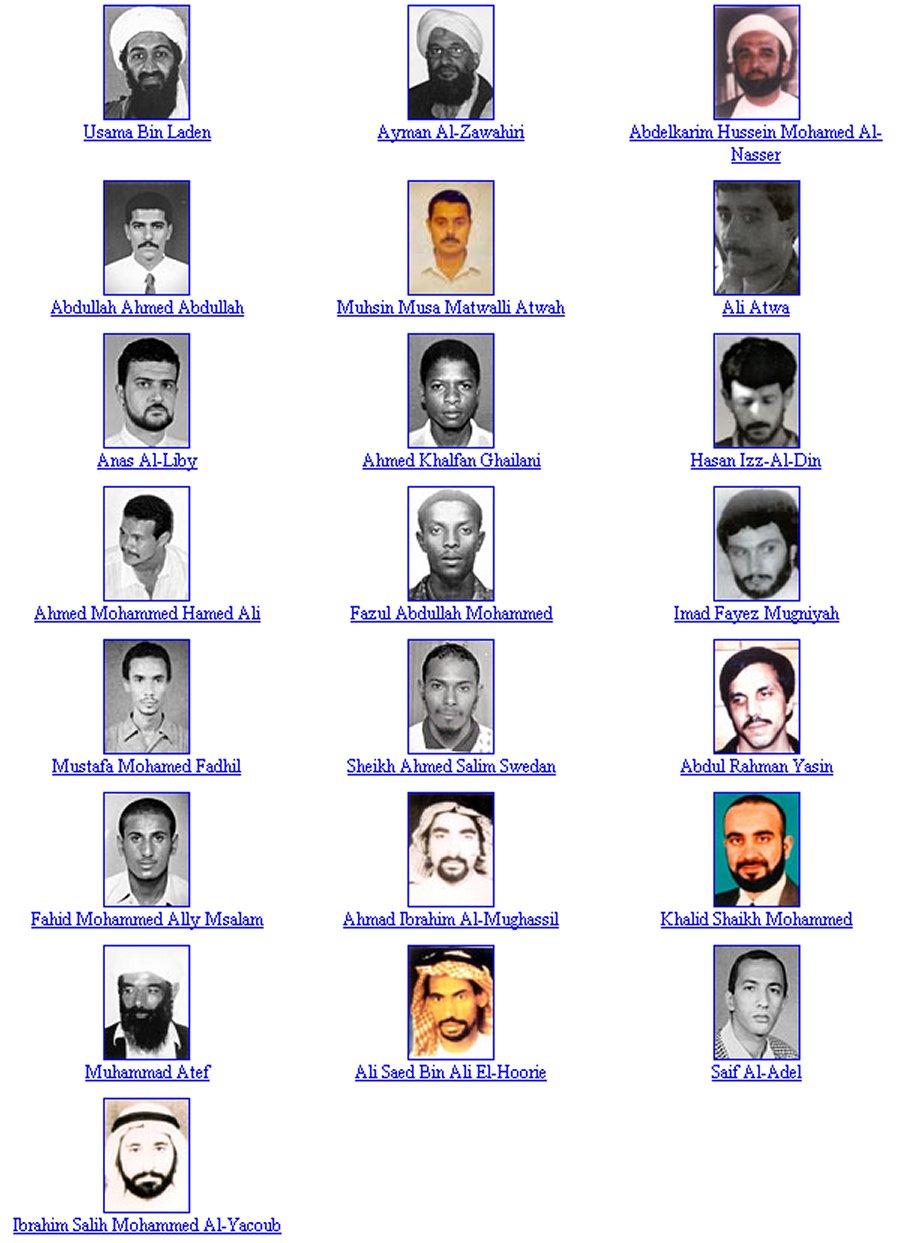 |
| Captured March 1 2003 |
| Excerpts |
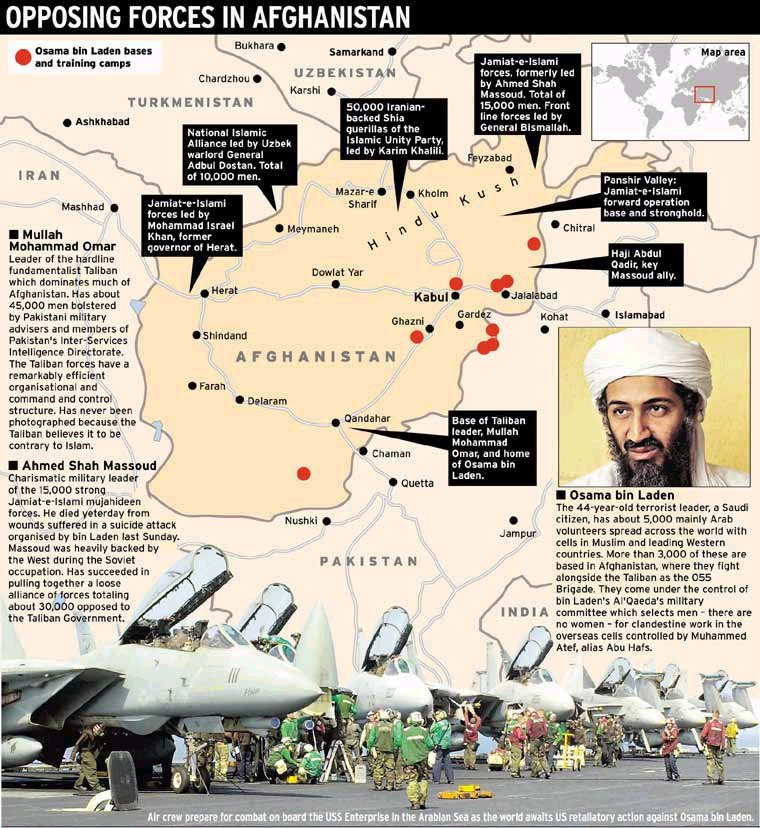 |
| shadow |
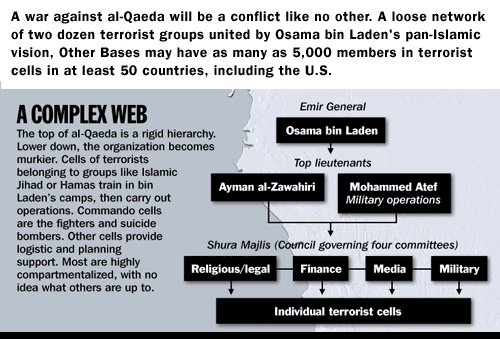 |
| shadow |
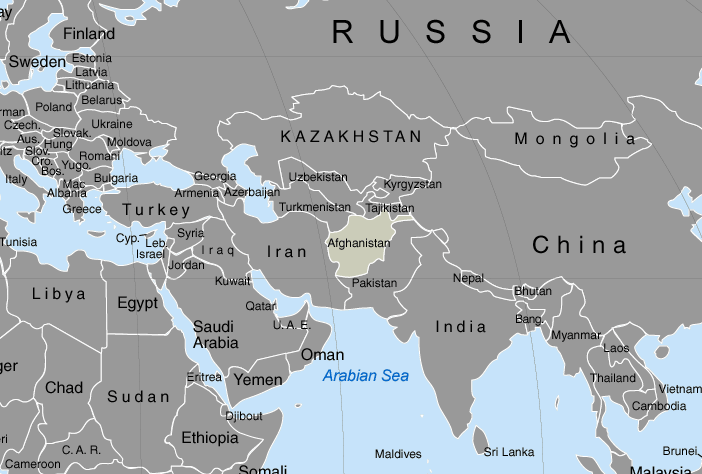 |
| Friday, Feb. 21, 2003 10:53 a.m. EST Ijaz: Al-Qaeda Ready for North Korean Plutonium Using plutonium it could obtain within weeks from North Korea, al-Qaeda operatives based in Indonesia and the Philippines may be able to build a nuclear device by May of this year, a New York businessman who has worked closely with Mujahedeen and Islamist leaders is warning. "According to my intelligence sources in the Far East," writes Mansoor Ijaz in this week's Weekly Standard, "the outlying renegade provinces of Indonesia (Aceh, for example) and the Philippines (where al Qaeda affiliate Abu Sayyaf rules) are infested with senior al Qaeda leaders." "Each one is financially empowered to purchase North Korea's plutonium the moment it is reprocessed," he adds ominously. Ijaz calls al-Qaeda's explosives expertise "unsurpassed in non-military circles" and warns that Pyongyang will be able to turn out "Coke cans of plutonium at the rate of one per week by the end of March.". "[Al-Qaeda] gets military-grade C4 charges from China and Iran," he says. "It employs Hezbollah and Hamas guerrillas trained in the fine arts of detonation devices (witness particularly the maritime attacks against the USS Cole and the French oil tanker); and it has brainwashed legions of men who are willing to die for the cause." The New York investment banker, who helped negotiate a deal turned down by the Clinton administration in the late 1990s for Osama bin Laden's release to the U.S., warns that in a worst-case scenario, al-Qaeda could use North Korean plutonium and Hezbollah C4 to "construct a crude but effective nuclear device in weeks, if not a month." Disaffected Pakistani nuclear scientists would be willing to share their expertise, he predicts.Citing "published - and so far undisputed - reports" over the last three years, the former Clinton administration terror troubleshooter says that eight senior nuclear scientists left Pakistan without obtaining the required No Objection Certificates needed for travel abroad. "They remain unaccounted for and at least some are reported to have traveled to Australia and Indonesia," he adds. China has helped Pyongyang refine its nuclear technique, he says, noting that Beijing has supplied "key chemicals to separate plutonium from depleted uranium." Meanwhile, Pakistan has given North Korea centrifuges to enrich uranium and schooled Pyongyang's nuclear scientists in the ways of bombmaking. Late Thursday the Pentagon acknowledged it was dispatching up to 3,000 troops to the Philippines to counter the al-Qaeda threat in the region, but it is not known whether the deployment has anything to do with fears of a possible North Korean connection. |
| Captured July 28 2003 |