Why we do not celebrate Halloween
Gene & Amanda Brooks  Home

We did not write the following articles, but we have placed them here to show our personal conviction not to celebrate Halloween.
Halloween, It's Origins and Customs Halloween in a Cross-Cultural Perspective: Halloween through a Nigerian's eyes Christians and Halloween
Halloween -- 31 October: Scriptural prayer guidelines< Can Halloween be an Entirely Innocent Practice?
(Part One)  PDF   | 
(Part Two)  PDF 
Specific Customs of Halloween and Pagan Beliefs  PDF 
Should Christians participate in Halloween?
Origins of Halloween  PDF 
 
Halloween: Its Origins and Customs
by Alexis Smith, Greensboro, NC

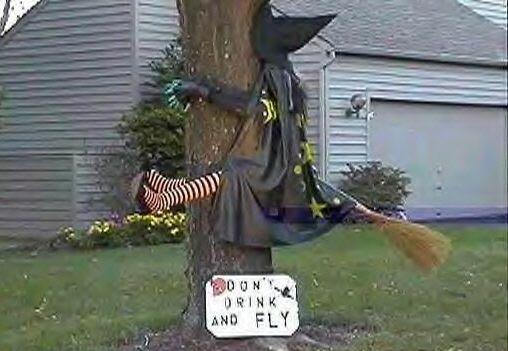
Flying Witch The majority of scholars believe that Halloween can be traced back to the ancient religion of the Celts. There is evidence, however, that other far older and unconnected cultures (the Egyptian and pre-Spanish Mexican) celebrated this as the “festival of the dead”. Most of our modern traditions come from the festival as the druids, Celtic priests, performed it. For them there were four major holy days (called “Fire Festivals”): Samhain, Oimelc, Beltane & Lughnasadh (in one set of Irish-based modern spellings). Samhain, at the end of the summer (Nov. 1) became what we call “Halloween.”

These four major holy days have been referred to as "fire festivals" for at least the last hundred years or so, because (1) to the ancient Celts, as with all the Indo-European  pagans, fire was a physical symbol of divinity, holiness, truth, and beauty; (2) fires play important roles in the traditional customs associated with these festivals; and (3) several early Celtic scholars called them that.

Whether in Ireland or India, among the Germans or the Hittites, sacred fires were apparently kindled by the pagan peoples on every important religious occasion. In ancient Ireland, the Druids sacrificed to the deities by burning victims in wickerwork cages. All other fires were to be extinguished and were relit from the sacrificial fire. Samhain or Samhuinn is pronounced "sow" (as in female pig) "-en"(with the neutral vowel sound). Known in Modern Irish as Lá Samhna, in Welsh as Nos Galen-gaeof (that is, the "Night of the Winter Calends"), and in Manx as Laa Houney (Hollantide Day), Samhain is often said to have been the most important of the fire festivals, because (according to most Celtic scholars) it may have marked the Celtic New Year. The day before Samhain is the last day of summer (or the old year) and the day after Samhain is the first day of winter (or of the new year).

Being between seasons or years, Samhain was (and is for neopagans) considered a very magical time, when the division between the world of the living and the world of the dead was very thin; because of this, the veils between past, present and future could be lifted in prophecy and divination.

As a feast of the dead, it was believed that the dead could, if they wished, return to the living for this one night. As a feast of divination, this was the night to peer into the future. The Celtic view of time was cyclical. At this time, between the old and new year, the natural order of the universe dissolves into primordial chaos, preparatory to re-establishing itself in a new order.

According to neopagans: “The Druid rites, therefore, were concerned with making contact with the spirits of the departed, who were seen as sources of guidance and inspiration rather than as sources of dread. The dark moon, the time when no moon can be seen in the sky, was the phase of the moon which ruled this time, because it represents a time in which our mortal sight needs to be obscured in order for us to see into the other worlds.” They believe that on this holiday, tarot card reading, crystal reading and other forms of fortune telling are the most apt to succeed.

Some Celtic scholars believe that Samhain was originally celebrated for three days. From 31 October to 2 November was a time celebrated as a “time of no-time.” Time was abolished for the three days of this festival and people did crazy things, men dressed as women and women as men. Farmers’ gates were unhinged and left in ditches, peoples’ horses were moved to different fields, and children would knock on neighbors’ doors for food and treats in a way that we still find today, in a watered-down way, in the custom of trick-or-treating on Halloween.

Many types of divination were traditional to this festival. Some of these included the use of apples and nuts. Apples have long been associated with female deities, and with immortality, resurrection, and knowledge. One reason is that if an apple is cut through its equator, it will reveal a five-pointed star outlined at the center of each hemisphere. This was a pentagram -- a Goddess symbol among the Roma (Gypsies), Celts, Egyptians, etc.

Other customs practiced today are very close to the pagan activities associated with the festival. Dunking for apples may well represent a “marriage divination” and/or the remnants of a “Pagan baptism rite called a ‘seining’, according to some writers. The water-filled tub is a latter-day Cauldron of Regeneration, into which the novice’s head is immersed. The fact that the participant in this folk game was usually blindfolded with hands tied behind the back also puts one in mind of a traditional Craft initiation ceremony.” Bats, owls, spiders, and other nocturnal animals were originally feared because people believed that these creatures could communicate with the spirits of the dead. Various cultures have also linked them to messages foretelling death. The color black is also linked with death, which makes it a “power” color to pagan groups. Orange is linked to autumn.

Samhain was the time of year when the herds were culled. That means that farmers and herders killed the old, sick or weak animals, as well as others they didn’t think would make it through the winter. Prior to the last few centuries in the West, most people lived with death as a common part of life, especially since most of them lived on farms.

Samhain became imbued with symbolism of these annual deaths. (It is believed that sacrifices also were part of the original Celtic ceremonies.) So skeletons and skulls joined the ghosts as symbols of the holiday. Indeed, in Mexico, where the holiday is known as Los dias de los Muertos, or “Days of the Dead” (combining All Saints Day with All Souls Day) skeleton and skull toys and even candies are made and enjoyed by the millions, many by and for devout Roman Catholics. 

There are a lot of traditions regarding the jack-o-lantern. Many believe was used as a lantern (although it was usually a turnip or gourd in Scottish or Irish tradition) by people traveling at night, the scary face to frighten away spirits or fairies who might otherwise lead one astray. Set on porches or in windows, they cast the same spell of protection over the household.

How did a Christian holiday get grafted onto such a pagan festival? Originally, the Romans observed their “Day of the Dead” as the festival of Feralia. Participants made sacrifices in honor of the dead, offered up prayers for them, and made oblations to them. The festival was celebrated on February 21, the end of the Roman year. In the 7th century, Pope Boniface IV introduced All Saints' Day to replace the pagan festival of the dead. It was observed on May 13. Later, Gregory III changed the date to November 1. The Greek Orthodox Church still observes it on the first Sunday after Pentecost. When the church couldn’t get the people to give up the pagan celebrations, it accommodated the people.

How do the neopagans and Wicca groups view this day? To them Halloween is one of the four High Holidays, or Greater Sabbats. It is the most important holiday of the year. They often do two distinct celebrations. First, a large Halloween party for non-Craft friends often held on the previous weekend. And second, a Coven ritual held on Halloween night itself, late enough so as not to be interrupted by trick-or-treaters.


HALLOWEEN IN A CROSS CULTURAL PERSPECTIVE

By Herbert M. Eze (Used with permission of Dr. Eze)
Special to ASSIST News Service
See Halloween through the eyes of a Nigerian-American.


PASADENA, CA  (ANS) -- Modernization spawns new forms of paganism. Commercial trends in Halloween show a new repackaging of old paganism. The huge display of Halloween paraphernalia in mauls and the extensive internet activities on paganism testify to a great revival of interest in pagan tradition.

There are presently about 199,000 internet sites on paganism, 50,000 on Halloween. It has been observed that the next generation of children in America will be inclined to the occult due to the current proselytization of children into occultism through the internet and the Harry Potter series on witchcraft in American schools. These are major doorways for trapping children into Satanism.

UNDERSTANDING HALLOWEEN

Halloween is the modern name for Samhain or Sauin, an ancient Celtic holy day. The feast is seasonal and marks the end of summer and the beginning of winter. It is considered "a very magical time, when the dead walk among the living and the veils between the past, present and future may be lifted in prophecy and divination." (Isaac Bonewits 1997, 2002:3).

The feast of Halloween is celebrated by many Neopagans, especially the Wiccans, Druids and Celtic Reconstructionists. Isaac Bonewits, a leading Neopagan explained that "Halloween is a time to deepen connection with the cycles of the seasons, to the generation that have come before us and those that will follow, and to the Gods and Goddesses we worship (www.neopagan.net1997, 2002:12).

The evening of October 31st marks the beginning of the Halloween event as the veil between the material and the spiritual world becomes lifted for mutual traffic between the living and the dead. Activities during the occasion include divination to gain spiritual insight about the past and the future. Bonewits regrets that bored kids in a violent saturated culture like America have caused Halloween activities to degenerate from "harmless 'decoration' of houses with shaving creams and toilet paper to serious vandalism and assaults" (2002:8).

SACRED FESTIVAL ACROSS CULTURE

The "hallowed evening," as it is called, is characterized by devotion to nature, to humanity, (past, present and future) and to the "Gods." It has some similarities with the ancestor veneration and devotion to deities that were common practice in African traditional religion of the past before the coming of Christianity and Islam. This is still in practice in some places in Africa. Pagan festivities are seasonal whether in Europe/America or in Africa. The occasions are sacred and always connected with the veneration of ancestors, spirits and worship of divinities. There are special days to celebrate each festival.

Chinua Achebe writes about the sacred week observed before the planting of crops in pre-colonial /early colonial times, among the Igbos in Africa. It was observed as a week of peace ordained by the Igbo forefathers in Umuofia. By rule, no one would say a harsh word to their neighbor during the occasion in order to honor the great goddess of the earth without whose blessing their crops would not grow. No one was allowed to work during the Week of Peace. People visited their neighbors to feast and to drink palm wine. Violation of the Week of Peace would lead to a heavy fine (Chinua Achebe 1958:26).

SPIRITS AND MORTALS IN MUTUAL TRAFFIC

The new yam festival in Igboland is a seasonal feast which begins the harvest of yams, a major food crop in Africa. Just as the festivity before the planting of crops is devoted to the earth goddess, the harvest festival also honors the earth goddess and the ancestral spirits of the clan (Achebe 1958:31). The occasion is characterized by great merriment of eating and drinking in which only the newly harvested yam is the major food for the day.

Masquerades, who symbolize the spirit of the ancestors, appear to grace the occasion and are treated with great respect and awe. Women and children are forbidden from watching them and would not dare to do so for severe consequences of whipping. Sacrifices of animal blood are made to the gods on sacred altars in families, clan and village. Food and oil are offered to ancestors including kola nuts. Wine is poured out to them on the ground with reverence, and prayers are offered in thanksgiving and for more blessings and protection.

In some places in Igboland, appearances of masquerades during a sacred festival may include the testing of spiritual power among masquerades. Knowledge of such activities and their consequences are restricted to male adults who are initiated in the masquerade cult as part of growing up as males. This may be similar to such aspects of the Halloween celebration that look violent and deplorable especially to the outsider.

The Samhain (Halloween) festival in Euro America and the New Yam Harvest Festival among the Igbos in Nigeria are both seasonal feasts. The dead walk among the living and such times are magical. Masquerades in the Igbo festival may go to people's homes where the adult initiated males are the only ones qualified to come out and meet them with greetings and gifts of money in reverence. Usually they are covered with masks and mythologically they as spirits and never related to as humans for that would be very offensive and lead to serious fine.

The presence of ancestral spirits in form of masquerades during an Igbo sacred festival can lead to absence of order. Disorders caused by their activities are not questioned except perhaps within the circle of the initiated if a case is very serious and violates the rule of ancestral spirits. The no -order period also characterize the Samhain festivity among the Paleopagan and Mesopagan Druids in England. Time was said to be abolished for the three days of the Samhain festival (Bonewits 2002:3).

People did crazy things. Men dressed as women and women as men. Farmers' gates were pulled out and left in ditches and people's horses were moved to different fields. Children would knock on doors for food and treats (Bonewits2000:3). The description here is quite characteristic of the form similar festivals take in Africa though it may not be exact. However, there are changes along the years due to the influence of Christianity in both cultures.

EFFECT OF CHRISTIANITY ON SAMHAIN FESTIVAL

A pagan critique of the Church's influence on Samhain may be helpful in an objective assessment of how the pagan festival has been affected by the gospel. Bonewits writes that "the Christian Church was unable to get people to stop celebrating this holiday, so they simply sprinkled little holy water on it and gave it new names as they did with other Paleopagan sacred holidays and customs which have Paleopagan elements associated with their dating/or symbols , " such as "Valentine's Day/Lupercalia, Easter/Eostre, and Christmas/Yule." (2002:4).

Samhain Day (now Halloween), which was associated originally with the gods and goddesses of the Celts, has been co-opted by the Church as All Saints Day (November 1) followed the next day (November 2) by All Souls Day which was originally the day for the worship of ancestors. Polytheism and ancestor worship were common practice in Europe just as it was in Africa. Most of the great cathedrals of Europe were built on top of earlier shrines and sacred grooves (Bonewits 2002:4). Early Christian missionaries to Africa did the same and in some places went to the extent of clearing bad bushes which were unsacred sites and abode of the wicked and evil spirits, to erect churches.

ARE PUBLIC SCHOOLS IN AMERICA SECULAR OR PAGAN?

The Neopagan, Bonewits does not argue that Halloween festivity today is not pagan. He agrees with those who accuse Halloween to be pagan that they are right and with certainty. He does not mince words in saying that the presence of Halloween in American schools is paganism in operation and control. "When Fundamentalists come to your local school board and try to get Halloween removed because 'it's a pagan holiday,' they are perfectly correct," says Bonewits.

The above response from a neo-paganist confirms that Halloween is pagan and poses a challenge like, what can you do about it, including the extremities of vandalism, blood, sorcery, witchcraft and exploiting commercial activities that go with the festivity? There is no time in America that I experienced spiritual oppression as during the Halloween festivity. Activities of demons, spirits and witches are usually intense at that period. Some churches organize serious warfare prayers to combat their experience of wicked forces during Halloween. This confirms the reality of evil presence connected with the festival.

Commercial gains from the proceeds of Halloween paraphernalia by those mauls who use their money to support educational and political programs, and other causes that favor their Halloween/witchcraft trade activities, have strengthened the revival of paganism in America The unholy marriage of some churches with the gods and goddess of paganism has perpetuated paganism in such churches dressing it unfortunately with the toga of Christianity whereby the undiscerning are ensnared.

HARRY POTTER AND THE SPREAD OF WITCHCRAFT

Harry Potter's series projects a worldview which promotes witchcraft. The novel is a big sell today and a great machinery for propagating a worldview that is anti-Christ. Harry Potter's parents were said to be killed by a witch, Voldemort, in a Halloween night, and Harry who was with them escaped with a lightening- bolt scar on his forehead. Horror tales, such as this, are sometimes part of such festivals in Africa that are connected with masquerades/ black magic and charm testing to prove spiritual power. The sources of such horrors /deaths are usually known by the leading members of the masquerade cult.

What way of life does the author of Harry Potter, J. K. Rowling, intend to teach children, by creating a wizard out of Harry Potter and making him the hero of her story through the study of witchcraft and magic for revenge. The worldview of the novel is diametrically opposed to the Bible both in studying to become a witch and in seeking of revenge. The consequences of kids reading the novel are becoming evident in the kind of reviews they write after reading it. However, I encourage that you read the Harry Potter yourself than to base your judgment on other people’s reviews some of which may be exaggerated or ill-motivated. A novel that projects a worldview which encourages revenge and, in addition, presents the art of witchcraft as a way to it is unacceptable to me in light of my Christian faith.

LESSONS FOR THE CHURCH

When the church discriminates, it may create witches without knowing it, and those who are witches already will only be hardened to propagate witchcraft more than ever. Unfortunately, when they do so, their message usually gain more attention and support from the world than what discriminating Church folks have to say.

In the horrible circumstance that Harry Potter found himself in the home of his close relatives, it was better news for him that he came in company of those who loved him and cared for him even though they were witches. Perhaps, if a church family showed him equal or greater love than the witches did, he would not have joined a witchcraft school. The question is how much does the church love these readers that have gone after the witch, Harry Potter? What excitement can we create for our youth and the world in writing novels that will not be anti-Christ in worldview but rather present witness wisely for the Lord?

LEARNING FROM SHAKESPEARE

Didn't Shakespeare write wonderful series of plays and sonnets which both Christians and the world were attracted to for centuries? Doesn't God have people today who can paraphrase and contextualize Shakespeare for today's readers, or write similar series for our time. The other factor is funding. He who pays the piper, as it is said, calls for the tune. J.K Rowling, the author of Harry Potter, was a struggling single mother when she began Book One of the series. It remained on scraps of papers until she received an unprecedented award from the Scottish Arts Council enabling her to finish the first book.

Are you surprised that the source of Harry Potter's funding will support publishing the novel? Although this does not justify the author from our view point from the Bible.
Paganism, sorcery and witchcraft have the same source of origin. There is no light in them says the Prophet Isaiah, and the test for their proof is God's Word (Isaiah 8:20). Seducing spirits in operation may appear familiar, like the Holy Spirit, in order to sell, especially in our time. It takes careful discernment to identify certain demonic activities. It also takes engaging devils in constant battle with the Scriptures, as Jesus did, to mature in discernment of their tactics because Satan himself is said to disguise as an angel of Light.

AN ATTACK ON BIBLICAL WORLDVIEW

Harry Potter series have been customized and made child-friendly that in this new repackaging of witchcraft in a fictitious novel, people hardly discern the error involved. The attack is on biblical worldview and the death pill is taken by readers unconsciously as they read, especially the children. The Scripture says that we should not regard familiar spirits or seek after wizards to be defiled by them, but to seek the Lord, our God (Lev. 19:31). It is also among the signs of the last days that many will depart from the faith giving heed to seducing spirits and doctrines of demons (I Tim. 4:1).

Across cultures, and at different times, Satan has remained the source of sorcery and witchcraft whose practices take new forms today. The heavily commercialized Halloween festivities for reviving and spreading paganism and the stunning popularity of the Harry Potter series with its impact in the public schools are very effective strategies of the occult in disseminating and globalizing the newly repackaged doctrine of the old religion of the devil.

To win this current battle, the church needs to submit to God and actively resist the devil. No effort in faith should be under-rated or delayed. God may choose to use the sling stone of one that is obscure or naive to eliminate this Goliath of a monster that is threatening to mislead an entire generation of kids.

THE GLOBAL EFFECT OF AMERICAN PAGANISM

Witchcraft and occultism have gained official acceptance in American school curriculum while the Bible and prayer to God are unacceptable. This has worldwide effect due to the impact of the United States in world economy and politics. The more Satanism gains strength in higher and strategic places in America, through the new repackaging process of witchcraft and occultism, the more the world is misled.

I remember visiting a believing family and discovered that they had dabbled into the occult. A lady medium was sending them literature in series with promises of good luck and fortune. They did not see anything wrong in it. As I showed them from the Scriptures the error of the practice, the husband objected, saying that it is everywhere in America and not a hidden practice. It took time before I could convince them of the error and got the materials destroyed after some serious praying.

As I questioned the couple mentioned above on why they could go into such practice even as believers in Christ, I learned that it was out of the wife's frustration for not having her prayers answered over a school final exam. The husband concurred that he did not blame her. The new repackaging of this occult practice made it user friendly for them to dabble into it because, from their African background in pagan religion, they know the difference between Christianity and paganism.

How would any Christian leader who lives in America sit on the fence on this subject when it affects people irrespective of race and ethnicity? It is unfortunate if born again believers from foreign countries who renounced satanism in their own lands get to America only to rededicate themselves to it, sometimes unwary, because it has been repackaged and made user-friendly. If adult believers hardly escape these pitfalls of the Enemy in America, what hope is there for the children in the public schools where Harry Potter and other forms of occultism hold sway?

Herbert M. Eze can be contacted by e-mail at: [email protected].

Nigerian-born Herbert Eze has seven years of marketing experience and twenty years of pastoral/teaching and political experience. He served as School Director in Evangel Academy while pastoring a church in Mubi. He has held offices as Chairman Christian Association of Nigeria (CAN), Mubi and Chairman, Pentecostal Fellowship of Nigeria, Mubi Zone. Eze was elected in the Social Democratic Party (SDP) for two tenures to serve as State Delegate for Yelwa Mubi during the Third Republic in Nigeria. He holds a Ph.D. degree in Intercultural Studies from Fuller Seminary and is a candidate for Ph. D. Intercultural Education from Biola University, La Mirada, California. For three years Eze has taught Social Science and World Religion courses at the University of Phoenix Southern California. He also serves as adjunct assistant professor of Intercultural Studies at Hope International University, Fullerton, where he teaches Cultural Anthropology.

** You may republish this story with proper attribution.


Christians and Halloween
Pittsburgh Church of the Brethren, 3503 Beechwood Boulevard, Pittsburgh, PA 15217

Of all worldly holidays none is more openly anti-Christian than Halloween. There is no real question about its origin to an unbiased historical investigator. Some of these sources are quoted in the following paragraphs. Tragically, most Christians argue about its observance and still practice it, even though they are aware of its occult origins.

Confusion and deception are major tools in satan's war against God's people. He was a liar from the beginning. If satan can involve Christian families in celebrating Halloween, even in ignorance, that is confusion. If he can persuade Christians to defend Halloween as "harmless fun," his deception is successful.

Dorine Irvine is a converted witch. At one time she belonged to the oldest and highest satanic orders in Europe. Amongst their doctrines in this: "Evil must increase that satan might reign." Dorine advanced to the rank of Queen of witches in Europe. Imagine all the witches' delight and laughter," Dorine declares.  "when they hear us say 'Come to our Halloween Dance.' There the Christians are celebrating Halloween. Little do they know what they are celebrating. Its one of the greatest festivities in witchcraft. No Christian should celebrate Halloween. And if you knew what I know —  and you haven't heard the half — you would never celebrate Halloween again."

Here is what the 1958 edition of the Encyclopedia Britannica has to say (emphasis supplied). .... the occasion shows clear connections with the religion of the druids in pre-Christian Ireland and Scotland.

The Celtic year ended on October 31. the eve of Samhain, and was celebrated with both religious and agrarian rites. For the druids, Samhain was both the end of Summer and a "Festival of the dead." The spirits of the departed were believed to visit their kinsmen in search of warmth and good cheer as winter approached. Divination and auguries for the new year were practiced at Samhain. These magical practices concerned such questions as who would die during the next year. the identity of the future marriage partners and the chances of good fortune. It was also an occasion when fairies, witches and goblins terrified the populace. These agents of the supernatural were alleged to steal infants, destroy crops and kill farm animals. Bonfires were lighted on hilltops on the eve of Samhain. The fires may have been lighted to guide the spirits of the dead to the homes of their kinsmen or to kill and ward of witches.

There is little doubt that the Christian church sought to eliminate or supplant the Druid festival of the dead by introducing the alternative observance of All Saints' day on Nov. 1 (Priests and worshipers of pagan cults) found an outlet during the middle ages in witchcraft which was devoted to the worship of satan. This cult included periodic meetings, known as witches Sabbathes, which were given over to feasting and revelry. One of the most important Sabbathes was held on Halloween. Witches were alleged to fly to these meetings on broomsticks, accompanied by black cats who were their constant companions. Stories of these Sabbathes are the source of much folklore about Halloween.
By the end of the middle ages, the celebration of Allhallows Eve was an established part of the annual calendar of the Roman Catholic church. However, after the Reformation. Protestants rejected this feast along with other important ones such as Christmas and Easter. Nevertheless Halloween folk costumes of pagan origin flourished....the inhabitants lighted bonfires on hilltops and... engaged in divination by such means as pulling kale, placing stones or nuts in the fire and throwing a shoe over a house. Some divination occurred even on the church porch, which was believed to be an especially reliable place to learn of future events.

The 1972 edition of the same encyclopedia gives us more information. Halloween ... was the Celtic festival at the end of Summer named Samhain, in contrast to May day, (Beltanic) the festival at the beginning of Summer...... October 31 was also the eve of the New Year in both Celtic and Anglo Saxon times and one of the ancient fire  festivals..... (the practice of divinations and its association with the dead, whose souls were supposed to revisit their homes on this day).

Since November ushers in the darkest and most barren half of the year, the autumnal festival acquired sinister significance, with ghosts, witches, hobgoblins, fairies and demons of all kinds roaming abroad. The Celtic festival was primarily a pastoral observance..... the crops as well as the flocks and herds had to be protected from demonic influences that were alive at the turn of the year. It was the time to placate the supernatural powers controlling the processes of nature. Coupled with this were fire rites, divinations, lunerary practices and masquerades.....In Scotland traces of an expiatory sacrificial rite have survived in the case of both Halloween and the Beltanic fires.

In addition, Halloween was thought to be the most favorable opportunity for divinations concerning marriage, luck, health and death.....it was the only day on which the help of the devil was invoked.... The common symbol of Halloween, the "jack-o-lantern"..... is a hollowed-out pumpkin carved in the appearance of a demonic face and a lighted candle inside.... By contrast with these Irivolous customs it was on Halloween that the general assembly, or open air parliament (Freig), was held at Tara in Celtic Ireland..... The proceedings opened with sacrifices to gods..., the victims being consumed by fire..... Halloween has nothing churchly about it and seems to be a relic of pagan times..... It was regarded as the time of all others when supernatural influences prevail, and as a night which was set apart for universal walking abroad of spirits both of the visible and invisible world; for on this mystic evening it was believed that even the human spirit might detach itself from the body and wander abroad. Halloween seems clearly allied to the "Walpurgis Night" of the Germans. thewitch-festival or assembling of evil spirits.

Sentimental reasons present the greatest hindrance to the Christian in admitting that Halloween is pagan, satanic and displeasing to God. After all Mom and Dad participated in Halloween. When we think of Halloween we think of costumes, the fun of "dressing up" and fooling friends and neighbors. We think of excitement, a night we were allowed to stay up late and play tricks. We remember the bags of candy we collected by "trick or treating." We recall games and merriment. So why should not our children today enjoy the "fun."

More is expected of followers of Jesus Christ. We are not to love the world system (1 John 2:15) Christianizing pagan holidays is and always has been wrong. We are in the last days of this age, many Christians believe. Satan is being allowed to work more openly than ever  before. The battle lines are being drawn more precisely as evil becomes more evil-- and, in contrast, God's people are being purified.

God specifically forbids His people to participate with the things of satan which Halloween represents. Deuteronomy 18:10-12 reads: "There shall not be found among you anyone that maketh his son or daughter to pass through the fire, (this refers to the sacrifice of children to pagan gods by fire, a practice associated with Halloween) or that useth divination, (another practice involved with Halloween, including bobbing for apples to foretell the future)or an observer of times, (astrology) or an enchanter (one who casts spells) or a witch.(involved also in the celebration of Halloween) Or a charmer,  (hypnotist) or a consulter with familiar spirits, (medium) or a wizard, or a necromancer (one who consults the so-called spirits of the dead, actually demons masquerading as spirits of the dead). For all that do these things are an abomination unto the Lord: and because of these abominations the Lord thy God doth drive them out from before thee.

Participation in the celebration of the satanic festival, Halloween is an open invitation for the forces of satan to gain influence in the lives of anyone, whether Christian or not. A rancher from Nebraska once visited our church asking for prayer for healing of very painful adhesions resulting from previous surgery. As we prayed the pain became worse. We asked God to show us why. The "water" came to the mind of the pastor's wife. "Does the word 'water' mean anything to you?" she asked the elderly rancher. The following conversation revealed that as a young boy, the rancher had held the forked stick of a "water-witch" or "water-diviner" used to discover that resource which is so critical to all farmers and ranchers. Participation in this form of occult activity had brought a curse on the rancher, regardless of his young age, the fact that he did not believe in it, and the fact that it had not worked for him. The moment he confessed seeking help from a supernatural source other than God and asked God's forgiveness in Jesus' name, the pain subsided. The curse was broken. A long-forgotten debt was canceled by Jesus atoning death on the cross.

If you like this rancher, are a Christian, then delay no longer. Confess any participation in such occult practices, including satanic celebration such as . Renounce all such participation, no matter how innocent it may have been, and ask God to forgive you in Jesus' name. If you are not a child of God, and have not asked Jesus to come into your heart and make you a new creation, why not do so now? Jesus died on the cross to set you free from the power of sin and death. He shed His blood to pay the debt you can never pay. If you are not sure that you are safe in His arms today, pray this short prayer:

Heavenly Father, I am sorry that I am a sinner. Please forgive me in Jesus' name I believe Jesus is your Son, that He came in a human body to die on the cross for me. I believe that you raised Him from the dead and that He is with you now interceding for me. Jesus, be my Savior and Lord of my life. Come into my heart, Lord Jesus. Make me a new person. Fill me with your Holy Spirit to teach, lead, correct and comfort me, and give me the power I need to be your witness in this world. Amen


Halloween - 31 October
by Elizabeth Jordaan in South Africa


Halloween originated among the ancient Celts of Europe and was called the festival of "Samhain" or "All Hallowtide". It was a feast of the dead and started the evening of 31 October, signaling the end of harvest and the beginning of winter. 1 November was All Soul's Day. It began on 31 October because in ancient times days were reckoned from evening to evening, rather than midnight-to-midnight as we do.

This also signaled the beginning of the New Year for the Celts. During the "turning" of the year, the "veil between the worlds" is believed to be at it thinnest and the living could communicate with the dead in their dwelling place. It is a time when deceased ancestors and other "friendly" spirits are invited to join in Sabbath festivals and be reunited with loved ones. The celebration of the dead honoured the god of the dead on this particular night. It was also a time when faeries were active. Faeries were seen as those angels who did not side with either God or Lucifer and were condemned to walk the earth until judgment day. The Celtic people believed that chaos reigned during this night since it was neither one year, nor the other. It was a  night of magic charms and divinations, reading the future and other rites.

"Trick or Treat": People would imitate the faeries and go from house to house begging for treats since the believe is that spirits had to be appeased by giving them a type of worship and offering (food or milk). Failure to provide the treats would result in practical jokes being visited on the owner of the house such as: blocking the chimney,  leading off cattle, throwing cabbages, etc. Another way to fool or scare away the evil spirits was to dress up to look like them. It was believed the spirits would bring them no harm then.

"Jack-o-Lantern": Jack was an Irish scoundrel who liked to eat big red turnips. On Halloween day he trapped the devil in a tree and would not let him down until the devil promised Jack he would never live in Hell. The devil agreed. A year later Jack died. Because he did not believe in God, he did not go to heaven. The devil did not allow him in hell. To help Jack find his way back to earth, the devil gave him a fiery coal. Jack put this fiery coal in the lantern he carved from his big turnip. This first "Jack- o-Lantern"  helped Jack find his way back to Ireland but never found it, forever roaming the earth with his lantern.

Fire ceremonies: Halloween was one of the four great "Fire Festivals" of the Celts. All the fires in hearths were extinguished and then  re-kindled from a central bonfire started ceremoniously by the druids. During this time the druids would wear animal skins and heads to disguise them from the spirits. The extinguishing of the fires symbolised the "dark half" of the year and the rekindling symbolised the return of hope. Fires or candles are left burning all night to honour and welcome the dead. The "Jack-o-lanterns", gourds, cider, incense and gemstones are used as altar decorations. The candles are black and orange. Black cats were considered to be reincarnated beings with the ability to divine the future.

Druids (priests of the Celts) held the ceremonies of the feast in sacred places, such as forests, rivers, lakes and streams. Human sacrifices were part of the ceremonies. Satanists had adopted the Druidic High Days and celebrate Halloween as follows: 22-29 October - Satanists start Sacrifice preparations, 30  October - Satanic High Day - related to Halloween with human sacrifice, 31 October - All Hallow's Eve - Blood and sex rituals with demons; animal or human sacrifices.

The early Christian Church tried to eliminate the Druid celebration by offering All Saint's Day as a substitute. It was of no avail. Although the outward forms of such worship disappeared, the belief in these gods did not. In the Middle Ages open practises of witchcraft flourished. In the mid 1900's paganism returned to the western world and the pagan feasts were re-introduced. The uninformed Christian has no idea that demonic spirits that are actually contacted and activated as people call out to them in jest or in seriousness. Every act around Halloween is in honour of false gods and spirits. To pray for the dead is totally against Scripture.

Scriptural prayer guidelines:

2 Timothy 1:7 - "God has not given us a spirit of fear, but of love,  power and a sound mind." Resist the spirit of fear that seems to surface in the time of Halloween and is enhanced by movies portraying either the occult or extreme situations of fear.

Deuteronomy 18:9-14 - "Do not imitate the detestable ways of the nations through sacrifice, divination, omens, witchcraft, casting of spells, mediums or consulting the dead." Resist the temptation to be drawn into seemingly harmless celebrations of this ancient demonic feast. If you were involved in the past, confess it. Ask the Lord for a revelation of His ways to people around you. Ask the Lord for forgiveness for the countless ways your town will be involved in this practice. Speak up and warn people of the danger of getting involved in any kind of occult practises.

"Father God, in the Name of the Lord Jesus Christ of Nazareth, I renounce any involvement my family, forefathers and I had with this practise of Halloween. I now cancel any covenants made with the spirit world and any worship we have given to Satan and his demons. I turn my back on this practise and ask You to cleanse me and my family with the blood of Jesus Christ Your Son."

Isaiah 8:19 - "Should a people not consult their God? Why speak to  the dead on behalf of the living?" Call upon the Name of the Lord Jesus  Christ.

Submit to His ways, and ask for a deeper revelation of His love. Ask Him to reveal to You His plan and purpose for your town and pray until He manifests His power in your area.

1 Chronicles 10:13-14 - Consulting the dead is being unfaithful to God, and can result in judgment. Commit yourself and your family once again to love and serve the Lord Jesus Christ and Him alone.  Ask the Lord to expose all evil, especially on the night of  Halloween, so that works of the kingdom of darkness will weaken.

Ask for protection for those targeted for human sacrifices. Pray for all Christians to be protected against curses directed at them, pray especially for pastors, ministers and Christian leaders.

Pray for the salvation of many who practise the occult, that they  will be confronted with the love, purity and holiness of God the Father.


Hosted by www.Geocities.ws

1