Cat Breeds
There are many different breeds of cats that exist. I am going to focus on a couple of lesser known breeds. Most people have seen or heard of Siamese, Tabbies, and Persians which are ubiquitous at cat shows, in cat magazines and books. I will not discuss these breeds. The five breeds that will be mentioned are the Bengal, Cornish Rex, Devon Rex, Ocicat and the Sphynx. These cats are not well known and I thought the public should be made aware of these unique breeds. I highly advise that if you wish to find more information about these breeds or to purchase one, see a licensed, reputable breeder. There are too many breeders that overbreed their cats and there is a high chance that you may get a sick or aggressive cat. Be careful and talk to different breeders and then make an informed choice in purchasing a cat.
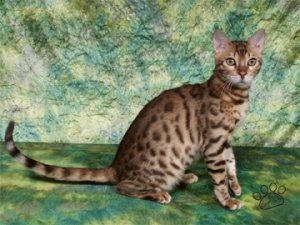
Bengal
Cornish Rex
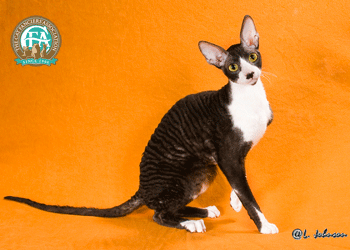
I grew up with this breed and they are wonderful animals. This breed is unusual because it is a genetic mutation. The first Cornish Rex that came into existance was Kallibunker in 1950 Cornwall, England. He was born on a farm and the owner, Mrs. Ennismore realized that she had a unique cat. Kallibunker had a coat of wavy, curly fur which is not normal for a cat. She contacted a geneticist to have the cat tested. They realized that the coat was of the Rexoid gene and was recessive. This causes their coats to be curly and wavy. The cat has the name Cornish Rex due to the first one which was born in Cornwall and also to differentiate between it and another discovery of a curly hair cat which became the Devon Rex.
Eventually the breed was established in England and not until the 1960's-1970's did this breed come to the United States and slowly gained popularity. The Cornish Rex has an affectionate personality and has a tall, slim and long body. Their hind legs are tall which make them good jumpers and fast runners. Their coat is wavy and curly and consists only of the down hairs (undercoat). Most cats have this plus the guard hairs or overcoat. Sometimes breeders will advertise these cats as "Hypoallergenic" or "Allergy Free" and they are not. Someone who has allergies may tolerate these cats better due to the one coat of fur but they can still cause allergic reactions. That is one thing to consider if deciding to purchase a Rex. These cats are high energy, zany, and very playful and can make an excellent family pet.
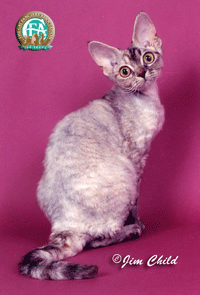
Devon Rex first appeared in Buckfastleigh, Devon, England about 1960. There was a feral curly haired tomcat that was discovered in this town. Eventually, this cat bred with another and there was one kitten that had the curly hair. This kitten was adopted and was named Kirlee. Kirlee started the Devon Rex line. This again, is a spontaneous mutation breed and is not genetically related to the Cornish Rex. The Devon looks very different from the Cornish. It is smaller, broad chested, muscular and although their fur is wavy, the waves are not as tight as the Cornish Rex waves. The Devon Rex is sometimes called the E.T. of the Rex breeds. Their faces are pixish, broad cheeks, and have large wide-set eyes. They have a fun, curious, loyal, delightful personality. They love to bask in sunlight and steal your bed for naps. They are also not an "Allergy Free" cat. The Devon Rex breed would be a wonderful addition to a home.
Ocicat
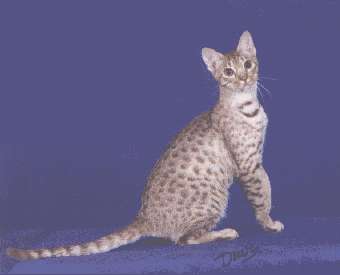
This cat is usually mistaken for a cross breed of wild and domesticated cat. They are not. They may look wild but they are just a domisticated cat. The first Ocicat appeared in 1964 by mistake. A woman named Ms. Daly wanted to produce an Aby-Point Siamese. She produced something quite different, a male kitten named Tonga who was a golden spotted cat. However, Tonga was neutered so the Ocicat line was not started by him. Breeders used the Abyssinian, Siamese and added the American Shorthair to the mix. This began the Ocicat breed. The name came from Ms. Daley's daughter who named the cats Ocicat in reference to the Ocelot which is a wild cat. This breed is well-muscled, medium-large in size and are heavier than how they appear. The coat is satiny with spots that run from the shoulder down to the tail. Ocicat comes in different color such as tawny, chocolate, cinnamon and silver. They are very intelligent, alert and full of energy. They form strong bonds with their owner and do not like to be left alone. Having another cat or dog around would be beneficial to this breed. This breed would also be a good addition to a home.
Sphynx
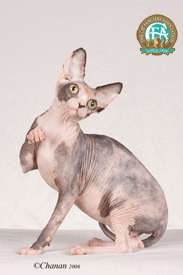
This is another spontaneous mutation breed. What the breeders and cat associations consider to be a Spynx first appeared in the 1960's in Canada. They are slowly making their way to the U.S. These cats are bald but sometimes they have fur on their noses and on their paws. They are also wrinkled and they are not a delicate looking breed. They are broad, short bodied cats and can weigh 6-10 pounds. They are very affectionate and they are always looking for an excuse to sit on your lap. They are inquisitive and will follow you around like a dog, and will get into everything; and they also do not like being alone. It has been documented that a Sphynx will become physically ill if the owner is not around a lot. If you are gone 10 or more hours a day, please do not get this breed, it would be unfair to the cat unless you have another cat to keep it company.
I have this breed and I have discovered that they need a lot of care. Due to lack of fur, they are oily skinned and must be bathed twice a week. Also, buy 100% cotton baby blankets for the cat to sleep on, not only for warmth, but the cotton will absorb the oil from their skins. During the winter make sure there are plenty of blankets the cat can sleep on for warmth, remember they are bald! This breed is also advertized as "Allergy Free" and they are not. They still can cause allergic reactions. However, some people with allergies can handle this breed better. I am not discouraging anyone from buying this breed, they are affectionate, loyal, and are very playful, but I want people to know that they are such a unique animal that they do need more care than most cats. Talk to your veternarian about proper care for this breed. Again, a little extra care is needed, but they are good cats and companions.